
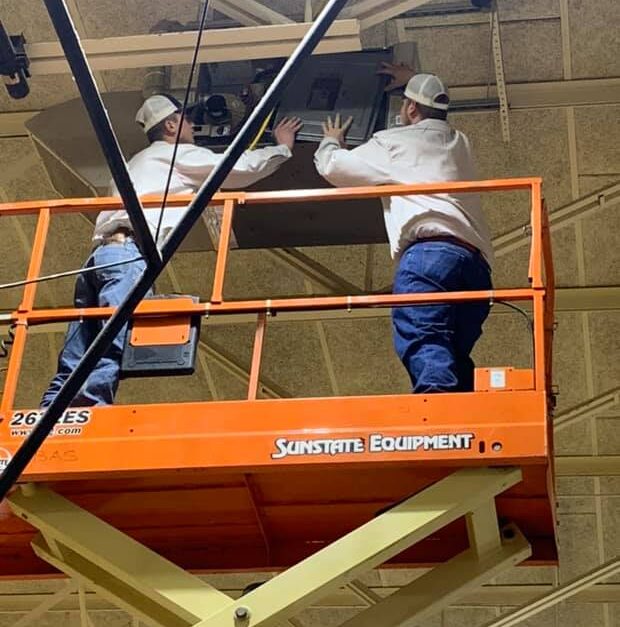
Searching for AC Install across Burlington?
Climate Control A/C & Heating takes on comfort equipment of every kind around the community.
Reach us at 512-446-4020 and ask a real question.
Summer Load – Built for a Long Haul
A Burlington summer stacks hot afternoon after hot afternoon; a cooling system here logs far more running hours than one in a mild climate.
Moisture in the air matters as much as the thermometer reading; an air conditioner pulls it out as a side effect of cooling, but only while it is actually running.
Right size, steady airflow and a clean coil explain much of how a house feels, whatever the label on the box promises.
Moving Heat Outdoors: What Each Piece Does
A central air conditioner is a heat mover, not a cold maker; it collects heat inside the house and dumps it into the outdoor air.
Warm indoor air passes over a cold coil in the air handler or furnace cabinet; outdoors, a fan pulls air across the condenser coil to shed the load.
Parts that wear out fastest are usually the small electrical ones; a failed capacitor is often a small repair rather than the end of the system.
Service Calls in Hot Weather – Finding the Real Cause
A proper air conditioning repair sorts the symptom from the cause before anything is replaced, and each of those causes needs a different fix.
When the outdoor fan hums but will not spin, a capacitor is often the reason, and each can be tested with a meter in a few minutes.
Ice building up near the air handler tells a technician where to look; switching the system off and letting it thaw protects the equipment until it can be checked.
Refrigerant is not a consumable that needs topping off every season, which is why measuring pressures and temperatures matters more than adding gas.
Condensate has to leave the house, so a blocked line sends it somewhere less welcome, and the fix is usually quick once the blockage is found.
Warning Signs: Spotting Problems Early
Most breakdowns announce themselves with small changes in behavior, and the following signs are worth acting on:
- Some rooms that never cool down even though the blower sounds normal.
- Loud banging when the compressor starts, whether or not the cooling seems to work.
- Short, frequent cycling of the outdoor unit, leaving the indoor air damp.
- Damp spots on the ceiling below the indoor cabinet, especially in humid weather.
Regular Maintenance – the Work Behind Reliable Comfort
Routine AC maintenance heads off the kind of failure that arrives on a hot afternoon, with attention paid to coils, drains, belts and wiring.
Filters catch the dust that would otherwise coat the indoor coil, and how often it needs changing depends on the filter type, pets and the season.
Coils, drain pans and drain lines all get attention during a complete tune-up; capacitors, contactors, wiring and motor amperage get checked as well.
Aging Equipment: Questions to Ask First
Replacement is worth considering once repairs pile up on equipment that was already aging, and a good evaluation lays out repair and replacement side by side.
Older equipment may use a refrigerant that has been phased out of new production, which is another reason to get a clear diagnosis before deciding.
Efficiency numbers on new equipment, such as SEER2, give a way to compare models fairly, which matters most where the system runs for months.
Getting an Install Right: the Groundwork Matters
Choosing equipment for an AC install means working out how much heat the structure gains, and the standard method for homes is a room-by-room heat gain calculation.
An oversized system cools the air quickly and then shuts off before it removes moisture; one that is too small never reaches the setpoint on the hottest days.
The indoor and outdoor parts have to match each other and the ductwork; the owner then gets a walk-through of the thermostat and the filter.
The Hidden Network in the Walls and Attic: Sizing, Sealing and Insulation
A duct system is the network of channels that carry conditioned air to every room and returns it for re-cooling, which is why the airflow measurement is part of a proper diagnosis.
Attic duct work in Texas sees extreme heat, so insulation and tight seams earn their keep, and sealing with mastic rather than cloth tape holds up better in the heat.
Cleaning the Air Paths: What It Can and Cannot Do
Air passages collect dust, and duct cleaning is the way to clear it from the inside; cleaning is not a substitute for fixing leaks or changing filters.
Dirt returns quickly if the filter is poor or the returns leak unfiltered air, and a plain look inside the duct tells the real story.
Heat Pump Basics – Efficient Most of the Year
A heat pump is an air conditioner that can run backward to warm the house, and that makes them efficient in climates with mild winters.
A heat pump may call on backup heat during a hard freeze or while defrosting its coil, and a technician can check whether the strips are running more than they should.
Furnace Basics – the Machinery in the Closet
The sequence in a gas furnace runs from thermostat call to draft fan, igniter, gas valve and flame proof, and the sequence is why furnaces need testing before cold weather.
A technician checks venting, gas pressure and the heat exchanger during a furnace tune-up, and homeowners should keep the area around the furnace clear of clutter.
Electric Furnaces and Air Handlers – Where It Fits Best
Electric heating systems have no burner, no flue and no combustion byproducts, and the main wear items are the elements, the sequencers and the blower.
Electricity makes heat at a steady rate, but resistance heat uses more power than a heat pump does for the same warmth; the choice depends on what fuel is available at the property.
Getting Ready for Cold Weather: Short Winters Still Bite
A hard freeze can arrive with little warning, so heating equipment needs to be ready before it is called on; running the heater briefly in fall shows whether it lights, blows warm air and shuts off properly.
A heating service call looks at the heat source, the blower, the filter, the thermostat and the airflow, and the safety controls get tested along with the comfort ones.
Boilers: Found in Older and Larger Buildings
Radiant floor and baseboard heating both rely on a boiler to heat the water, and they are less common in Texas than furnaces and heat pumps.
Service on boiler systems covers the burner, the water pressure, the circulator pump, the expansion tank and the safety relief valve, and bleeding air from the loops is a routine task.
The Air Inside Your Walls: Beyond Temperature and Humidity
Residential air quality is shaped by dust, pet dander, cooking fumes, cleaning products and moisture, and cleaner air depends on filtration, ventilation and moisture control working together.
A better filter helps only if the blower can pull air through it without strain; a deeper media cabinet gives better filtering with less restriction.
Commercial air quality involves larger volumes, more occupants and strict airflow requirements, which is why commercial properties usually benefit from regular service visits.
Filters, Purifiers and Their Limits: What the Labels Mean
Purifiers vary widely, from simple filters to units combining filtration, carbon and other methods; pollen and dust call for filtration, while odors call for carbon.
Equipment that cleans the air cannot make up for a dirty coil or a leaky return, which is why one device rarely fits every home.
Managing Growth Inside the System: Understanding the Options
UV lights install in the air handler and shine on the indoor coil and drain pan to limit microbial growth, and results depend on placement, dose and the lamp type.
Treatments with antimicrobial mist are used after cleaning, when surfaces are dry and accessible, and ventilation and occupant safety are part of the process.
Fresh Air and Exhaust – Controlled and Filtered
Planned ventilation brings in measured amounts of outdoor air and exhausts the stale air; the cooling equipment has to be sized to handle the fresh air coming in.
A hot attic loads up the ceiling and the ducts, so attic ventilation and insulation help the system; improvements can start with simple, low-effort fixes.
Business Climate Control: Comfort That Supports the Work
A commercial AC system is often a rooftop package unit that holds the compressor, the coils and the blower in one cabinet, and when it fails the business feels it quickly.
Coil cleaning, belt checks and economizer inspections are part of keeping commercial equipment dependable; planning a changeout around business hours limits disruption.
Chilled Water Cooling: How They Differ From Packaged Units
Chiller systems are used in large offices, schools, hospitals and industrial plants; air-cooled and water-cooled designs differ in how they reject heat.
Refrigeration Service: What Service Involves
A refrigeration problem is often found in the condenser, the defrost control or a worn door gasket; frost buildup, warm product and constant running all point to trouble.
How Climate Control A/C & Heating Works Through AC Install around Burlington
Conversation comes first, because the owner knows the symptoms better than anyone, then examines the equipment and measures what can be measured.
The owner hears what needs to happen now, what can wait and what is optional; nothing starts without a clear understanding.
Let's Talk About Your Equipment
Call 512-446-4020 to book a technician or get a straight answer.
Bringing It Home – Equipment, Airflow and Air Quality
Equipment, ducts and air quality are connected, so a question about AC Install is rarely a stand-alone one; reach Climate Control A/C & Heating at 512-446-4020 when you are ready.