
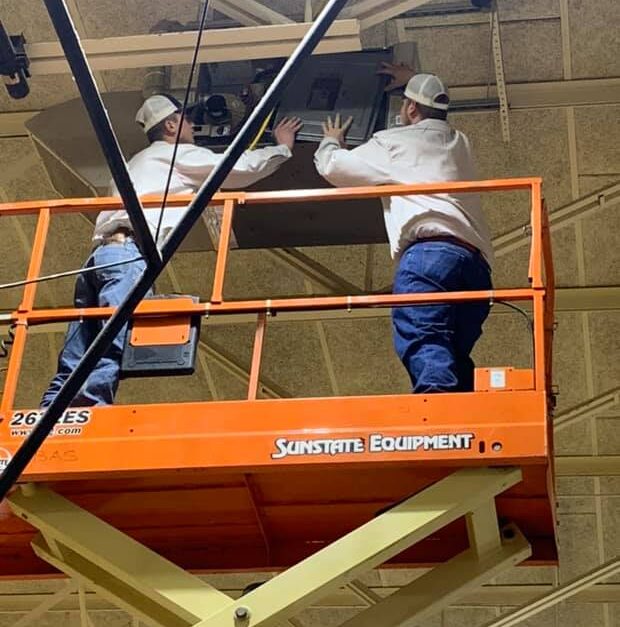
Trying to find AC Install near Buckholts?
Climate Control A/C & Heating looks after cooling, heating and the air indoors around the community.
Reach us at 512-446-4020 to start the conversation.
Summer Load – the Setting for Every Choice
Summers across Buckholts run long, hot and humid; a cooling system here logs far more running hours than one in a mild climate.
Damp air changes how a house feels at any given temperature; a cooling system dehumidifies only when the compressor is on and air is moving across the coil.
Right size, steady airflow and a clean coil explain much of how a house feels, even before anything breaks.
Inside an Air Conditioner – Heat Moves, Cold Is Not Made
A central air conditioner is a heat mover, not a cold maker; warmth is absorbed in one coil and released in another.
Inside the house, the evaporator coil does the absorbing, and the condensing unit in the yard completes the loop by getting rid of the heat.
Starting and stopping thousands of times a season is hard on switches and capacitors, which is why a quick diagnosis matters before anyone talks about replacement.
Service Calls in Hot Weather – Sorting Symptoms From Causes
A proper air conditioning repair sorts the symptom from the cause before anything is replaced; the same warm room can come from a dead capacitor, a frozen coil or a leak.
When the outdoor fan hums but will not spin, a capacitor is often the reason, though a part that failed once can point to heat or a loose connection that needs attention.
Frost on the indoor coil or the copper line is a warning sign, not a cooling success, and the cause may be as simple as a clogged filter or as involved as a leak.
Refrigerant is not a consumable that needs topping off every season, and adding more without finding the leak only delays the same problem.
Algae and debris plug the drain, and many systems have a float switch that stops the cooling, though a stopped system after heavy use is a good moment to check it.
Symptoms Worth Noticing: Spotting Problems Early
Air conditioners seldom quit without hints along the way; the list below covers what owners tend to notice:
- Uneven temperatures from room to room while the system runs nonstop.
- Loud banging when the compressor starts, whether or not the cooling seems to work.
- A system that turns on and off in short cycles; parts wear faster.
- Damp spots on the ceiling below the indoor cabinet, often tracing back to the drain line.
Routine Care: Habits That Pay Off Later
Air conditioning maintenance keeps dust, grime and wear from piling up unseen, with attention paid to coils, drains, belts and wiring.
Changing the filter on schedule protects the coil, the blower and the ductwork, and how often it needs changing depends on the filter type, pets and the season.
Dirt on the condenser makes the compressor run hotter, so that coil gets cleaned too, and reading the numbers shows whether anything is drifting out of range.
When Replacement Makes Sense – a Decision Worth Making Carefully
The conversation about replacement starts when age, condition and comfort all point the same way, with the condition of the compressor and coils weighing heavily.
Older equipment may use a refrigerant that has been phased out of new production; current equipment follows the refrigerant rules in force today.
Newer cooling equipment is generally more efficient than older models, and comfort improves along with the numbers.
Planning a New Installation: Where Good Results Begin
AC install work succeeds or fails on sizing and airflow before any equipment is delivered; windows, attic insulation and ductwork all change the answer.
Oversizing is a common mistake, and it wears out parts through constant starting, and a proper calculation avoids both extremes.
The indoor and outdoor parts have to match each other and the ductwork, and the installer verifies airflow and charge before leaving the job.
Ductwork Matters – What Hides Above the Ceiling
A duct system is the network of channels that carry conditioned air to every room and returns it for re-cooling, and leaks, bad bends and poor insulation waste a large share of the effort.
Attic duct work in Texas sees extreme heat, so insulation and tight seams earn their keep; return air paths deserve the same attention as the supply side.
When Ducts Need Attention: Realistic Expectations
Cleaning the ducts means pulling loose material out with agitation tools and a strong vacuum; a house with no such history may not need it often.
Cleaning pays off only when the source of the dirt is also addressed, and a careful provider will show the owner what was found inside.
Heat Pumps: How the Technology Works
A heat pump is an air conditioner that can run backward to warm the house, and that makes them efficient in climates with mild winters.
A heat pump may call on backup heat during a hard freeze or while defrosting its coil, and a system that runs strips constantly deserves a diagnostic visit.
Furnace Basics: How a Furnace Heats a House
Inside a gas furnace, a burner lights, a heat exchanger warms up and the blower pushes air across it; the flue and combustion air must be clear for safe operation.
Combustion appliances produce carbon monoxide, which is why detectors and clear vents matter; never ignore an alarm or a smell of gas.
Electric Furnaces and Air Handlers: What to Expect From It
Electric heating systems have no burner, no flue and no combustion byproducts; troubleshooting centers on power, controls and the blower motor.
Homes with strip heat often see bigger winter bills than homes with efficient heat pumps; the decision rests on the building, not just the equipment.
Heating Systems of Every Type – Test Before You Need It
Heating season in this part of Texas is brief, with sudden swings between warm days and freezing nights, which is why heating services are well scheduled in fall.
Heating services cover igniters and burners on gas units, reversing valves on heat pumps and elements on electric ones, which keeps the work simple to explain and easy to follow.
Heating With Water: Found in Older and Larger Buildings
A boiler warms water in a closed loop, and pumps circulate it to the rooms, and they are less common in Texas than furnaces and heat pumps.
Service on boiler systems covers the burner, the water pressure, the circulator pump, the expansion tank and the safety relief valve, and bleeding air from the loops is a routine task.
The Air Inside Your Walls – the Part You Cannot See
Good indoor air quality means controlling particles, humidity, fresh air and sources of contamination; allergy seasons put extra load on filters and ducts.
MERV numbers describe how fine a filter catches, and the right one balances capture with airflow; humidity control prevents the conditions mold needs.
Larger buildings circulate air through central equipment, so one fault can reach every room, which is why commercial properties usually benefit from regular service visits.
Choosing an Air Cleaner: What the Labels Mean
Purifiers remove particles or gases from the air, and they come as whole-home units or portable room models; any claims about performance should be checked against the specification.
Good results come from a purifier chosen to complement the rest of the system, and a conversation about the whole house usually comes first.
Light and Mist Treatments: Where They Fit
Ultraviolet lamps near the coil are meant to keep it cleaner by discouraging growth on damp surfaces, and a technician can explain which kind fits a given air handler.
An antimicrobial mist is sprayed or fogged onto surfaces inside the system or the building, and ventilation and occupant safety are part of the process.
Fresh Air and Exhaust – Not Too Much, Not Too Little
Ventilating a building means replacing stale indoor air with fresh outdoor air in a controlled way, which is where design and service make a real difference.
Ductwork that dumps moisture into an attic can create damage far from the source, and the same attention applies to the whole building.
Cooling for Shops, Offices and Buildings – Equipment Built for Heavier Duty
Commercial air conditioning system designs range from rooftop packages to split systems and multi-zone setups, and when it fails the business feels it quickly.
Coil cleaning, belt checks and economizer inspections are part of keeping commercial equipment dependable; planning a changeout around business hours limits disruption.
Chiller Systems for Larger Buildings: Where They Make Sense
A chiller is a large refrigeration machine that chills water for use in many spaces; the equipment is larger, more complex and more closely monitored.
Coolers, Freezers and Ice Machines: Walk-Ins, Reach-Ins and More
Refrigeration service covers walk-in coolers, reach-in units, freezers, display cases and ice machines, which is why restaurants and stores plan service ahead of busy seasons.
How Climate Control A/C & Heating Approaches AC Install throughout Buckholts
A good service call begins with listening to what the owner has noticed, followed by an explanation of what was found and what the choices are.
The owner hears what needs to happen now, what can wait and what is optional; good service depends on trust running both ways.
Ready When You Are
Dial 512-446-4020 to book a technician or get a straight answer.
A Last Word: Comfort Is a System
Interest in AC Install often starts with a problem, and the solution starts with a clear diagnosis, with Climate Control A/C & Heating at 512-446-4020 to start the conversation.