
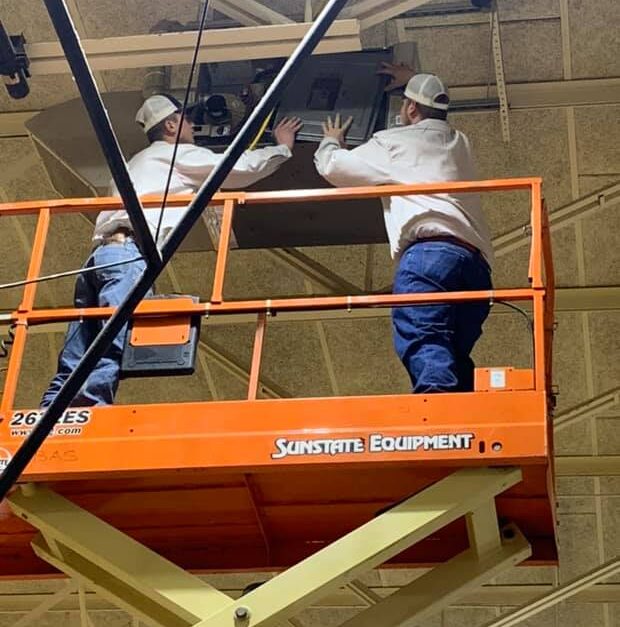
Shopping around for AC Replacement in Buckholts?
Climate Control A/C & Heating supports cooling, heating and the air indoors around the community.
Dial 512-446-4020 to describe what your equipment is doing.
A Hot, Wet Climate: Why Equipment Works Hard Here
A Buckholts summer stacks hot afternoon after hot afternoon; a cooling system here logs far more running hours than one in a mild climate.
Moisture in the air matters as much as the thermometer reading; the indoor coil acts as the dehumidifier, collecting water that leaves through a drain line.
Proper equipment size, good airflow and clean surfaces separate a comfortable house from a clammy one, whatever the label on the box promises.
How Air Conditioning Works: the Basics Worth Knowing
A central air conditioner is a heat mover, not a cold maker; a sealed loop of refrigerant absorbs heat at one point and releases it at another.
The indoor coil is where the cooling happens, and the condensing unit in the yard completes the loop by getting rid of the heat.
Wear tends to show up in the electrical components before the big mechanical ones, and the larger parts usually go on to last much longer.
Diagnosing a Weak Cooling System: a Look at Common Failures
Air conditioning repair begins with finding out why the system quit, not with swapping parts; weak cooling is a symptom that many separate faults share.
A tripped breaker, a failed capacitor or a worn contactor keeps the outdoor unit from starting, and these are among the quicker repairs when the technician has the part.
Ice on the lines almost always means too little air or too little refrigerant, and running the system while it is frozen can damage the compressor.
Refrigerant is not a consumable that needs topping off every season, and the leak is the thing that has to be found and dealt with.
Clogged condensate drains are a quiet cause of water stains and shutdowns, and a flush of the line during regular service often prevents the problem.
Clues Your System Is Struggling: Small Changes, Big Hints
Most breakdowns announce themselves with small changes in behavior, and every item below is a reason to schedule a visit:
- Supply air that feels weak or lukewarm though the unit sounds normal.
- A hissing noise near the refrigerant lines, often getting louder from one week to the next.
- A system that turns on and off in short cycles; parts wear faster.
- Pooling water under the furnace or air handler, which deserves a look before damage spreads.
Tune-Ups for Cooling Gear – the Work Behind Reliable Comfort
AC maintenance is a set of simple, repeatable tasks that keep a cooling system efficient, and the work centers on airflow, cleanliness and electrical health.
Dirty filters are the single easiest thing for an owner to handle, and a quick check each month is a good habit through the summer.
The visit usually includes the condenser coil, the evaporator coil and a flush of the drain line; the report reflects measurements rather than guesses.
Repair or Replace: Weighing the Options Honestly
Air conditioning equipment reaches a point where a new system makes more sense than another fix; the decision belongs to the owner, who deserves the facts.
A system built around a retired refrigerant can be a poor candidate for major repairs; matching parts and refrigerant correctly keeps the whole loop reliable.
Newer cooling equipment is generally more efficient than older models; the benefit grows in houses that rely on cooling much of the year.
Choosing Capacity – a Calculation, Not a Guess
Choosing equipment for an AC install means working out how much heat the structure gains, which is why square footage alone is a poor guide.
Equipment that is too big runs in bursts, which hurts comfort and efficiency alike; one that is too small never reaches the setpoint on the hottest days.
A complete installation pairs the condenser, the coil and the air handler as one system; commissioning measurements confirm that the system performs as designed.
The Hidden Network in the Walls and Attic: Moving Air Efficiently
Good duct work delivers the right amount of air to each room and brings it back again; undersized trunks, kinked runs and open seams all choke the flow.
Attic duct work in Texas sees extreme heat, so insulation and tight seams earn their keep; return air paths deserve the same attention as the supply side.
Clearing Out the Channels: Worth Doing at the Right Time
Air passages collect dust, and duct cleaning is the way to clear it from the inside, and it makes the most sense after a renovation, a pest problem or visible contamination.
Filtering, sealing and cleaning form one plan, not three separate jobs; ask to see before-and-after photos of the work.
Heat Pump Basics – Efficient Most of the Year
The reversing valve is what lets heat pumps switch between cooling and heating; in Texas, cold snaps are short, so a heat pump covers most of the heating season.
A heat pump may call on backup heat during a hard freeze or while defrosting its coil, and a system that runs strips constantly deserves a diagnostic visit.
Gas Furnaces: How a Furnace Heats a House
Gas furnaces rely on an igniter, a flame sensor and a gas valve working in sequence, and the sequence is why furnaces need testing before cold weather.
The annual furnace check is also a safety check on combustion and exhaust, and a detector near the sleeping areas gives early warning.
Electric Furnaces and Air Handlers: Simple Equipment, Steady Output
Electric heat uses sequenced elements, relays and limit switches to warm the house; the electrical safety devices do the most important work.
The trade-off with electric heat is simple equipment against higher running use, particularly where cold stretches are brief.
Warmth When the Front Arrives: What to Do Before the First Freeze
Heating season in this part of Texas is brief, with sudden swings between warm days and freezing nights, and a test on a mild day beats a surprise on a freezing one.
Furnaces, heat pumps and electric air handlers all heat homes, and each has its own checkup list; the common thread is clean air passages and a blower that moves enough air.
Boilers: How Hydronic Systems Differ
Boiler systems appear in older buildings, larger properties and some commercial spaces, and they are less common in Texas than furnaces and heat pumps.
A boiler tune-up checks combustion, water level, pressure and the controls that keep it safe; water damage can grow quickly.
What You Breathe at Home: Beyond Temperature and Humidity
Good indoor air quality means controlling particles, humidity, fresh air and sources of contamination, and cleaner air depends on filtration, ventilation and moisture control working together.
MERV numbers describe how fine a filter catches, and the right one balances capture with airflow; a deeper media cabinet gives better filtering with less restriction.
Commercial air quality depends on ventilation rates, filtration and the upkeep of rooftop equipment, and a maintenance plan fits the building's size and hours.
Choosing an Air Cleaner: Sorting Fact From Marketing
Air purifiers range from a stand-alone machine in one room to a unit tied into the ductwork, and ozone-producing models are better avoided in occupied rooms.
Good results come from a purifier chosen to complement the rest of the system, which is why one device rarely fits every home.
UV Lights and Antimicrobial Mist: Understanding the Options
A UV lamp does not clean the air passing by, but it treats the surfaces it can see, and results depend on placement, dose and the lamp type.
An antimicrobial mist is sprayed or fogged onto surfaces inside the system or the building, and ventilation and occupant safety are part of the process.
Fresh Air and Exhaust – Not Too Much, Not Too Little
Ventilating a building means replacing stale indoor air with fresh outdoor air in a controlled way; the cooling equipment has to be sized to handle the fresh air coming in.
Attic ventilation is a separate matter, but it affects how hard the cooling system works; the equipment, the envelope and the airflow work as a team.
Commercial Cooling – Planning Around the Business
Shops, restaurants, offices and churches often rely on rooftop equipment that serves a zone of the building; planned maintenance keeps surprises to a minimum.
Condensate drains on rooftops clog with debris, and the water can stain ceilings below, and a technician can map out options on site.
Chiller Systems for Larger Buildings: How They Differ From Packaged Units
A chiller is a large refrigeration machine that chills water for use in many spaces; air-cooled and water-cooled designs differ in how they reject heat.
Coolers, Freezers and Ice Machines – Equipment With Little Room for Error
Businesses that sell or store food depend on refrigeration service to hold safe temperatures; regular cleaning of condenser coils matters even more than in comfort cooling.
How Climate Control A/C & Heating Works Through AC Replacement near Buckholts
Conversation comes first, because the owner knows the symptoms better than anyone, then examines the equipment and measures what can be measured.
Options are laid out clearly, with the reasons behind each recommendation, and questions are welcome at every stage.
Comfort Is a Phone Call Away
Dial 512-446-4020 to schedule service or ask what makes sense for your building.
Bringing It Home – Equipment, Airflow and Air Quality
From AC Replacement to routine upkeep, good outcomes come from understanding the equipment and caring for it, with Climate Control A/C & Heating at 512-446-4020 to start the conversation.