
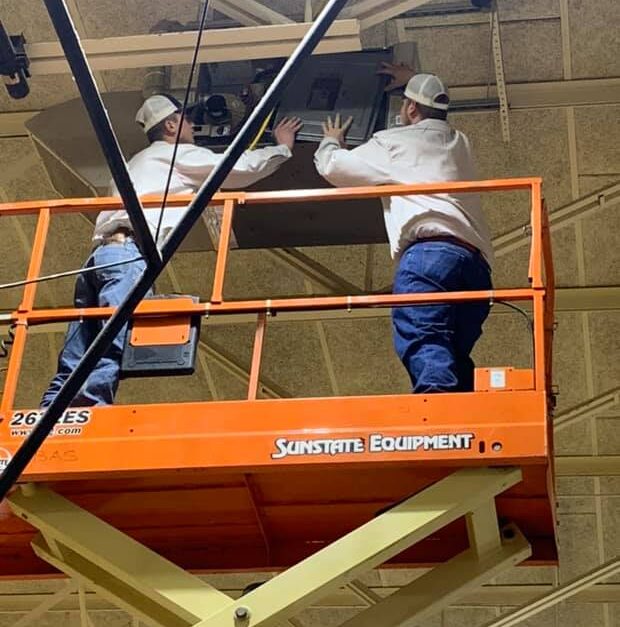
Looking for AC Replacement in Cameron?
Climate Control A/C & Heating takes on climate equipment for homes and businesses around the community.
Reach us at 512-446-4020 to talk it through.
The Cooling Season – Built for a Long Haul
A Cameron summer stacks hot afternoon after hot afternoon, and the equipment that carries the load is working harder than its owner tends to notice.
Damp air changes how a house feels at any given temperature; a cooling system dehumidifies only when the compressor is on and air is moving across the coil.
Right sizing, steady airflow and a clean coil therefore decide how a house feels, whatever the label on the box promises.
How Air Conditioning Works: the Basics Worth Knowing
Air conditioning is the business of relocating heat; warmth is absorbed in one coil and released in another.
Warm indoor air passes over a cold coil in the air handler or furnace cabinet; the outdoor cabinet houses the compressor, the condenser coil and a fan.
Parts that wear out fastest are usually the small electrical ones; a failed capacitor is often a small repair rather than the end of the system.
Service Calls in Hot Weather – Sorting Symptoms From Causes
A proper air conditioning repair sorts the symptom from the cause before anything is replaced, and a house that is warm may have an electrical fault, an airflow problem or a refrigerant problem.
A tripped breaker, a failed capacitor or a worn contactor keeps the outdoor unit from starting, and they usually repair cleanly because the parts are small.
Ice building up near the air handler tells a technician where to look; shutting the cooling off is the safest response until someone inspects it.
Low refrigerant means a leak, because the charge stays put when the loop is tight; a responsible repair locates the leak instead of simply adding more.
Condensate has to leave the house, so a blocked line sends it somewhere less welcome, and a flush of the line during regular service often prevents the problem.
Symptoms Worth Noticing – Before a Breakdown
Cooling equipment usually gives notice before it fails outright, and every item below is a reason to schedule a visit:
- Some rooms that never cool down even though the blower sounds normal.
- A burning smell from the vents, especially when the weather is hot.
- Constant starting and stopping through the afternoon, along with a higher electric bill.
- Musty smells when the blower starts, particularly after long runs.
Tune-Ups for Cooling Gear: Habits That Pay Off Later
Regular AC maintenance trims the chance of a breakdown during the hottest week; the checklist stays short enough to repeat every season.
Dirty filters are the single easiest thing for an owner to handle, which is a quick job that helps the entire system.
A technician cleans or inspects the outdoor coil, the indoor coil and the condensate drain; the report reflects measurements rather than guesses.
Repair or Replace – a Decision Worth Making Carefully
An old unit that needs repair after repair may be a candidate for AC replacement, and a good evaluation lays out repair and replacement side by side.
Older equipment may use a refrigerant that has been phased out of new production, and that can tip a close decision toward replacement.
Efficiency has improved steadily, and a modern system can use noticeably less electricity, and in a long cooling season those savings add up.
Planning a New Installation: Where Good Results Begin
Choosing equipment for an AC install means working out how much heat the structure gains, which is why square footage alone is a poor guide.
Too much capacity leads to short cycling, uneven rooms and a clammy feel, and a unit that is too small runs constantly without catching up.
Every connection, from the refrigerant lines to the thermostat wire, gets sized and routed with care, and the installer verifies airflow and charge before leaving the job.
Ducts: the Lungs of the House
Duct work moves the air that the equipment has cooled or heated, so its design shapes every room; a house with comfort problems deserves a look at its air paths.
Runs through an unconditioned attic or crawl space gain heat or lose chill unless sealed and wrapped; return air paths deserve the same attention as the supply side.
Dust, Debris and Ductwork: Realistic Expectations
Cleaning the ducts means pulling loose material out with agitation tools and a strong vacuum; cleaning is not a substitute for fixing leaks or changing filters.
Cleaning pays off only when the source of the dirt is also addressed, and be cautious of anyone who promises that cleaning will cure every problem.
The Two-Way Heat Mover: Strengths and Limits
A heat pump is an air conditioner that can run backward to warm the house, and one system handles both seasons with a single set of equipment.
Auxiliary heat strips back up the heat pump on the coldest mornings, and a system that runs strips constantly deserves a diagnostic visit.
Gas Furnaces: How a Furnace Heats a House
Gas furnaces burn natural gas or propane in a burner and pass the heat through a heat exchanger; the flue and combustion air must be clear for safe operation.
Carbon monoxide detectors belong in any home with fuel-burning equipment, and the furnace check is well timed before the first cold front arrives.
Electric Furnaces and Air Handlers: What to Expect From It
Electric heat uses sequenced elements, relays and limit switches to warm the house; the electrical safety devices do the most important work.
Compared with a heat pump, strips and electric furnaces draw heavily for the heat they make; the choice depends on what fuel is available at the property.
Heating Systems of Every Type: Planning for Sudden Cold
A hard freeze can arrive with little warning, so heating equipment needs to be ready before it is called on, which is why heating services are well scheduled in fall.
A heating service call looks at the heat source, the blower, the filter, the thermostat and the airflow, and a technician adjusts the visit to the equipment on site.
Hot-Water Heating: Found in Older and Larger Buildings
Hydronic heating moves heat with water instead of air, which makes for quiet, even warmth; the region mostly uses forced air, so boilers are the exception.
The relief valve and low-water cutoff protect a boiler, so they get tested during service; leaks near joints deserve prompt attention.
Indoor Air Quality: Beyond Temperature and Humidity
Residential air quality is shaped by dust, pet dander, cooking fumes, cleaning products and moisture, which makes the HVAC system the natural place to improve air quality.
A better filter helps only if the blower can pull air through it without strain, and sealing return leaks keeps unfiltered air from sneaking around the filter.
Larger buildings circulate air through central equipment, so one fault can reach every room, and employee and customer comfort both depend on it.
Purifiers – Whole-Home or Single Room
Some purifiers capture particles with high-efficiency filters, and others target odors with carbon; any claims about performance should be checked against the specification.
A purifier works alongside good ventilation and a clean system, not in place of them; a technician looks at the system before recommending a device.
Add-On Air Treatments: Understanding the Options
UV lights install in the air handler and shine on the indoor coil and drain pan to limit microbial growth; bulbs lose strength over time and need changing.
Antimicrobial mist is a liquid treatment applied to coils, ducts or surfaces to discourage growth; the label for the product spells out how it is to be used.
Bringing Outdoor Air In: Balance in a Humid Climate
Bath fans, kitchen hoods and outdoor air intakes are all part of ventilating a modern building; an energy recovery ventilator can trade heat and moisture between the two airstreams.
Ductwork that dumps moisture into an attic can create damage far from the source; improvements can start with simple, low-effort fixes.
Cooling for Shops, Offices and Buildings – Equipment Built for Heavier Duty
Commercial air conditioning system designs range from rooftop packages to split systems and multi-zone setups, and filters, belts, coils and drains are the usual checklist items.
Condensate drains on rooftops clog with debris, and the water can stain ceilings below, and a technician can map out options on site.
Central Plant Equipment – Big Buildings, Big Loads
Instead of cooling air directly, chiller systems cool a water loop that serves coils across the property; the equipment is larger, more complex and more closely monitored.
Cold Storage Equipment: What Service Involves
Businesses that sell or store food depend on refrigeration service to hold safe temperatures; frost buildup, warm product and constant running all point to trouble.
How Climate Control A/C & Heating Works Through AC Replacement around Cameron
A good service call begins with listening to what the owner has noticed, then examines the equipment and measures what can be measured.
Options are laid out clearly, with the reasons behind each recommendation; nothing starts without a clear understanding.
Start With a Conversation
Dial 512-446-4020 to schedule service or ask what makes sense for your building.
Closing Thoughts – Equipment, Airflow and Air Quality
Equipment, ducts and air quality are connected, so a question about AC Replacement is rarely a stand-alone one, and Climate Control A/C & Heating is ready to help with it.