
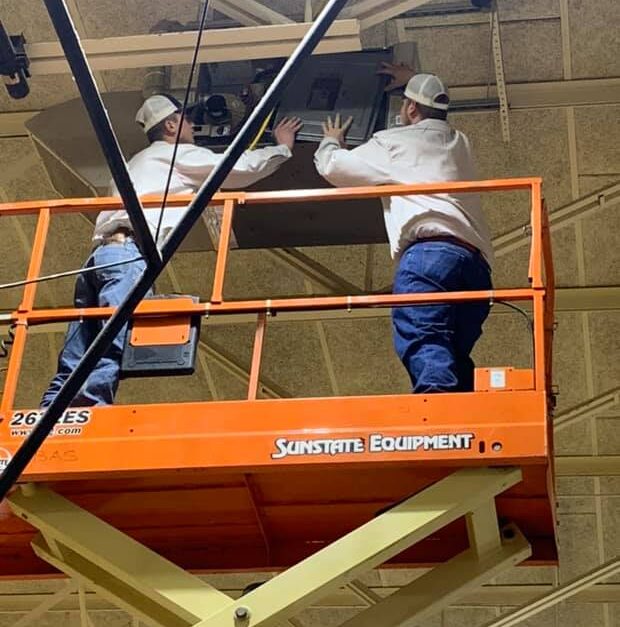
Trying to find Ventilating throughout Burlington?
Climate Control A/C & Heating takes on heating, cooling and indoor comfort in the surrounding towns.
Call 512-446-4020 to start the conversation.
The Cooling Season: Local Conditions Come First
A Burlington summer stacks hot afternoon after hot afternoon, and the equipment that carries the load is working harder than its owner tends to notice.
Water vapor rides along with the heat on a muggy afternoon; an air conditioner pulls it out as a side effect of cooling, but only while it is actually running.
Right sizing, steady airflow and a clean coil therefore decide how a house feels, even before anything breaks.
Moving Heat Outdoors: What Each Piece Does
An air conditioner does not create cold; it collects heat inside the house and dumps it into the outdoor air.
The indoor coil is where the cooling happens, and the outdoor unit holds the compressor and condenser coil that push that heat away.
The contactor, the capacitor and the motors take a beating in hot weather; a failed capacitor is often a small repair rather than the end of the system.
Diagnosing a Weak Cooling System – Finding the Real Cause
A thorough air conditioning repair starts with a diagnosis rather than a hunch, and a house that is warm may have an electrical fault, an airflow problem or a refrigerant problem.
A tripped breaker, a failed capacitor or a worn contactor keeps the outdoor unit from starting; the diagnosis comes before any decision about a bigger job.
Ice building up near the air handler tells a technician where to look; the coil needs to thaw completely before anyone can measure what is going on.
The charge in a cooling system is fixed, so a shortage points to escape, which is why measuring pressures and temperatures matters more than adding gas.
A blocked drain line can back water into the pan and trip a safety switch, and a flush of the line during regular service often prevents the problem.
Symptoms Worth Noticing: Spotting Problems Early
Cooling equipment usually gives notice before it fails outright, and the following signs are worth acting on:
- Rooms that stay warm even though the blower sounds normal.
- A buzzing or clicking sound at startup, whether or not the cooling seems to work.
- Repeated short runs that never finish a cooling cycle, with indoor humidity climbing.
- Damp spots on the ceiling below the indoor cabinet, which deserves a look before damage spreads.
Keeping Equipment Healthy – the Work Behind Reliable Comfort
AC maintenance is a set of simple, repeatable tasks that keep a cooling system efficient, and the work centers on airflow, cleanliness and electrical health.
Filters catch the dust that would otherwise coat the indoor coil; homes with pets, dust or a constant run schedule need fresh filters more often.
Heat flows through each of the coils, and each one loses capacity when it collects dirt; capacitors, contactors, wiring and motor amperage get checked as well.
Repair or Replace: Weighing the Options Honestly
AC replacement becomes a real question when a system is old, repeatedly broken or hard to keep comfortable; the right answer differs from one house to the next.
The refrigerant a system uses is worth asking about when a repair involves the sealed loop, which is another reason to get a clear diagnosis before deciding.
Efficiency numbers on new equipment, such as SEER2, give a way to compare models fairly; the benefit grows in houses that rely on cooling much of the year.
Choosing Capacity: Where Good Results Begin
Air conditioning install quality depends on matching capacity to what the building actually needs; orientation and shading matter as much as floor area.
Oversizing is a common mistake, and it wears out parts through constant starting; careful sizing protects comfort and the equipment.
A complete installation pairs the condenser, the coil and the air handler as one system; the owner then gets a walk-through of the thermostat and the filter.
Ductwork Matters: the Lungs of the House
A duct system is the network of channels that carry conditioned air to every room and returns it for re-cooling, and a unit can be fine while the ducts hold the whole system back.
A long flexible run through a hot attic needs support, sealing and good insulation, and a technician can often find the leaks with a pressure test.
Dust, Debris and Ductwork: What It Can and Cannot Do
Air passages collect dust, and duct cleaning is the way to clear it from the inside, and it makes the most sense after a renovation, a pest problem or visible contamination.
Dirt returns quickly if the filter is poor or the returns leak unfiltered air; ask to see before-and-after photos of the work.
The Two-Way Heat Mover: Strengths and Limits
Instead of burning fuel, heat pumps pull warmth from outdoor air and carry it inside, and one system handles both seasons with a single set of equipment.
Auxiliary heat strips back up the heat pump on the coldest mornings, and a system that runs strips constantly deserves a diagnostic visit.
Gas Furnaces: Reliable Heat for Cold Fronts
The sequence in a gas furnace runs from thermostat call to draft fan, igniter, gas valve and flame proof, and a fault in any one step can stop the whole cycle.
Carbon monoxide detectors belong in any home with fuel-burning equipment, and a detector near the sleeping areas gives early warning.
Electric Furnaces and Air Handlers – Features and Trade-Offs
Electric heating systems warm the air with heating elements instead of a flame; troubleshooting centers on power, controls and the blower motor.
Compared with a heat pump, strips and electric furnaces draw heavily for the heat they make; the choice depends on what fuel is available at the property.
Heating Services – Reliable Heat on Demand
A norther can send temperatures tumbling, and heating systems that sat idle all summer must start right up, and a test on a mild day beats a surprise on a freezing one.
Furnaces, heat pumps and electric air handlers all heat homes, and each has its own checkup list, which keeps the work simple to explain and easy to follow.
Boilers – Radiators, Coils and Radiant Floors
A boiler warms water in a closed loop, and pumps circulate it to the rooms, but a building with a boiler needs service from someone who knows hydronics.
Pressure, temperature and flame quality are the numbers that matter in a boiler check; leaks near joints deserve prompt attention.
Indoor Air Quality: Starting With Facts
Air inside a home can carry particles, gases and moisture that the thermostat never shows, which makes the HVAC system the natural place to improve air quality.
Choosing a filter means balancing how much it removes against how much resistance it adds; the system and the filter are chosen together.
Businesses face their own air issues, from shared air handlers to customers coming and going all day, and employee and customer comfort both depend on it.
Filters, Purifiers and Their Limits – Useful, With Realistic Goals
Some purifiers capture particles with high-efficiency filters, and others target odors with carbon, and the right choice depends on what needs removing.
Equipment that cleans the air cannot make up for a dirty coil or a leaky return, and sizing matters here as much as anywhere.
Add-On Air Treatments: What They Do and What They Do Not
A UV lamp does not clean the air passing by, but it treats the surfaces it can see, and results depend on placement, dose and the lamp type.
Mist treatments use an approved solution applied by a technician in a controlled way; the product and method should be explained in advance.
Letting a Building Breathe: Why Tight Buildings Need It
Ventilating also removes moisture from kitchens and baths before it settles into the structure, and dampers, filters and controls keep the supply of fresh air in balance.
Exhaust fans that move air out of kitchens and baths should vent outdoors, not into the attic; the equipment, the envelope and the airflow work as a team.
Commercial AC Systems: Comfort That Supports the Work
Shops, restaurants, offices and churches often rely on rooftop equipment that serves a zone of the building, and filters, belts, coils and drains are the usual checklist items.
Coil cleaning, belt checks and economizer inspections are part of keeping commercial equipment dependable; a clear plan helps the business stay open.
Chilled Water Cooling: Where They Make Sense
Chiller systems cool water, and pumps carry the chilled water through pipes to air handlers throughout a building; air-cooled and water-cooled designs differ in how they reject heat.
Keeping Food and Product Cold: Temperature Is the Whole Job
Walk-in coolers rely on evaporators, condensing units, defrost systems and door seals working together; frost buildup, warm product and constant running all point to trouble.
How Climate Control A/C & Heating Works Through Ventilating near Burlington
The technician asks what changed, what is happening and how long it has been going on; readings replace guesses, and the findings are explained in plain language.
Honest advice separates the necessary from the optional; nothing starts without a clear understanding.
Comfort Is a Phone Call Away
Dial 512-446-4020 to line up service or learn what to expect.
Closing Thoughts – Keep Things Simple
Whether the need falls under Ventilating or elsewhere in the heating, cooling and air quality family, the same principles apply, with Climate Control A/C & Heating at 512-446-4020 to start the conversation.