
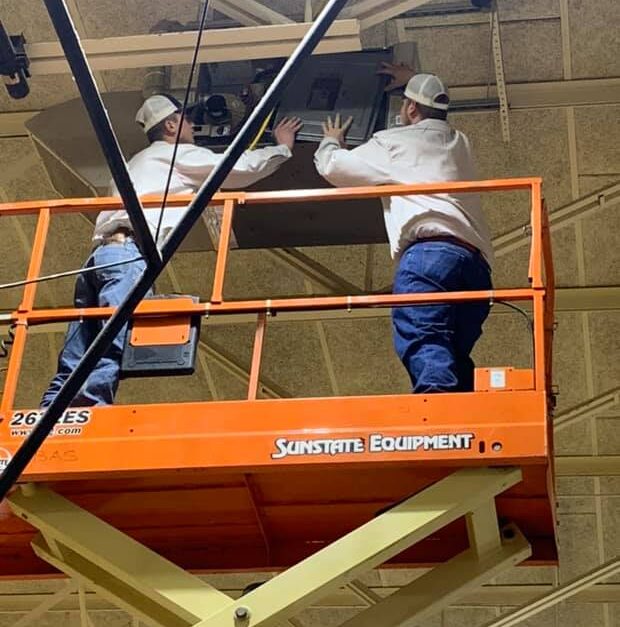
Shopping around for Commercial Air Conditioning System across Buckholts?
Climate Control A/C & Heating looks after heating, cooling and indoor comfort in the local area.
Call 512-446-4020 to start the conversation.
What Summer Asks of a System – Built for a Long Haul
The cooling season in Buckholts starts early and finishes late; a cooling system here logs far more running hours than one in a mild climate.
Sticky air can make a cool room feel uncomfortable, and removing it takes steady run time rather than quick bursts.
Proper equipment size, good airflow and clean surfaces separate a comfortable house from a clammy one, even before anything breaks.
How Air Conditioning Works – Heat Moves, Cold Is Not Made
An air conditioner does not create cold; the refrigerant carries heat out of the house and leaves the cool behind.
Inside the house, the evaporator coil does the absorbing; the outdoor cabinet houses the compressor, the condenser coil and a fan.
The contactor, the capacitor and the motors take a beating in hot weather, and the larger parts usually go on to last much longer.
Problems Behind a Warm House – Sorting Symptoms From Causes
Air conditioning repair begins with finding out why the system quit, not with swapping parts, and each of those causes needs a different fix.
When the outdoor fan hums but will not spin, a capacitor is often the reason, and these are among the quicker repairs when the technician has the part.
Frost on the indoor coil or the copper line is a warning sign, not a cooling success, and running the system while it is frozen can damage the compressor.
Refrigerant is sealed in a loop and does not get used up, and the leak is the thing that has to be found and dealt with.
Algae and debris plug the drain, and many systems have a float switch that stops the cooling, though a stopped system after heavy use is a good moment to check it.
Warning Signs – What Owners Notice First
A struggling cooling system leaves clues around the house; the list below covers what owners tend to notice:
- Uneven temperatures from room to room while the system runs nonstop.
- Grinding, squealing or rattling from the outdoor cabinet, often getting louder from one week to the next.
- An outdoor unit that starts and stops every few minutes, along with a higher electric bill.
- Condensation where there should be none, often tracing back to the drain line.
Regular Maintenance – the Work Behind Reliable Comfort
Scheduled air conditioning maintenance gives a technician a look at the system while it still works; the checklist stays short enough to repeat every season.
Dirty filters are the single easiest thing for an owner to handle; the label on the filter and the look of its surface are a reliable guide.
Coils, drain pans and drain lines all get attention during a complete tune-up, and reading the numbers shows whether anything is drifting out of range.
Repair or Replace: How Owners Decide
An old unit that needs repair after repair may be a candidate for AC replacement; the decision belongs to the owner, who deserves the facts.
Some older units run on refrigerant that is now scarce, which affects repair decisions; current equipment follows the refrigerant rules in force today.
Newer cooling equipment is generally more efficient than older models, and comfort improves along with the numbers.
Sizing and Setup: Where Good Results Begin
AC install work succeeds or fails on sizing and airflow before any equipment is delivered; orientation and shading matter as much as floor area.
Equipment that is too big runs in bursts, which hurts comfort and efficiency alike, and a unit that is too small runs constantly without catching up.
A complete installation pairs the condenser, the coil and the air handler as one system; the owner then gets a walk-through of the thermostat and the filter.
Duct System Basics: Sizing, Sealing and Insulation
Duct work moves the air that the equipment has cooled or heated, so its design shapes every room; undersized trunks, kinked runs and open seams all choke the flow.
Attic duct work in Texas sees extreme heat, so insulation and tight seams earn their keep; return air paths deserve the same attention as the supply side.
When Ducts Need Attention – Reasons and Limits
Duct cleaning removes dust and debris from the supply and return runs, the registers and the blower compartment, and it makes the most sense after a renovation, a pest problem or visible contamination.
Dirt returns quickly if the filter is poor or the returns leak unfiltered air, and a plain look inside the duct tells the real story.
Reversible Systems – Efficient Most of the Year
The reversing valve is what lets heat pumps switch between cooling and heating; in Texas, cold snaps are short, so a heat pump covers most of the heating season.
When outdoor temperatures fall far enough, electric strips or a furnace add the missing warmth; watch for unusually high bills as a hint.
Heating With Gas – Parts, Safety and Service
The sequence in a gas furnace runs from thermostat call to draft fan, igniter, gas valve and flame proof; a cracked heat exchanger is a safety issue that calls for a prompt professional look.
Safe furnace operation depends on clear venting and working carbon monoxide alarms; never ignore an alarm or a smell of gas.
Electric Furnaces and Air Handlers – Where It Fits Best
An electric furnace passes air over banks of resistance elements that glow when energized, which keeps the mechanical side straightforward.
Resistance heat converts every unit of power to heat, while a heat pump moves several units for each one consumed, particularly where cold stretches are brief.
Heating Services – Test Before You Need It
Heating season in this part of Texas is brief, with sudden swings between warm days and freezing nights; heating systems are better checked before they are needed.
Heating services cover igniters and burners on gas units, reversing valves on heat pumps and elements on electric ones, and the safety controls get tested along with the comfort ones.
Boilers: Less Common, Still Important
A boiler warms water in a closed loop, and pumps circulate it to the rooms, and they are less common in Texas than furnaces and heat pumps.
A boiler tune-up checks combustion, water level, pressure and the controls that keep it safe, and annual attention keeps these systems running quietly.
The Air Inside Your Walls – Sources, Symptoms and Solutions
The air in a house mixes outdoor pollen, indoor dust and chemicals from everyday products; the equipment that moves air is also the equipment that carries the contaminants.
A better filter helps only if the blower can pull air through it without strain; humidity control prevents the conditions mold needs.
Businesses face their own air issues, from shared air handlers to customers coming and going all day; ventilation rules for occupied spaces set a baseline.
Filters, Purifiers and Their Limits: Matching the Tool to the Problem
Purifiers vary widely, from simple filters to units combining filtration, carbon and other methods, and the right choice depends on what needs removing.
Good results come from a purifier chosen to complement the rest of the system, and sizing matters here as much as anywhere.
Light and Mist Treatments: What They Do and What They Do Not
UV lights are a common add-on in humid climates, where the evaporator coil stays wet for months, and results depend on placement, dose and the lamp type.
Treatments with antimicrobial mist are used after cleaning, when surfaces are dry and accessible; the label for the product spells out how it is to be used.
Letting a Building Breathe – Not Too Much, Not Too Little
Ventilating also removes moisture from kitchens and baths before it settles into the structure; an energy recovery ventilator can trade heat and moisture between the two airstreams.
Good attic airflow lowers the heat that leaks down into the living space, and a technician who looks at the surroundings sees more than the unit alone.
Keeping a Workplace Comfortable: From Rooftop Units to Split Systems
Commercial air conditioning system designs range from rooftop packages to split systems and multi-zone setups, and when it fails the business feels it quickly.
Condensate drains on rooftops clog with debris, and the water can stain ceilings below; planning a changeout around business hours limits disruption.
Chillers: Parts and Service Needs
Chiller systems cool water, and pumps carry the chilled water through pipes to air handlers throughout a building, and water treatment, tube cleaning and refrigerant checks are routine tasks.
Keeping Food and Product Cold: Temperature Is the Whole Job
A refrigeration problem is often found in the condenser, the defrost control or a worn door gasket, and food safety rules set limits that equipment must keep.
How Climate Control A/C & Heating Approaches Commercial Air Conditioning System throughout Buckholts
A good service call begins with listening to what the owner has noticed, then examines the equipment and measures what can be measured.
Recommendations come with explanations, so choices rest on information rather than pressure; nothing starts without a clear understanding.
Questions About Your System Are Welcome
Contact us at 512-446-4020 to set up a visit or talk through your options.
Closing Thoughts: Small Habits, Big Difference
Searching for Commercial Air Conditioning System in Buckholts usually leads to the same few questions about size, age, airflow and care; reach Climate Control A/C & Heating at 512-446-4020 when you are ready.