
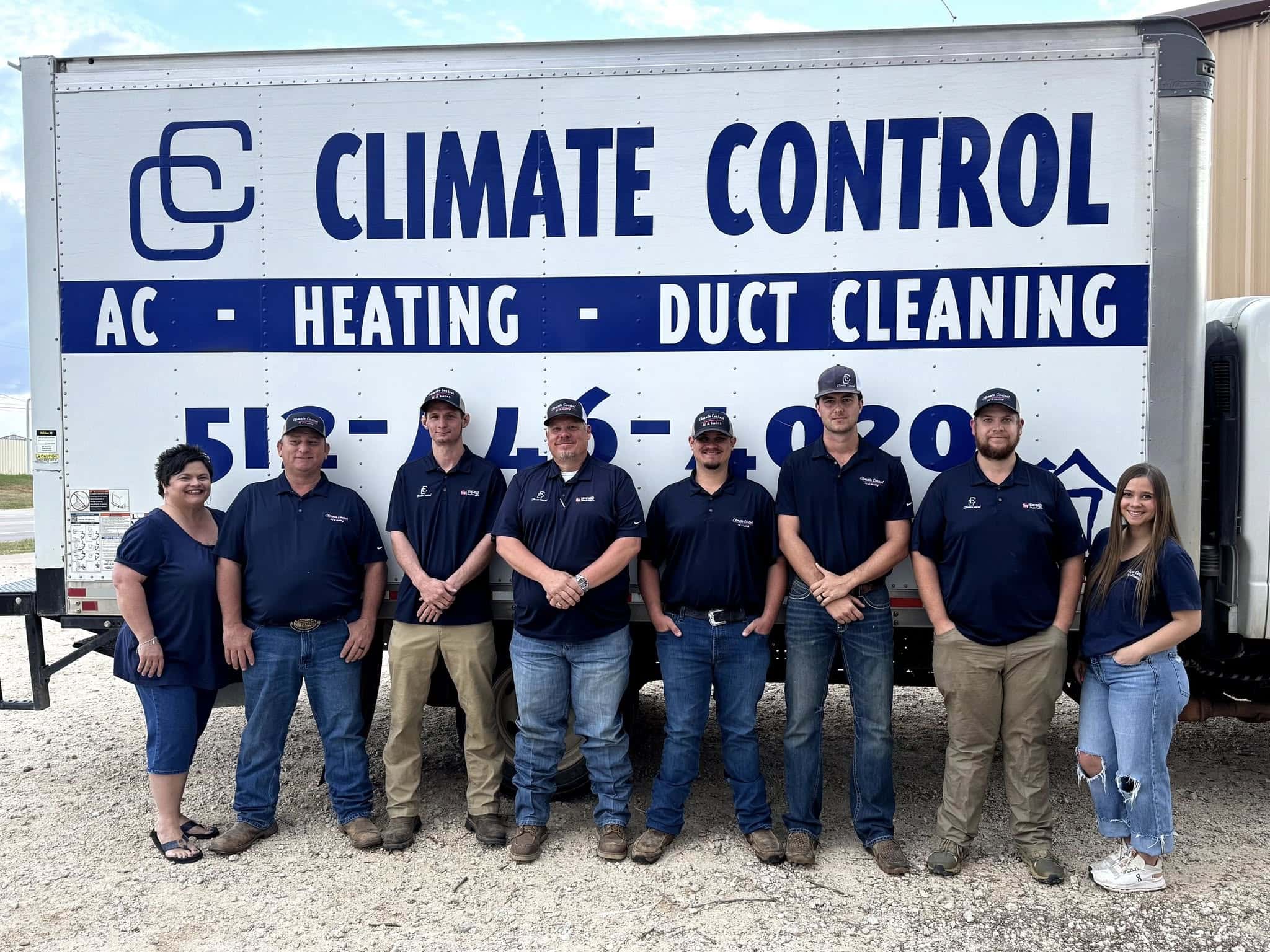
In need of Residential Air Quality throughout Milam County?
Climate Control A/C & Heating takes on comfort equipment of every kind close to home.
Reach us at 512-446-4020 to describe what your equipment is doing.
The Cooling Season – the Setting for Every Choice
Warm weather in Milam County stretches across much of the calendar, and the equipment that carries the load is working harder than its owner tends to notice.
Damp air changes how a house feels at any given temperature; the indoor coil acts as the dehumidifier, collecting water that leaves through a drain line.
Capacity, airflow and cleanliness work together, and a weakness in one shows up as a house that never feels quite right, regardless of which brand is on the cabinet.
The Refrigerant Cycle – Parts and Their Jobs
An air conditioner does not create cold; warmth is absorbed in one coil and released in another.
The indoor coil is where the cooling happens, with the compressor outside squeezing the refrigerant so the heat can leave.
Starting and stopping thousands of times a season is hard on switches and capacitors; a failed capacitor is often a small repair rather than the end of the system.
Diagnosing a Weak Cooling System – Sorting Symptoms From Causes
Air conditioning repair begins with finding out why the system quit, not with swapping parts; weak cooling is a symptom that many separate faults share.
A tripped breaker, a failed capacitor or a worn contactor keeps the outdoor unit from starting, though a part that failed once can point to heat or a loose connection that needs attention.
Ice building up near the air handler tells a technician where to look, and running the system while it is frozen can damage the compressor.
A properly working system keeps its charge for good, since nothing burns it off, and adding more without finding the leak only delays the same problem.
Algae and debris plug the drain, and many systems have a float switch that stops the cooling, and the fix is usually quick once the blockage is found.
When to Call for Service – What Owners Notice First
Air conditioners seldom quit without hints along the way; the list below covers what owners tend to notice:
- Supply air that feels weak or lukewarm while the system runs nonstop.
- A buzzing or clicking sound at startup, often getting louder from one week to the next.
- Repeated short runs that never finish a cooling cycle, leaving the indoor air damp.
- Condensation where there should be none, particularly after long runs.
Preventive Service: Habits That Pay Off Later
Air conditioning maintenance keeps dust, grime and wear from piling up unseen; the checklist stays short enough to repeat every season.
Dirty filters are the single easiest thing for an owner to handle, and how often it needs changing depends on the filter type, pets and the season.
Dirt on the condenser makes the compressor run hotter, so that coil gets cleaned too; capacitors, contactors, wiring and motor amperage get checked as well.
Aging Equipment: Weighing the Options Honestly
Air conditioning equipment reaches a point where a new system makes more sense than another fix; the right answer differs from one house to the next.
Refrigerant types have changed over time, so older systems may use one that is hard to find, which is another reason to get a clear diagnosis before deciding.
Today's units move the same heat with less power than equipment from a generation ago; replacement can pay back in comfort as well as in energy use.
Choosing Capacity – a Calculation, Not a Guess
AC install work succeeds or fails on sizing and airflow before any equipment is delivered, which is why square footage alone is a poor guide.
An oversized system cools the air quickly and then shuts off before it removes moisture; careful sizing protects comfort and the equipment.
Every connection, from the refrigerant lines to the thermostat wire, gets sized and routed with care, and the installer verifies airflow and charge before leaving the job.
Ducts – Where Comfort Is Won or Lost
Good duct work delivers the right amount of air to each room and brings it back again, and leaks, bad bends and poor insulation waste a large share of the effort.
Ducts that run through a hot attic lose a surprising amount of cooling on the way to the rooms, and sealing with mastic rather than cloth tape holds up better in the heat.
When Ducts Need Attention: Realistic Expectations
Air passages collect dust, and duct cleaning is the way to clear it from the inside, and the decision should rest on what is actually in the ducts.
Clean ducts work best alongside a good filter and sealed connections, and be cautious of anyone who promises that cleaning will cure every problem.
Cooling and Heating in One: Strengths and Limits
The reversing valve is what lets heat pumps switch between cooling and heating, which suits places where freezing weather is brief.
A heat pump may call on backup heat during a hard freeze or while defrosting its coil, and a technician can check whether the strips are running more than they should.
Burners, Igniters and Flues: How a Furnace Heats a House
Inside a gas furnace, a burner lights, a heat exchanger warms up and the blower pushes air across it; the flue and combustion air must be clear for safe operation.
A technician checks venting, gas pressure and the heat exchanger during a furnace tune-up, and the furnace check is well timed before the first cold front arrives.
Electric Furnaces and Air Handlers – Where It Fits Best
Elements in an electric air handler turn current directly into heat, and the equipment is simple, with few moving parts.
The trade-off with electric heat is simple equipment against higher running use; the choice depends on what fuel is available at the property.
Heating Systems of Every Type – Reliable Heat on Demand
A hard freeze can arrive with little warning, so heating equipment needs to be ready before it is called on; heating systems are better checked before they are needed.
A heating service call looks at the heat source, the blower, the filter, the thermostat and the airflow; one failed switch can shut down an otherwise healthy system.
Boiler Systems – Quiet, Even Heat
Radiant floor and baseboard heating both rely on a boiler to heat the water, and they are less common in Texas than furnaces and heat pumps.
Pressure, temperature and flame quality are the numbers that matter in a boiler check, and annual attention keeps these systems running quietly.
Cleaner Air Indoors – Sources, Symptoms and Solutions
Good indoor air quality means controlling particles, humidity, fresh air and sources of contamination, and cleaner air depends on filtration, ventilation and moisture control working together.
Filter grade matters, but a very dense filter in the wrong system can choke the airflow; humidity control prevents the conditions mold needs.
Larger buildings circulate air through central equipment, so one fault can reach every room; ventilation rules for occupied spaces set a baseline.
Choosing an Air Cleaner – Whole-Home or Single Room
Purifiers remove particles or gases from the air, and they come as whole-home units or portable room models; any claims about performance should be checked against the specification.
A purifier works alongside good ventilation and a clean system, not in place of them; a technician looks at the system before recommending a device.
Managing Growth Inside the System: Where They Fit
Ultraviolet lamps near the coil are meant to keep it cleaner by discouraging growth on damp surfaces; bulbs lose strength over time and need changing.
An antimicrobial mist is sprayed or fogged onto surfaces inside the system or the building; the label for the product spells out how it is to be used.
Letting a Building Breathe – Controlled and Filtered
Bath fans, kitchen hoods and outdoor air intakes are all part of ventilating a modern building; the cooling equipment has to be sized to handle the fresh air coming in.
Exhaust fans that move air out of kitchens and baths should vent outdoors, not into the attic, and a technician who looks at the surroundings sees more than the unit alone.
Commercial Cooling – Equipment Built for Heavier Duty
A commercial AC system is often a rooftop package unit that holds the compressor, the coils and the blower in one cabinet, and filters, belts, coils and drains are the usual checklist items.
Control settings, schedules and thermostats on commercial systems deserve a look when comfort complaints begin, and larger properties may phase work across several units.
Cooling at Scale: How They Differ From Packaged Units
A building with chilled water pulls its cooling from a central plant rather than separate rooftop units, and they need specialized service knowledge.
Refrigeration Service – Equipment With Little Room for Error
Walk-in coolers rely on evaporators, condensing units, defrost systems and door seals working together, and temperature drift is the warning sign to act on.
How Climate Control A/C & Heating Looks at Residential Air Quality in Milam County
Every visit starts with questions about what the equipment has been doing and when; the owner understands the situation before any decision.
Recommendations come with explanations, so choices rest on information rather than pressure; nothing starts without a clear understanding.
Comfort Is a Phone Call Away
Dial 512-446-4020 to schedule service or ask what makes sense for your building.
Bringing It Home – Equipment, Airflow and Air Quality
Whether the need falls under Residential Air Quality or elsewhere in the heating, cooling and air quality family, the same principles apply, with Climate Control A/C & Heating at 512-446-4020 to start the conversation.