
Trying to find Commercial AC System near Hoyte?
Climate Control A/C & Heating looks after cooling, heating and the air indoors close to home.
Call 512-446-4020 to describe what your equipment is doing.
Heat and Humidity: Local Conditions Come First
Summers across Hoyte run long, hot and humid, and a home air conditioner may run most of the day through the worst of it.
Humidity is half of the comfort problem, not an afterthought; an air conditioner pulls it out as a side effect of cooling, but only while it is actually running.
Right size, steady airflow and a clean coil explain much of how a house feels, even before anything breaks.
Anatomy of a Cooling System – Parts and Their Jobs
An air conditioner does not create cold; a sealed loop of refrigerant absorbs heat at one point and releases it at another.
The air handler holds the indoor coil and the blower that pushes air across it; the outdoor cabinet houses the compressor, the condenser coil and a fan.
Wear tends to show up in the electrical components before the big mechanical ones; the compressor itself can last a long time when it is kept clean and properly charged.
Cooling Troubles: Where the Fault Usually Hides
Good AC repair is detective work before it is wrench work, and a house that is warm may have an electrical fault, an airflow problem or a refrigerant problem.
A unit that clicks and does nothing may be waiting on a bad contactor or a dead control board, though a part that failed once can point to heat or a loose connection that needs attention.
Frost on the indoor coil or the copper line is a warning sign, not a cooling success; the coil needs to thaw completely before anyone can measure what is going on.
The charge in a cooling system is fixed, so a shortage points to escape; a responsible repair locates the leak instead of simply adding more.
Condensate has to leave the house, so a blocked line sends it somewhere less welcome; moisture removed from muggy air adds up to gallons a day.
Trouble You Can See and Hear – Before a Breakdown
Most breakdowns announce themselves with small changes in behavior, and the items below are easy to check from inside the house:
- Some rooms that never cool down though the unit sounds normal.
- A burning smell from the vents, particularly at the start of a cycle.
- Repeated short runs that never finish a cooling cycle, along with a higher electric bill.
- Water around the air handler, sometimes from a dirty coil.
Tune-Ups for Cooling Gear: Catching Trouble Before It Grows
AC maintenance is a set of simple, repeatable tasks that keep a cooling system efficient; the checklist stays short enough to repeat every season.
Filters catch the dust that would otherwise coat the indoor coil; homes with pets, dust or a constant run schedule need fresh filters more often.
A technician cleans or inspects the outdoor coil, the indoor coil and the condensate drain; capacitors, contactors, wiring and motor amperage get checked as well.
Aging Equipment – Age, Condition and Efficiency
AC replacement becomes a real question when a system is old, repeatedly broken or hard to keep comfortable, and an honest technician explains both paths.
Refrigerant types have changed over time, so older systems may use one that is hard to find, and newer equipment is built for current refrigerants.
Variable-speed designs hold temperature and humidity more precisely than single-stage units, and in a long cooling season those savings add up.
Getting an Install Right – Bigger Is Not Better
An air conditioning install starts with a load calculation, not a rule of thumb; orientation and shading matter as much as floor area.
An oversized system cools the air quickly and then shuts off before it removes moisture; the right size runs long, steady cycles that dry the air.
The outdoor pad, the line set, the electrical disconnect and the drain all need planning, and the installer verifies airflow and charge before leaving the job.
Duct System Basics: the Lungs of the House
A duct system is the network of channels that carry conditioned air to every room and returns it for re-cooling; a house with comfort problems deserves a look at its air paths.
Runs through an unconditioned attic or crawl space gain heat or lose chill unless sealed and wrapped, and sealing with mastic rather than cloth tape holds up better in the heat.
Cleaning the Air Paths – Deciding if It Fits
Duct cleaning removes dust and debris from the supply and return runs, the registers and the blower compartment; cleaning is not a substitute for fixing leaks or changing filters.
Cleaning pays off only when the source of the dirt is also addressed, and a plain look inside the duct tells the real story.
Cooling and Heating in One – Efficient Most of the Year
The reversing valve is what lets heat pumps switch between cooling and heating; in Texas, cold snaps are short, so a heat pump covers most of the heating season.
When outdoor temperatures fall far enough, electric strips or a furnace add the missing warmth, and a technician can check whether the strips are running more than they should.
Furnace Basics: How a Furnace Heats a House
A furnace heats air by passing it over a hot metal exchanger while exhaust gases leave through a flue, and a dirty flame sensor is a frequent reason for a furnace that lights and then shuts off.
The annual furnace check is also a safety check on combustion and exhaust; never ignore an alarm or a smell of gas.
Heating With Electricity – Features and Trade-Offs
Elements in an electric air handler turn current directly into heat, and the main wear items are the elements, the sequencers and the blower.
Electricity makes heat at a steady rate, but resistance heat uses more power than a heat pump does for the same warmth, and many homes pair a heat pump with strips as a backup.
Heating Services: What to Do Before the First Freeze
Winters in Texas are short, but cold fronts can drop temperatures sharply in a matter of hours; heating systems are better checked before they are needed.
From gas furnaces to heat pumps, each heating system needs different attention before winter; one failed switch can shut down an otherwise healthy system.
Boilers: Found in Older and Larger Buildings
Boiler systems appear in older buildings, larger properties and some commercial spaces, and they are less common in Texas than furnaces and heat pumps.
The relief valve and low-water cutoff protect a boiler, so they get tested during service; leaks near joints deserve prompt attention.
Indoor Air Quality: Why It Deserves Attention
The air in a house mixes outdoor pollen, indoor dust and chemicals from everyday products, and cleaner air depends on filtration, ventilation and moisture control working together.
MERV numbers describe how fine a filter catches, and the right one balances capture with airflow, and a technician can recommend what the equipment can handle.
Businesses face their own air issues, from shared air handlers to customers coming and going all day, which is why commercial properties usually benefit from regular service visits.
Filters, Purifiers and Their Limits: What the Labels Mean
Some purifiers capture particles with high-efficiency filters, and others target odors with carbon, and the right choice depends on what needs removing.
Equipment that cleans the air cannot make up for a dirty coil or a leaky return, and a conversation about the whole house usually comes first.
UV Lights and Antimicrobial Mist: Where They Fit
UV lights are a common add-on in humid climates, where the evaporator coil stays wet for months; bulbs lose strength over time and need changing.
Antimicrobial mist is a liquid treatment applied to coils, ducts or surfaces to discourage growth, and ventilation and occupant safety are part of the process.
Ventilation Done Right: the Case for Planned Airflow
Modern buildings are tight, so ventilating on purpose keeps carbon dioxide and odors from building up, and dampers, filters and controls keep the supply of fresh air in balance.
Exhaust fans that move air out of kitchens and baths should vent outdoors, not into the attic, and a technician who looks at the surroundings sees more than the unit alone.
Cooling for Shops, Offices and Buildings: Uptime Matters
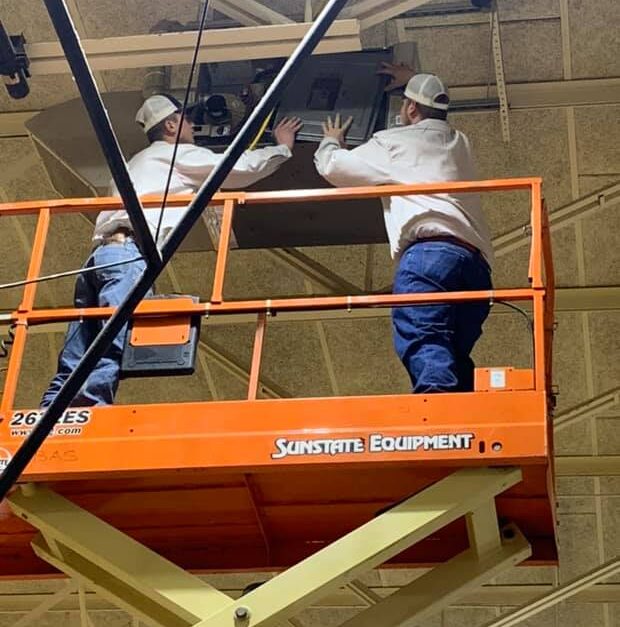
Shops, restaurants, offices and churches often rely on rooftop equipment that serves a zone of the building, which is why many businesses plan service around their schedule.
Commercial equipment is built to run long hours, and it still depends on clean coils and clear drains; planning a changeout around business hours limits disruption.
Central Plant Equipment: How They Differ From Packaged Units
Chiller systems cool water, and pumps carry the chilled water through pipes to air handlers throughout a building; the equipment is larger, more complex and more closely monitored.
Cold Storage Equipment – Why Failures Matter Fast
Refrigeration service covers walk-in coolers, reach-in units, freezers, display cases and ice machines, which is why restaurants and stores plan service ahead of busy seasons.
How Climate Control A/C & Heating Thinks About Commercial AC System around Hoyte
The technician asks what changed, what is happening and how long it has been going on, followed by an explanation of what was found and what the choices are.
Recommendations come with explanations, so choices rest on information rather than pressure, and the owner stays in control of the decision.
Questions About Your System Are Welcome
Dial 512-446-4020 to book a technician or get a straight answer.
Putting It Together: Attention Now Saves Trouble Later
Equipment, ducts and air quality are connected, so a question about Commercial AC System is rarely a stand-alone one, and Climate Control A/C & Heating is ready to help with it.