
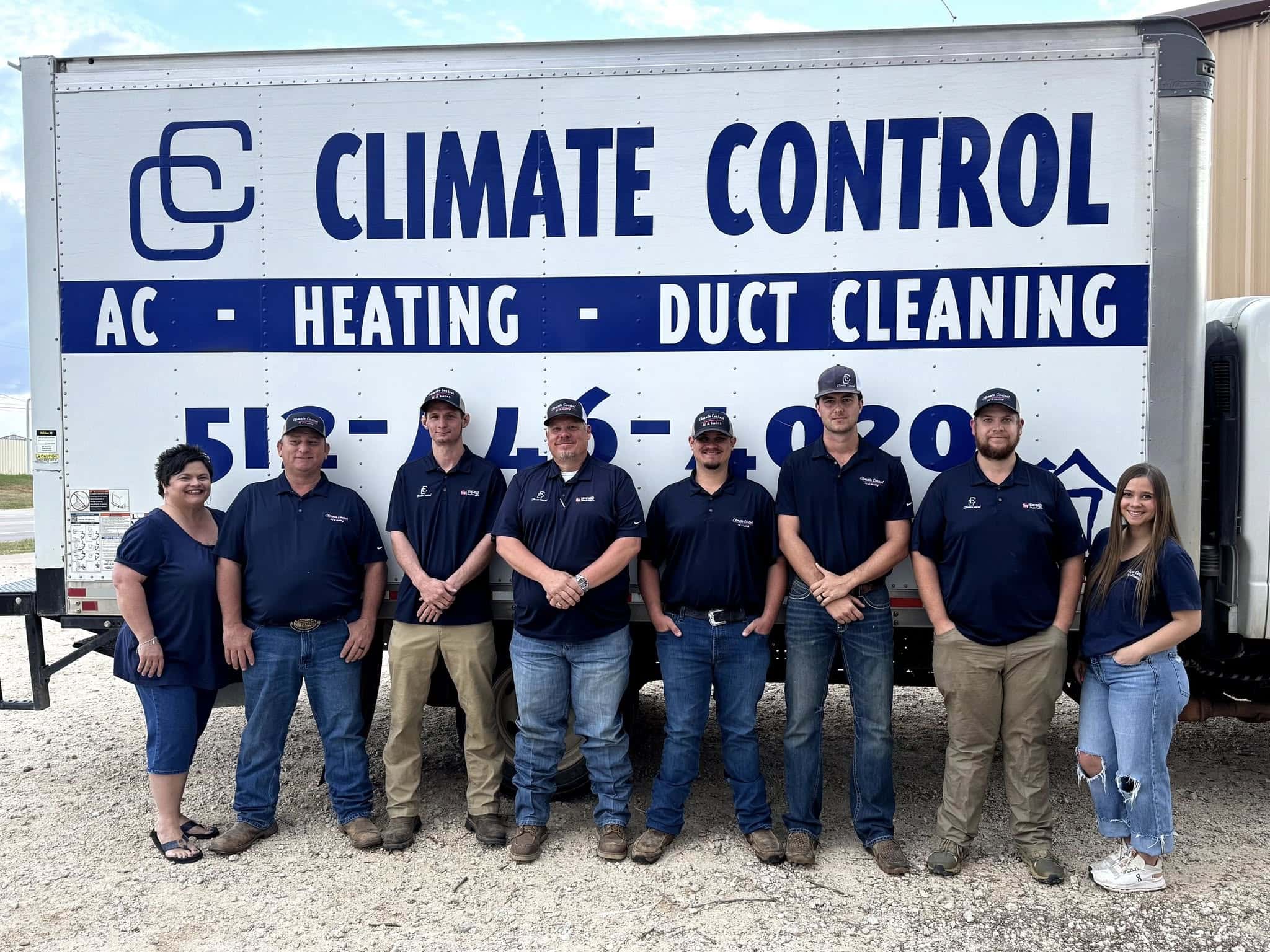
Trying to find AC Repair in Rockdale?
Climate Control A/C & Heating takes on cooling, heating and the air indoors in the local area.
Dial 512-446-4020 to describe what your equipment is doing.
A Hot, Wet Climate: Local Conditions Come First
The cooling season in Rockdale starts early and finishes late, which means a cooling unit seldom rests between spring and fall.
Sticky air can make a cool room feel uncomfortable; the indoor coil acts as the dehumidifier, collecting water that leaves through a drain line.
Matching capacity to the house, moving enough air and keeping the coil clean all shape the result, regardless of which brand is on the cabinet.
How Air Conditioning Works: the Basics Worth Knowing
Nothing in a cooling system generates cold air from scratch; refrigerant picks up warmth from indoor air and carries it outside.
Inside the house, the evaporator coil does the absorbing; the outdoor cabinet houses the compressor, the condenser coil and a fan.
Wear tends to show up in the electrical components before the big mechanical ones, and that is good news, because they are far simpler to fix than a compressor.
Service Calls in Hot Weather: Where the Fault Usually Hides
A proper air conditioning repair sorts the symptom from the cause before anything is replaced; the same warm room can come from a dead capacitor, a frozen coil or a leak.
Electrical faults are common, with capacitors and contactors leading the list of small failures, though a part that failed once can point to heat or a loose connection that needs attention.
Ice building up near the air handler tells a technician where to look, and running the system while it is frozen can damage the compressor.
Low refrigerant means a leak, because the charge stays put when the loop is tight, which is why measuring pressures and temperatures matters more than adding gas.
Algae and debris plug the drain, and many systems have a float switch that stops the cooling, and a flush of the line during regular service often prevents the problem.
Warning Signs: Trust Your Senses
Air conditioners seldom quit without hints along the way, and every item below is a reason to schedule a visit:
- Uneven temperatures from room to room though the unit sounds normal.
- Loud banging when the compressor starts, sometimes only on the hottest afternoons.
- A system that turns on and off in short cycles, even though the thermostat is satisfied.
- Pooling water under the furnace or air handler, which deserves a look before damage spreads.
Tune-Ups for Cooling Gear – the Work Behind Reliable Comfort
Air conditioning maintenance keeps dust, grime and wear from piling up unseen, with attention paid to coils, drains, belts and wiring.
Changing the filter on schedule protects the coil, the blower and the ductwork, and a quick check each month is a good habit through the summer.
Coils, drain pans and drain lines all get attention during a complete tune-up; temperature drop and refrigerant pressures are measured to show how the loop is behaving.
Deciding on a New System – Age, Condition and Efficiency
Replacement is worth considering once repairs pile up on equipment that was already aging, and an honest technician explains both paths.
The refrigerant a system uses is worth asking about when a repair involves the sealed loop; current equipment follows the refrigerant rules in force today.
Newer cooling equipment is generally more efficient than older models, and in a long cooling season those savings add up.
Choosing Capacity – Bigger Is Not Better
Choosing equipment for an AC install means working out how much heat the structure gains; orientation and shading matter as much as floor area.
An oversized system cools the air quickly and then shuts off before it removes moisture; the right size runs long, steady cycles that dry the air.
A complete installation pairs the condenser, the coil and the air handler as one system, and a startup check confirms the charge, the airflow and the temperature drop.
The Hidden Network in the Walls and Attic – Where Comfort Is Won or Lost
Good duct work delivers the right amount of air to each room and brings it back again; undersized trunks, kinked runs and open seams all choke the flow.
Leaks at joints pull attic air into the system and push cooled air out into the rafters, which can improve comfort without touching the equipment.
Dust, Debris and Ductwork – Deciding if It Fits
Duct cleaning removes dust and debris from the supply and return runs, the registers and the blower compartment; a house with no such history may not need it often.
Dirt returns quickly if the filter is poor or the returns leak unfiltered air, and claims about health benefits should be treated skeptically.
Heat Pumps – Efficient Most of the Year
A heat pump is an air conditioner that can run backward to warm the house; one outdoor unit does the work of two.
When outdoor temperatures fall far enough, electric strips or a furnace add the missing warmth; steam from the outdoor unit during defrost is normal.
Burners, Igniters and Flues – the Machinery in the Closet
A furnace heats air by passing it over a hot metal exchanger while exhaust gases leave through a flue, and a dirty flame sensor is a frequent reason for a furnace that lights and then shuts off.
A technician checks venting, gas pressure and the heat exchanger during a furnace tune-up; never ignore an alarm or a smell of gas.
Resistance and Strip Heat: How the Elements Work
Electric heating systems warm the air with heating elements instead of a flame, and the main wear items are the elements, the sequencers and the blower.
Electricity makes heat at a steady rate, but resistance heat uses more power than a heat pump does for the same warmth, and many homes pair a heat pump with strips as a backup.
Winter Preparation: What to Do Before the First Freeze
Heating season in this part of Texas is brief, with sudden swings between warm days and freezing nights; running the heater briefly in fall shows whether it lights, blows warm air and shuts off properly.
A heating service call looks at the heat source, the blower, the filter, the thermostat and the airflow; the common thread is clean air passages and a blower that moves enough air.
Boilers: Less Common, Still Important
Boiler systems appear in older buildings, larger properties and some commercial spaces; an owner with a boiler should look for experience with water-based heat.
Pressure, temperature and flame quality are the numbers that matter in a boiler check; water damage can grow quickly.
Cleaner Air Indoors – Sources, Symptoms and Solutions
Good indoor air quality means controlling particles, humidity, fresh air and sources of contamination, which makes the HVAC system the natural place to improve air quality.
Choosing a filter means balancing how much it removes against how much resistance it adds; a deeper media cabinet gives better filtering with less restriction.
Larger buildings circulate air through central equipment, so one fault can reach every room, which is why commercial properties usually benefit from regular service visits.
Cleaning the Air Itself – Useful, With Realistic Goals
Purifiers vary widely, from simple filters to units combining filtration, carbon and other methods; any claims about performance should be checked against the specification.
Buying a purifier without fixing a moisture problem treats a symptom and misses the cause; a technician looks at the system before recommending a device.
Managing Growth Inside the System – Reasonable Expectations
A UV lamp does not clean the air passing by, but it treats the surfaces it can see; the lamp supplements regular cleaning rather than replacing it.
An antimicrobial mist is sprayed or fogged onto surfaces inside the system or the building, and it works best where the source of moisture has been dealt with.
Bringing Outdoor Air In: Balance in a Humid Climate
Ventilating also removes moisture from kitchens and baths before it settles into the structure, which is where design and service make a real difference.
A hot attic loads up the ceiling and the ducts, so attic ventilation and insulation help the system, and the same attention applies to the whole building.
Commercial AC Systems: Uptime Matters
A commercial AC system is sized for heat from people, lighting and machines as well as sunshine; a break in cooling can mean lost customers or a workday cut short.
Coil cleaning, belt checks and economizer inspections are part of keeping commercial equipment dependable, and a technician can map out options on site.
Chiller Systems for Larger Buildings: Parts and Service Needs
A chiller is a large refrigeration machine that chills water for use in many spaces; air-cooled and water-cooled designs differ in how they reject heat.
Coolers, Freezers and Ice Machines: What Service Involves
Businesses that sell or store food depend on refrigeration service to hold safe temperatures, which is why restaurants and stores plan service ahead of busy seasons.
How Climate Control A/C & Heating Works Through AC Repair in Rockdale
The technician asks what changed, what is happening and how long it has been going on; the owner understands the situation before any decision.
A repair, a tune-up and a replacement are each described for what they are and what they involve; good service depends on trust running both ways.
Comfort Is a Phone Call Away
Reach out at 512-446-4020 to describe what is going on and find the next step.
What to Remember – Equipment, Airflow and Air Quality
Searching for AC Repair in Rockdale usually leads to the same few questions about size, age, airflow and care, and Climate Control A/C & Heating answers questions at 512-446-4020.