
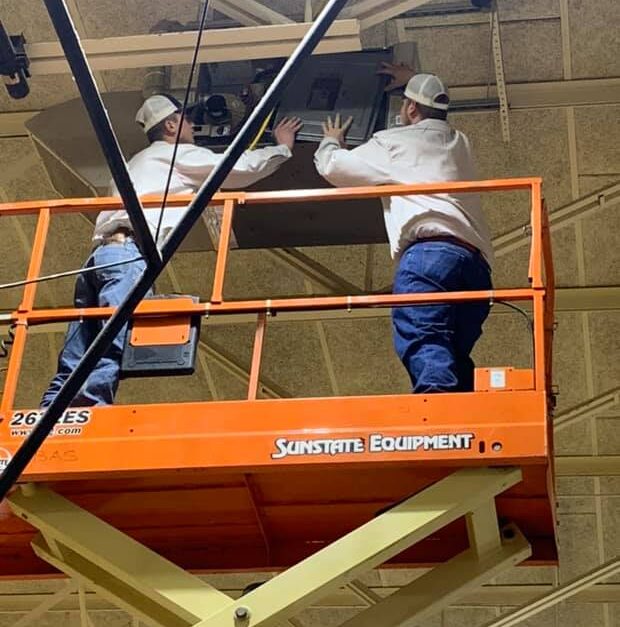
Looking for AC Install around Branchville?
Climate Control A/C & Heating works on the equipment that keeps buildings comfortable in the local area.
Reach us at 512-446-4020 to start the conversation.
The Cooling Season: Why Equipment Works Hard Here
Summers across Branchville run long, hot and humid; the machine on the pad outside is among the busiest appliances a household owns.
Water vapor rides along with the heat on a muggy afternoon; a cooling system dehumidifies only when the compressor is on and air is moving across the coil.
Matching capacity to the house, moving enough air and keeping the coil clean all shape the result, even before anything breaks.
Inside an Air Conditioner: a Plain Explanation
Cooling equipment does not manufacture chill; a sealed loop of refrigerant absorbs heat at one point and releases it at another.
Warm indoor air passes over a cold coil in the air handler or furnace cabinet, with the compressor outside squeezing the refrigerant so the heat can leave.
The contactor, the capacitor and the motors take a beating in hot weather; the compressor itself can last a long time when it is kept clean and properly charged.
Service Calls in Hot Weather – Sorting Symptoms From Causes
AC repair that works starts with measurements, because guessing wastes time and parts, and each of those causes needs a different fix.
When the outdoor fan hums but will not spin, a capacitor is often the reason, though a part that failed once can point to heat or a loose connection that needs attention.
Frost on the indoor coil or the copper line is a warning sign, not a cooling success; the coil needs to thaw completely before anyone can measure what is going on.
A properly working system keeps its charge for good, since nothing burns it off, and the leak is the thing that has to be found and dealt with.
A blocked drain line can back water into the pan and trip a safety switch, and clearing the line is routine maintenance work.
Warning Signs: Small Changes, Big Hints
A struggling cooling system leaves clues around the house, and every item below is a reason to schedule a visit:
- Rooms that stay warm even though the blower sounds normal.
- A burning smell from the vents, whether or not the cooling seems to work.
- Constant starting and stopping through the afternoon, with indoor humidity climbing.
- Water around the air handler, sometimes from a dirty coil.
Preventive Service: Catching Trouble Before It Grows
Regular AC maintenance trims the chance of a breakdown during the hottest week; the technician cleans what gets dirty and measures what can drift.
Changing the filter on schedule protects the coil, the blower and the ductwork; the label on the filter and the look of its surface are a reliable guide.
A technician cleans or inspects the outdoor coil, the indoor coil and the condensate drain; the report reflects measurements rather than guesses.
Time for a Change: How Owners Decide
An old unit that needs repair after repair may be a candidate for AC replacement, and an honest technician explains both paths.
A system built around a retired refrigerant can be a poor candidate for major repairs, which is another reason to get a clear diagnosis before deciding.
Today's units move the same heat with less power than equipment from a generation ago, and comfort improves along with the numbers.
Matching a System to a House: the Groundwork Matters
An air conditioning install starts with a load calculation, not a rule of thumb, which is why square footage alone is a poor guide.
Equipment that is too big runs in bursts, which hurts comfort and efficiency alike; the right size runs long, steady cycles that dry the air.
Matched components perform to their design efficiency, while mismatched ones fall short, and local permit and inspection rules apply in most towns.
The Hidden Network in the Walls and Attic – What Hides Above the Ceiling
The duct system is as much a part of comfort as the unit that feeds it, which is why the airflow measurement is part of a proper diagnosis.
Runs through an unconditioned attic or crawl space gain heat or lose chill unless sealed and wrapped, which can improve comfort without touching the equipment.
Dust, Debris and Ductwork – Reasons and Limits
A duct cleaning visit reaches the trunk lines, the branches and the grilles; construction dust, rodents or visible mold growth are the usual reasons to schedule it.
Dirt returns quickly if the filter is poor or the returns leak unfiltered air, and be cautious of anyone who promises that cleaning will cure every problem.
Heat Pump Basics: Strengths and Limits
The reversing valve is what lets heat pumps switch between cooling and heating; one outdoor unit does the work of two.
A heat pump may call on backup heat during a hard freeze or while defrosting its coil, but a heat pump that always needs the backup may have a fault.
Heating With Gas: Reliable Heat for Cold Fronts
The sequence in a gas furnace runs from thermostat call to draft fan, igniter, gas valve and flame proof; the flue and combustion air must be clear for safe operation.
A technician checks venting, gas pressure and the heat exchanger during a furnace tune-up, and a detector near the sleeping areas gives early warning.
Electric Heating Systems – Where It Fits Best
Electric heating systems warm the air with heating elements instead of a flame, which keeps the mechanical side straightforward.
The trade-off with electric heat is simple equipment against higher running use, particularly where cold stretches are brief.
Getting Ready for Cold Weather: Planning for Sudden Cold
Heating season in this part of Texas is brief, with sudden swings between warm days and freezing nights; problems found early can be repaired before a cold front arrives.
Heating services cover igniters and burners on gas units, reversing valves on heat pumps and elements on electric ones, which keeps the work simple to explain and easy to follow.
Boilers: Less Common, Still Important
Hydronic heating moves heat with water instead of air, which makes for quiet, even warmth; the region mostly uses forced air, so boilers are the exception.
Service on boiler systems covers the burner, the water pressure, the circulator pump, the expansion tank and the safety relief valve; neglected boilers corrode inside, so water quality and venting matter.
What You Breathe at Home: Beyond Temperature and Humidity
Air inside a home can carry particles, gases and moisture that the thermostat never shows, and cleaner air depends on filtration, ventilation and moisture control working together.
Choosing a filter means balancing how much it removes against how much resistance it adds, and a technician can recommend what the equipment can handle.
Offices, shops and restaurants need steady fresh air so that crowds do not make the space stuffy, and a maintenance plan fits the building's size and hours.
Filters, Purifiers and Their Limits: What the Labels Mean
Air purifiers range from a stand-alone machine in one room to a unit tied into the ductwork; pollen and dust call for filtration, while odors call for carbon.
Good results come from a purifier chosen to complement the rest of the system, which is why one device rarely fits every home.
Add-On Air Treatments – Reasonable Expectations
A UV lamp does not clean the air passing by, but it treats the surfaces it can see; the lamp supplements regular cleaning rather than replacing it.
An antimicrobial mist is sprayed or fogged onto surfaces inside the system or the building, and ventilation and occupant safety are part of the process.
Fresh Air and Exhaust: the Case for Planned Airflow
Modern buildings are tight, so ventilating on purpose keeps carbon dioxide and odors from building up; the cooling equipment has to be sized to handle the fresh air coming in.
Attic ventilation is a separate matter, but it affects how hard the cooling system works, and this is another reason the whole building matters.
Commercial Cooling: Uptime Matters
A commercial AC system is sized for heat from people, lighting and machines as well as sunshine; planned maintenance keeps surprises to a minimum.
Control settings, schedules and thermostats on commercial systems deserve a look when comfort complaints begin, and replacement decisions weigh downtime as well as equipment.
Chillers – Big Buildings, Big Loads
Chiller systems cool water, and pumps carry the chilled water through pipes to air handlers throughout a building; air-cooled and water-cooled designs differ in how they reject heat.
Keeping Food and Product Cold: Temperature Is the Whole Job
Refrigeration equipment uses the same basic cycle as air conditioning but at much lower temperatures, and temperature drift is the warning sign to act on.
How Climate Control A/C & Heating Works Through AC Install near Branchville
A good service call begins with listening to what the owner has noticed; the owner understands the situation before any decision.
A repair, a tune-up and a replacement are each described for what they are and what they involve, and the work proceeds only when the owner agrees.
Start With a Conversation
Contact us at 512-446-4020 to line up service or learn what to expect.
A Last Word – Equipment, Airflow and Air Quality
Whether the need falls under AC Install or elsewhere in the heating, cooling and air quality family, the same principles apply, with Climate Control A/C & Heating at 512-446-4020 to start the conversation.