
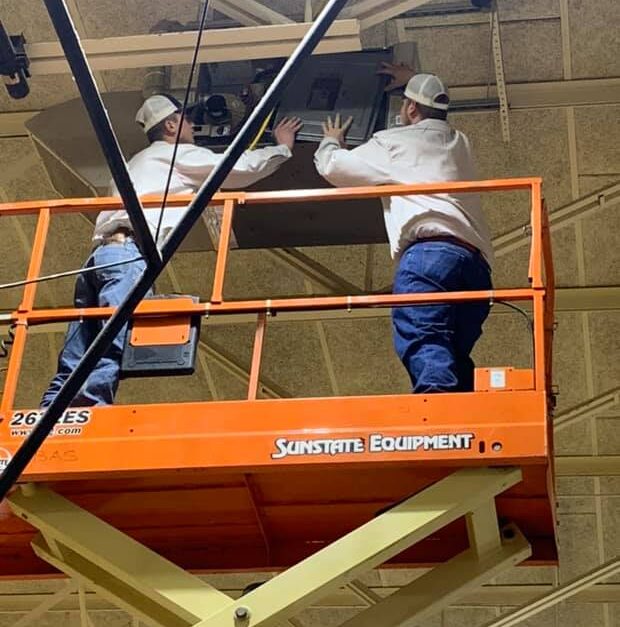
Trying to find Commercial Air Quality across Cameron?
Climate Control A/C & Heating takes on the equipment that keeps buildings comfortable in the local area.
Call 512-446-4020 to start the conversation.
The Cooling Season – Built for a Long Haul
A Cameron summer stacks hot afternoon after hot afternoon, and a home air conditioner may run most of the day through the worst of it.
Sticky air can make a cool room feel uncomfortable; an air conditioner pulls it out as a side effect of cooling, but only while it is actually running.
Right sizing, steady airflow and a clean coil therefore decide how a house feels, whatever the label on the box promises.
The Refrigerant Cycle: a Plain Explanation
Air conditioning is the business of relocating heat; refrigerant picks up warmth from indoor air and carries it outside.
Inside the house, the evaporator coil does the absorbing, and the outdoor unit holds the compressor and condenser coil that push that heat away.
Fan motors and start components do a great deal of work for their size, which is why a quick diagnosis matters before anyone talks about replacement.
Cooling Troubles: a Look at Common Failures
A proper air conditioning repair sorts the symptom from the cause before anything is replaced, and each of those causes needs a different fix.
A tripped breaker, a failed capacitor or a worn contactor keeps the outdoor unit from starting, and these are among the quicker repairs when the technician has the part.
A frozen evaporator coil blocks the very air it is supposed to cool, and the cause may be as simple as a clogged filter or as involved as a leak.
A properly working system keeps its charge for good, since nothing burns it off; a responsible repair locates the leak instead of simply adding more.
Condensate has to leave the house, so a blocked line sends it somewhere less welcome, and clearing the line is routine maintenance work.
Trouble You Can See and Hear – Before a Breakdown
Most breakdowns announce themselves with small changes in behavior, and the following signs are worth acting on:
- Uneven temperatures from room to room though the unit sounds normal.
- Grinding, squealing or rattling from the outdoor cabinet, whether or not the cooling seems to work.
- Constant starting and stopping through the afternoon, leaving the indoor air damp.
- Damp spots on the ceiling below the indoor cabinet, especially in humid weather.
Tune-Ups for Cooling Gear – Small Tasks, Long Equipment Life
Air conditioning maintenance keeps dust, grime and wear from piling up unseen; the checklist stays short enough to repeat every season.
The air filter is the part most under the homeowner's own control, which is a quick job that helps the entire system.
Dirt on the condenser makes the compressor run hotter, so that coil gets cleaned too; temperature drop and refrigerant pressures are measured to show how the loop is behaving.
When Replacement Makes Sense – Age, Condition and Efficiency
Air conditioning equipment reaches a point where a new system makes more sense than another fix; the right answer differs from one house to the next.
The refrigerant a system uses is worth asking about when a repair involves the sealed loop, and newer equipment is built for current refrigerants.
Efficiency numbers on new equipment, such as SEER2, give a way to compare models fairly, and in a long cooling season those savings add up.
Choosing Capacity: Details That Shape Comfort
Air conditioning install quality depends on matching capacity to what the building actually needs, which is why square footage alone is a poor guide.
Too much capacity leads to short cycling, uneven rooms and a clammy feel; one that is too small never reaches the setpoint on the hottest days.
A complete installation pairs the condenser, the coil and the air handler as one system; the owner then gets a walk-through of the thermostat and the filter.
Duct System Basics – What Hides Above the Ceiling
The duct system is as much a part of comfort as the unit that feeds it; undersized trunks, kinked runs and open seams all choke the flow.
Ducts that run through a hot attic lose a surprising amount of cooling on the way to the rooms, and sealing with mastic rather than cloth tape holds up better in the heat.
Duct Cleaning: Realistic Expectations
A duct cleaning visit reaches the trunk lines, the branches and the grilles, and the decision should rest on what is actually in the ducts.
Clean ducts work best alongside a good filter and sealed connections, and claims about health benefits should be treated skeptically.
Heat Pump Basics – Why They Suit the Region
Instead of burning fuel, heat pumps pull warmth from outdoor air and carry it inside, and one system handles both seasons with a single set of equipment.
A heat pump may call on backup heat during a hard freeze or while defrosting its coil, and a technician can check whether the strips are running more than they should.
Heating With Gas: How a Furnace Heats a House
Gas furnaces rely on an igniter, a flame sensor and a gas valve working in sequence, and a dirty flame sensor is a frequent reason for a furnace that lights and then shuts off.
Carbon monoxide detectors belong in any home with fuel-burning equipment, and homeowners should keep the area around the furnace clear of clutter.
Electric Heating Systems: What to Expect From It
Electric heating systems warm the air with heating elements instead of a flame, and the main wear items are the elements, the sequencers and the blower.
Compared with a heat pump, strips and electric furnaces draw heavily for the heat they make; the decision rests on the building, not just the equipment.
Getting Ready for Cold Weather – Reliable Heat on Demand
The heating season is short enough that equipment sits unused for months, then must work on the first cold night, and a test on a mild day beats a surprise on a freezing one.
Heating services cover igniters and burners on gas units, reversing valves on heat pumps and elements on electric ones, and the safety controls get tested along with the comfort ones.
Boiler Systems – Radiators, Coils and Radiant Floors
Boiler systems heat water or make steam and send it through pipes to radiators, baseboards or in-floor loops, and the parts, from circulators to expansion tanks, differ from forced-air equipment.
A boiler tune-up checks combustion, water level, pressure and the controls that keep it safe, and annual attention keeps these systems running quietly.
The Air Inside Your Walls – Sources, Symptoms and Solutions
Indoor air quality describes what is floating in the air inside a building, from dust and pollen to odors and humidity, and in Texas, cedar pollen and spring dust can find their way inside.
A better filter helps only if the blower can pull air through it without strain; the system and the filter are chosen together.
Commercial air quality involves larger volumes, more occupants and strict airflow requirements, which is why commercial properties usually benefit from regular service visits.
Choosing an Air Cleaner: What the Labels Mean
Some purifiers capture particles with high-efficiency filters, and others target odors with carbon; a device that makes bold promises deserves a second look.
A purifier works alongside good ventilation and a clean system, not in place of them, which is why one device rarely fits every home.
Managing Growth Inside the System: What They Do and What They Do Not
Ultraviolet lamps near the coil are meant to keep it cleaner by discouraging growth on damp surfaces; the lamp supplements regular cleaning rather than replacing it.
Fogging a space with antimicrobial mist is a surface treatment, not a cure for a moisture problem; the label for the product spells out how it is to be used.
Fresh Air and Exhaust – Controlled and Filtered
Planned ventilation brings in measured amounts of outdoor air and exhausts the stale air; the cooling equipment has to be sized to handle the fresh air coming in.
Exhaust fans that move air out of kitchens and baths should vent outdoors, not into the attic; the equipment, the envelope and the airflow work as a team.
Commercial Cooling: Uptime Matters
Shops, restaurants, offices and churches often rely on rooftop equipment that serves a zone of the building, and when it fails the business feels it quickly.
Condensate drains on rooftops clog with debris, and the water can stain ceilings below, and larger properties may phase work across several units.
Chiller Systems for Larger Buildings – Big Buildings, Big Loads
Chiller systems cool water, and pumps carry the chilled water through pipes to air handlers throughout a building, and water treatment, tube cleaning and refrigerant checks are routine tasks.
Coolers, Freezers and Ice Machines: What Service Involves
Businesses that sell or store food depend on refrigeration service to hold safe temperatures, and temperature drift is the warning sign to act on.
How Climate Control A/C & Heating Works Through Commercial Air Quality throughout Cameron
A good service call begins with listening to what the owner has noticed; the owner understands the situation before any decision.
A repair, a tune-up and a replacement are each described for what they are and what they involve; nothing starts without a clear understanding.
Let's Talk About Your Equipment
Reach out at 512-446-4020 to line up service or learn what to expect.
Closing Thoughts: Comfort Is a System
Equipment, ducts and air quality are connected, so a question about Commercial Air Quality is rarely a stand-alone one, and Climate Control A/C & Heating answers questions at 512-446-4020.