
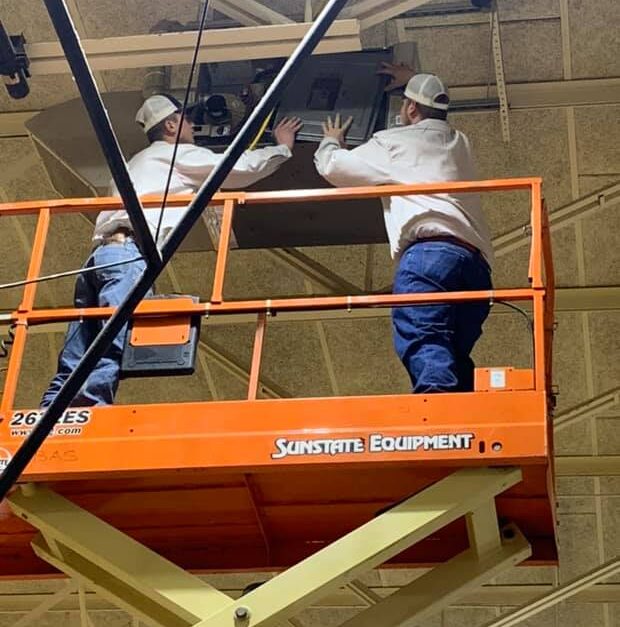
Searching for AC Repair around Hoyte?
Climate Control A/C & Heating looks after comfort equipment of every kind close to home.
Call 512-446-4020 and tell us what you are noticing.
Heat and Humidity – Built for a Long Haul
Summers across Hoyte run long, hot and humid; the machine on the pad outside is among the busiest appliances a household owns.
Sticky air can make a cool room feel uncomfortable; a cooling system dehumidifies only when the compressor is on and air is moving across the coil.
Right size, steady airflow and a clean coil explain much of how a house feels, and each one is something a technician can check on site.
Inside an Air Conditioner – Heat Moves, Cold Is Not Made
Air conditioning is the business of relocating heat; warmth is absorbed in one coil and released in another.
A cold coil indoors takes in heat while the blower keeps air moving; outdoors, a fan pulls air across the condenser coil to shed the load.
Parts that wear out fastest are usually the small electrical ones; a failed capacitor is often a small repair rather than the end of the system.
When the House Stops Cooling: a Look at Common Failures
A proper air conditioning repair sorts the symptom from the cause before anything is replaced, and a house that is warm may have an electrical fault, an airflow problem or a refrigerant problem.
A unit that clicks and does nothing may be waiting on a bad contactor or a dead control board, and each can be tested with a meter in a few minutes.
A frozen evaporator coil blocks the very air it is supposed to cool, and the cause may be as simple as a clogged filter or as involved as a leak.
The charge in a cooling system is fixed, so a shortage points to escape, and the leak is the thing that has to be found and dealt with.
Condensate has to leave the house, so a blocked line sends it somewhere less welcome, and clearing the line is routine maintenance work.
Trouble You Can See and Hear: Small Changes, Big Hints
Cooling equipment usually gives notice before it fails outright, and the following signs are worth acting on:
- Uneven temperatures from room to room even though the blower sounds normal.
- A hissing noise near the refrigerant lines, sometimes only on the hottest afternoons.
- Repeated short runs that never finish a cooling cycle, even though the thermostat is satisfied.
- Musty smells when the blower starts, particularly after long runs.
Regular Maintenance – Small Tasks, Long Equipment Life
Scheduled air conditioning maintenance gives a technician a look at the system while it still works; the checklist stays short enough to repeat every season.
The air filter is the part most under the homeowner's own control, which is a quick job that helps the entire system.
Dirt on the condenser makes the compressor run hotter, so that coil gets cleaned too; the report reflects measurements rather than guesses.
Aging Equipment: How Owners Decide
AC replacement becomes a real question when a system is old, repeatedly broken or hard to keep comfortable; the decision belongs to the owner, who deserves the facts.
A system built around a retired refrigerant can be a poor candidate for major repairs, and newer equipment is built for current refrigerants.
Efficiency numbers on new equipment, such as SEER2, give a way to compare models fairly; replacement can pay back in comfort as well as in energy use.
Getting an Install Right: Where Good Results Begin
AC install work succeeds or fails on sizing and airflow before any equipment is delivered; orientation and shading matter as much as floor area.
Too much capacity leads to short cycling, uneven rooms and a clammy feel; careful sizing protects comfort and the equipment.
Every connection, from the refrigerant lines to the thermostat wire, gets sized and routed with care; the owner then gets a walk-through of the thermostat and the filter.
Ducts – What Hides Above the Ceiling
A duct system is the network of channels that carry conditioned air to every room and returns it for re-cooling, and leaks, bad bends and poor insulation waste a large share of the effort.
Ducts that run through a hot attic lose a surprising amount of cooling on the way to the rooms, which can improve comfort without touching the equipment.
Dust, Debris and Ductwork – Reasons and Limits
Cleaning the ducts means pulling loose material out with agitation tools and a strong vacuum; cleaning is not a substitute for fixing leaks or changing filters.
Filtering, sealing and cleaning form one plan, not three separate jobs; ask to see before-and-after photos of the work.
Heat Pump Basics – Why They Suit the Region
Heat pumps move heat in both directions, cooling in summer and heating in winter; one outdoor unit does the work of two.
Auxiliary heat strips back up the heat pump on the coldest mornings; watch for unusually high bills as a hint.
Burners, Igniters and Flues: Reliable Heat for Cold Fronts
A furnace heats air by passing it over a hot metal exchanger while exhaust gases leave through a flue; a cracked heat exchanger is a safety issue that calls for a prompt professional look.
Safe furnace operation depends on clear venting and working carbon monoxide alarms, and homeowners should keep the area around the furnace clear of clutter.
Electric Furnaces and Air Handlers – Features and Trade-Offs
Electric heating systems warm the air with heating elements instead of a flame, and the main wear items are the elements, the sequencers and the blower.
The trade-off with electric heat is simple equipment against higher running use, particularly where cold stretches are brief.
Heating Services – Test Before You Need It
A norther can send temperatures tumbling, and heating systems that sat idle all summer must start right up; heating systems are better checked before they are needed.
A heating service call looks at the heat source, the blower, the filter, the thermostat and the airflow; one failed switch can shut down an otherwise healthy system.
Hydronic Warmth: Found in Older and Larger Buildings
Boiler systems appear in older buildings, larger properties and some commercial spaces; an owner with a boiler should look for experience with water-based heat.
Service on boiler systems covers the burner, the water pressure, the circulator pump, the expansion tank and the safety relief valve; water damage can grow quickly.
The Air Inside Your Walls – the Part You Cannot See
Indoor air quality describes what is floating in the air inside a building, from dust and pollen to odors and humidity, which makes the HVAC system the natural place to improve air quality.
Choosing a filter means balancing how much it removes against how much resistance it adds; humidity control prevents the conditions mold needs.
Commercial air quality depends on ventilation rates, filtration and the upkeep of rooftop equipment, and employee and customer comfort both depend on it.
Choosing an Air Cleaner: What the Labels Mean
Air purifiers range from a stand-alone machine in one room to a unit tied into the ductwork, and ozone-producing models are better avoided in occupied rooms.
Purifiers help most when the air handler is clean, the ducts are sealed and humidity is under control; the goal is a measurable improvement, not a gadget.
Light and Mist Treatments – Tools for a Damp Climate
UV lights are a common add-on in humid climates, where the evaporator coil stays wet for months; the lamp supplements regular cleaning rather than replacing it.
An antimicrobial mist is sprayed or fogged onto surfaces inside the system or the building; the underlying cause still has to be fixed.
Fresh Air and Exhaust – Controlled and Filtered
Modern buildings are tight, so ventilating on purpose keeps carbon dioxide and odors from building up; the cooling equipment has to be sized to handle the fresh air coming in.
Ductwork that dumps moisture into an attic can create damage far from the source, and the same attention applies to the whole building.
Cooling for Shops, Offices and Buildings: Comfort That Supports the Work
Commercial air conditioning system designs range from rooftop packages to split systems and multi-zone setups; planned maintenance keeps surprises to a minimum.
Commercial equipment is built to run long hours, and it still depends on clean coils and clear drains, and a technician can map out options on site.
Cooling at Scale – Big Buildings, Big Loads
A chiller is a large refrigeration machine that chills water for use in many spaces, and they need specialized service knowledge.
Coolers, Freezers and Ice Machines: Temperature Is the Whole Job
A refrigeration problem is often found in the condenser, the defrost control or a worn door gasket; regular cleaning of condenser coils matters even more than in comfort cooling.
How Climate Control A/C & Heating Approaches AC Repair across Hoyte
Before touching a tool, the technician hears the history of the problem from the person who lives with it, followed by an explanation of what was found and what the choices are.
Options are laid out clearly, with the reasons behind each recommendation, and questions are welcome at every stage.
Comfort Is a Phone Call Away
Phone 512-446-4020 to set up a visit or talk through your options.
A Last Word: Comfort Is a System
Searching for AC Repair in Hoyte usually leads to the same few questions about size, age, airflow and care; reach Climate Control A/C & Heating at 512-446-4020 when you are ready.