
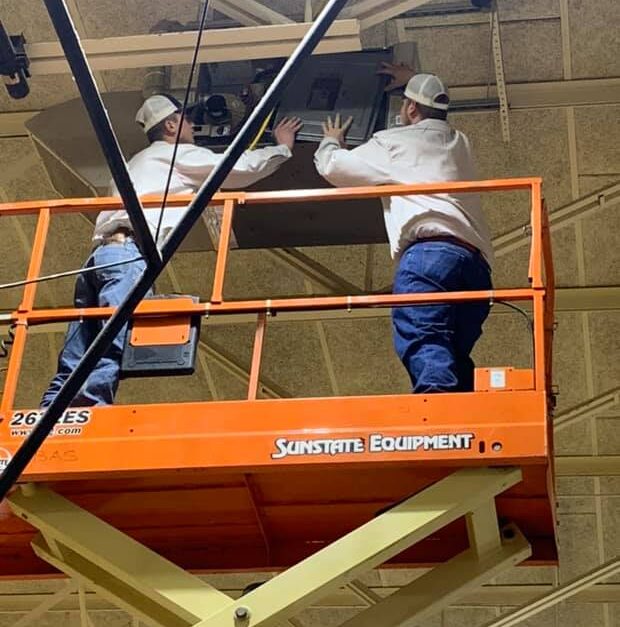
Searching for AC Install across San Gabriel?
Climate Control A/C & Heating works on heating, cooling and indoor comfort here at home.
Contact us at 512-446-4020 and ask a real question.
Heat and Humidity: Local Conditions Come First
The cooling season in San Gabriel starts early and finishes late, and the equipment that carries the load is working harder than its owner tends to notice.
Moisture in the air matters as much as the thermometer reading, and the coil is where the moisture condenses and drains away.
Proper equipment size, good airflow and clean surfaces separate a comfortable house from a clammy one, and each one is something a technician can check on site.
The Refrigerant Cycle – Parts and Their Jobs
Nothing in a cooling system generates cold air from scratch; refrigerant picks up warmth from indoor air and carries it outside.
A cold coil indoors takes in heat while the blower keeps air moving; the outdoor cabinet houses the compressor, the condenser coil and a fan.
Parts that wear out fastest are usually the small electrical ones, and that is good news, because they are far simpler to fix than a compressor.
Service Calls in Hot Weather – Sorting Symptoms From Causes
Air conditioning repair begins with finding out why the system quit, not with swapping parts; the same warm room can come from a dead capacitor, a frozen coil or a leak.
A tripped breaker, a failed capacitor or a worn contactor keeps the outdoor unit from starting, and they usually repair cleanly because the parts are small.
A coil that ices over points toward airflow or refrigerant; shutting the cooling off is the safest response until someone inspects it.
Low refrigerant means a leak, because the charge stays put when the loop is tight, which is why measuring pressures and temperatures matters more than adding gas.
Condensate has to leave the house, so a blocked line sends it somewhere less welcome, and a flush of the line during regular service often prevents the problem.
When to Call for Service: Trust Your Senses
A struggling cooling system leaves clues around the house; these are the signs a homeowner can see, hear or feel without any tools:
- Some rooms that never cool down even with the thermostat set low.
- A burning smell from the vents, sometimes only on the hottest afternoons.
- An outdoor unit that starts and stops every few minutes; parts wear faster.
- Condensation where there should be none, particularly after long runs.
Tune-Ups for Cooling Gear – the Work Behind Reliable Comfort
Scheduled air conditioning maintenance gives a technician a look at the system while it still works, and the visit usually combines cleaning, measuring and tightening.
The air filter is the part most under the homeowner's own control, which is a quick job that helps the entire system.
Heat flows through each of the coils, and each one loses capacity when it collects dirt; capacitors, contactors, wiring and motor amperage get checked as well.
Repair or Replace: Weighing the Options Honestly
The conversation about replacement starts when age, condition and comfort all point the same way; the decision belongs to the owner, who deserves the facts.
The refrigerant a system uses is worth asking about when a repair involves the sealed loop, and that can tip a close decision toward replacement.
Newer cooling equipment is generally more efficient than older models, and in a long cooling season those savings add up.
Getting an Install Right: Details That Shape Comfort
Choosing equipment for an AC install means working out how much heat the structure gains, which is why square footage alone is a poor guide.
Oversizing is a common mistake, and it wears out parts through constant starting; one that is too small never reaches the setpoint on the hottest days.
Matched components perform to their design efficiency, while mismatched ones fall short; the owner then gets a walk-through of the thermostat and the filter.
Ductwork Matters: Sizing, Sealing and Insulation
Good duct work delivers the right amount of air to each room and brings it back again; a house with comfort problems deserves a look at its air paths.
Runs through an unconditioned attic or crawl space gain heat or lose chill unless sealed and wrapped, which can improve comfort without touching the equipment.
Cleaning the Air Paths: Realistic Expectations
Duct cleaning removes dust and debris from the supply and return runs, the registers and the blower compartment; a house with no such history may not need it often.
Dirt returns quickly if the filter is poor or the returns leak unfiltered air; ask to see before-and-after photos of the work.
The Two-Way Heat Mover: Strengths and Limits
Heat pumps use the same refrigerant loop as an air conditioner, with a reversing valve added; one outdoor unit does the work of two.
Defrost cycles and backup heat are normal parts of winter operation; watch for unusually high bills as a hint.
Gas Furnaces – Parts, Safety and Service
Inside a gas furnace, a burner lights, a heat exchanger warms up and the blower pushes air across it; a cracked heat exchanger is a safety issue that calls for a prompt professional look.
Safe furnace operation depends on clear venting and working carbon monoxide alarms, and stored items near the unit can block airflow and combustion air.
Electric Heating Systems – Features and Trade-Offs
Electric heating systems warm the air with heating elements instead of a flame, and the main wear items are the elements, the sequencers and the blower.
Homes with strip heat often see bigger winter bills than homes with efficient heat pumps, and a technician can explain how each option behaves in a mild climate.
Winter Preparation: What to Do Before the First Freeze
Winters in Texas are short, but cold fronts can drop temperatures sharply in a matter of hours, which is why heating services are well scheduled in fall.
Furnaces, heat pumps and electric air handlers all heat homes, and each has its own checkup list, which keeps the work simple to explain and easy to follow.
Boilers – Radiators, Coils and Radiant Floors
Hydronic heating moves heat with water instead of air, which makes for quiet, even warmth, and the parts, from circulators to expansion tanks, differ from forced-air equipment.
Air in the lines, a stuck valve or a weak pump are common reasons a boiler heats unevenly; water damage can grow quickly.
The Air Inside Your Walls: Beyond Temperature and Humidity
Indoor air quality describes what is floating in the air inside a building, from dust and pollen to odors and humidity, and cleaner air depends on filtration, ventilation and moisture control working together.
Filter grade matters, but a very dense filter in the wrong system can choke the airflow; humidity control prevents the conditions mold needs.
Commercial air quality depends on ventilation rates, filtration and the upkeep of rooftop equipment, and employee and customer comfort both depend on it.
Air Purification Options – Useful, With Realistic Goals
Purifiers remove particles or gases from the air, and they come as whole-home units or portable room models, and the right choice depends on what needs removing.
Buying a purifier without fixing a moisture problem treats a symptom and misses the cause; the goal is a measurable improvement, not a gadget.
Light and Mist Treatments: Where They Fit
A UV lamp does not clean the air passing by, but it treats the surfaces it can see; bulbs lose strength over time and need changing.
An antimicrobial mist is sprayed or fogged onto surfaces inside the system or the building; the product and method should be explained in advance.
Ventilating – Controlled and Filtered
Modern buildings are tight, so ventilating on purpose keeps carbon dioxide and odors from building up, which is where design and service make a real difference.
Attic ventilation is a separate matter, but it affects how hard the cooling system works; improvements can start with simple, low-effort fixes.
Keeping a Workplace Comfortable – Equipment Built for Heavier Duty
Every commercial air conditioning system serves a space with different loads from a house, such as crowds, lighting and equipment, and filters, belts, coils and drains are the usual checklist items.
Condensate drains on rooftops clog with debris, and the water can stain ceilings below, and larger properties may phase work across several units.
Central Plant Equipment: Where They Make Sense
Chiller systems cool water, and pumps carry the chilled water through pipes to air handlers throughout a building, and water treatment, tube cleaning and refrigerant checks are routine tasks.
Keeping Food and Product Cold: Temperature Is the Whole Job
Refrigeration equipment uses the same basic cycle as air conditioning but at much lower temperatures; regular cleaning of condenser coils matters even more than in comfort cooling.
How Climate Control A/C & Heating Approaches AC Install throughout San Gabriel
A good service call begins with listening to what the owner has noticed, then examines the equipment and measures what can be measured.
Recommendations come with explanations, so choices rest on information rather than pressure, and the work proceeds only when the owner agrees.
Comfort Is a Phone Call Away
Contact us at 512-446-4020 to book a technician or get a straight answer.
Closing Thoughts – Keep Things Simple
Interest in AC Install often starts with a problem, and the solution starts with a clear diagnosis; Climate Control A/C & Heating can walk through the choices with you.