
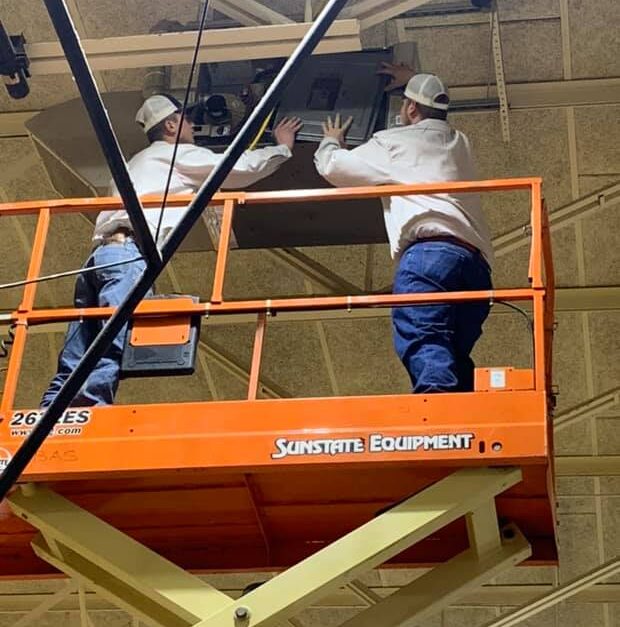
Shopping around for Duct Work in Hoyte?
Climate Control A/C & Heating supports heating, cooling and indoor comfort here at home.
Contact us at 512-446-4020 to talk it through.
The Cooling Season: Local Conditions Come First
Hot weather in Hoyte settles in for months at a time; the machine on the pad outside is among the busiest appliances a household owns.
Damp air changes how a house feels at any given temperature; an air conditioner pulls it out as a side effect of cooling, but only while it is actually running.
Capacity, airflow and cleanliness work together, and a weakness in one shows up as a house that never feels quite right, even before anything breaks.
Moving Heat Outdoors – Heat Moves, Cold Is Not Made
Cooling equipment does not manufacture chill; a sealed loop of refrigerant absorbs heat at one point and releases it at another.
A cold coil indoors takes in heat while the blower keeps air moving; the outdoor cabinet houses the compressor, the condenser coil and a fan.
Starting and stopping thousands of times a season is hard on switches and capacitors; the compressor itself can last a long time when it is kept clean and properly charged.
When the House Stops Cooling: Where the Fault Usually Hides
Air conditioning repair begins with finding out why the system quit, not with swapping parts; three very different faults can feel identical from the thermostat.
When the outdoor fan hums but will not spin, a capacitor is often the reason, though a part that failed once can point to heat or a loose connection that needs attention.
Frost on the indoor coil or the copper line is a warning sign, not a cooling success, and running the system while it is frozen can damage the compressor.
A properly working system keeps its charge for good, since nothing burns it off, and adding more without finding the leak only delays the same problem.
A blocked drain line can back water into the pan and trip a safety switch, and the fix is usually quick once the blockage is found.
Symptoms Worth Noticing: Small Changes, Big Hints
Cooling equipment usually gives notice before it fails outright; these are the signs a homeowner can see, hear or feel without any tools:
- Uneven temperatures from room to room even though the blower sounds normal.
- A hissing noise near the refrigerant lines, particularly at the start of a cycle.
- Repeated short runs that never finish a cooling cycle; parts wear faster.
- Condensation where there should be none, which deserves a look before damage spreads.
Preventive Service: Habits That Pay Off Later
Scheduled air conditioning maintenance gives a technician a look at the system while it still works; the technician cleans what gets dirty and measures what can drift.
A clogged filter chokes the blower and starves the coil of air, which is a quick job that helps the entire system.
Heat flows through each of the coils, and each one loses capacity when it collects dirt; temperature drop and refrigerant pressures are measured to show how the loop is behaving.
When Replacement Makes Sense – a Decision Worth Making Carefully
Replacement is worth considering once repairs pile up on equipment that was already aging; the right answer differs from one house to the next.
The refrigerant a system uses is worth asking about when a repair involves the sealed loop, and that can tip a close decision toward replacement.
Variable-speed designs hold temperature and humidity more precisely than single-stage units; replacement can pay back in comfort as well as in energy use.
Planning a New Installation – Bigger Is Not Better
An air conditioning install starts with a load calculation, not a rule of thumb; windows, attic insulation and ductwork all change the answer.
Oversizing is a common mistake, and it wears out parts through constant starting, and a unit that is too small runs constantly without catching up.
A complete installation pairs the condenser, the coil and the air handler as one system, and a startup check confirms the charge, the airflow and the temperature drop.
Ducts: the Lungs of the House
In many houses, the ducts decide whether a new system performs as promised, and leaks, bad bends and poor insulation waste a large share of the effort.
Runs through an unconditioned attic or crawl space gain heat or lose chill unless sealed and wrapped; the usual fix is sealing the seams, supporting the runs and adding insulation.
Cleaning the Air Paths: What It Can and Cannot Do
A duct cleaning visit reaches the trunk lines, the branches and the grilles; construction dust, rodents or visible mold growth are the usual reasons to schedule it.
Clean ducts work best alongside a good filter and sealed connections, and a plain look inside the duct tells the real story.
The Two-Way Heat Mover: Strengths and Limits
Instead of burning fuel, heat pumps pull warmth from outdoor air and carry it inside, and one system handles both seasons with a single set of equipment.
Auxiliary heat strips back up the heat pump on the coldest mornings, and a system that runs strips constantly deserves a diagnostic visit.
Gas Furnaces – the Machinery in the Closet
Gas furnaces burn natural gas or propane in a burner and pass the heat through a heat exchanger, and a fault in any one step can stop the whole cycle.
Safe furnace operation depends on clear venting and working carbon monoxide alarms, and a detector near the sleeping areas gives early warning.
Electric Heating Systems: What to Expect From It
Elements in an electric air handler turn current directly into heat; the electrical safety devices do the most important work.
Resistance heat converts every unit of power to heat, while a heat pump moves several units for each one consumed, and many homes pair a heat pump with strips as a backup.
Heating Services: What to Do Before the First Freeze
Heating season in this part of Texas is brief, with sudden swings between warm days and freezing nights, and a test on a mild day beats a surprise on a freezing one.
Furnaces, heat pumps and electric air handlers all heat homes, and each has its own checkup list; the common thread is clean air passages and a blower that moves enough air.
Heating With Water: How Hydronic Systems Differ
Radiant floor and baseboard heating both rely on a boiler to heat the water, but a building with a boiler needs service from someone who knows hydronics.
A boiler tune-up checks combustion, water level, pressure and the controls that keep it safe, and bleeding air from the loops is a routine task.
The Air Inside Your Walls – the Part You Cannot See
Air inside a home can carry particles, gases and moisture that the thermostat never shows, which makes the HVAC system the natural place to improve air quality.
Residential air quality improves when the filter fits the system and gets changed on schedule, and sealing return leaks keeps unfiltered air from sneaking around the filter.
Commercial air quality depends on ventilation rates, filtration and the upkeep of rooftop equipment; ventilation rules for occupied spaces set a baseline.
Air Purification Options – Useful, With Realistic Goals
Some purifiers capture particles with high-efficiency filters, and others target odors with carbon; any claims about performance should be checked against the specification.
A purifier works alongside good ventilation and a clean system, not in place of them, which is why one device rarely fits every home.
Add-On Air Treatments: Where They Fit
UV lights install in the air handler and shine on the indoor coil and drain pan to limit microbial growth, and a technician can explain which kind fits a given air handler.
An antimicrobial mist is sprayed or fogged onto surfaces inside the system or the building; the product and method should be explained in advance.
Ventilating – Not Too Much, Not Too Little
Planned ventilation brings in measured amounts of outdoor air and exhausts the stale air, and dampers, filters and controls keep the supply of fresh air in balance.
Exhaust fans that move air out of kitchens and baths should vent outdoors, not into the attic, and this is another reason the whole building matters.
Commercial AC Systems – Equipment Built for Heavier Duty
Every commercial air conditioning system serves a space with different loads from a house, such as crowds, lighting and equipment; a break in cooling can mean lost customers or a workday cut short.
Commercial equipment is built to run long hours, and it still depends on clean coils and clear drains, and larger properties may phase work across several units.
Chiller Systems for Larger Buildings – Water Carries the Cold
Instead of cooling air directly, chiller systems cool a water loop that serves coils across the property, and they need specialized service knowledge.
Cold Storage Equipment – Why Failures Matter Fast
A refrigeration problem is often found in the condenser, the defrost control or a worn door gasket; regular cleaning of condenser coils matters even more than in comfort cooling.
How Climate Control A/C & Heating Goes About Duct Work throughout Hoyte
Before touching a tool, the technician hears the history of the problem from the person who lives with it, and then the system gets inspected with gauges, meters and a careful eye.
Recommendations come with explanations, so choices rest on information rather than pressure; good service depends on trust running both ways.
Let's Talk About Your Equipment
Phone 512-446-4020 to describe what is going on and find the next step.
Closing Thoughts – Keep Things Simple
From Duct Work to routine upkeep, good outcomes come from understanding the equipment and caring for it, and Climate Control A/C & Heating is ready to help with it.