
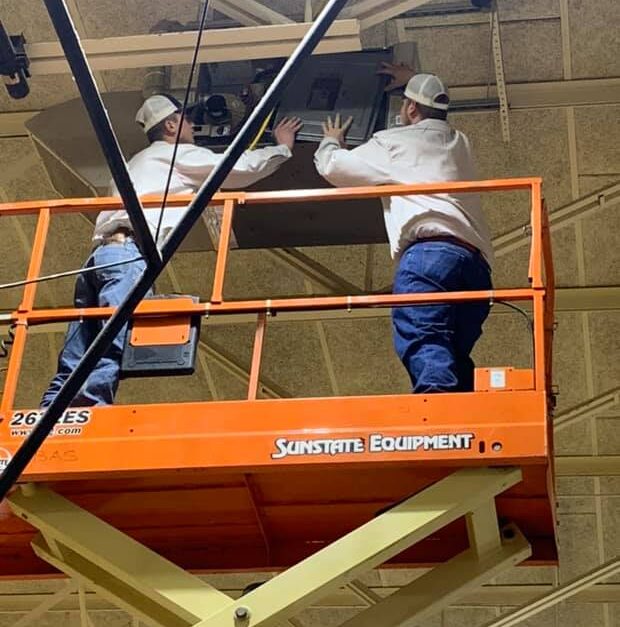
In need of Commercial Air Quality around Val Verde?
Climate Control A/C & Heating looks after heating, cooling and indoor comfort here at home.
Dial 512-446-4020 to start the conversation.
The Cooling Season – the Setting for Every Choice
Hot weather in Val Verde settles in for months at a time, which means a cooling unit seldom rests between spring and fall.
Moisture in the air matters as much as the thermometer reading, and the coil is where the moisture condenses and drains away.
Proper equipment size, good airflow and clean surfaces separate a comfortable house from a clammy one, and each one is something a technician can check on site.
The Refrigerant Cycle: What Each Piece Does
An air conditioner does not create cold; it collects heat inside the house and dumps it into the outdoor air.
The indoor coil is where the cooling happens, and the condensing unit in the yard completes the loop by getting rid of the heat.
Parts that wear out fastest are usually the small electrical ones; the compressor itself can last a long time when it is kept clean and properly charged.
Diagnosing a Weak Cooling System: Repair Starts With Diagnosis
A proper air conditioning repair sorts the symptom from the cause before anything is replaced; weak cooling is a symptom that many separate faults share.
If the outdoor unit is silent, power, a breaker and the low-voltage wiring are the first suspects, and these are among the quicker repairs when the technician has the part.
A coil that ices over points toward airflow or refrigerant; switching the system off and letting it thaw protects the equipment until it can be checked.
Low refrigerant means a leak, because the charge stays put when the loop is tight, and the leak is the thing that has to be found and dealt with.
Condensate has to leave the house, so a blocked line sends it somewhere less welcome; moisture removed from muggy air adds up to gallons a day.
Symptoms Worth Noticing: Trust Your Senses
A struggling cooling system leaves clues around the house; these are the signs a homeowner can see, hear or feel without any tools:
- Supply air that feels weak or lukewarm even though the blower sounds normal.
- Grinding, squealing or rattling from the outdoor cabinet, often getting louder from one week to the next.
- Short, frequent cycling of the outdoor unit; parts wear faster.
- Condensation where there should be none, which deserves a look before damage spreads.
Keeping Equipment Healthy: Habits That Pay Off Later
Scheduled air conditioning maintenance gives a technician a look at the system while it still works; the technician cleans what gets dirty and measures what can drift.
A clogged filter chokes the blower and starves the coil of air; the label on the filter and the look of its surface are a reliable guide.
Dirt on the condenser makes the compressor run hotter, so that coil gets cleaned too; capacitors, contactors, wiring and motor amperage get checked as well.
Time for a Change: Weighing the Options Honestly
An old unit that needs repair after repair may be a candidate for AC replacement, with the condition of the compressor and coils weighing heavily.
Some older units run on refrigerant that is now scarce, which affects repair decisions; matching parts and refrigerant correctly keeps the whole loop reliable.
Efficiency numbers on new equipment, such as SEER2, give a way to compare models fairly, and in a long cooling season those savings add up.
Planning a New Installation: Where Good Results Begin
Air conditioning install quality depends on matching capacity to what the building actually needs, which is why square footage alone is a poor guide.
Equipment that is too big runs in bursts, which hurts comfort and efficiency alike; careful sizing protects comfort and the equipment.
Matched components perform to their design efficiency, while mismatched ones fall short; commissioning measurements confirm that the system performs as designed.
Ductwork Matters – What Hides Above the Ceiling
Duct work moves the air that the equipment has cooled or heated, so its design shapes every room; undersized trunks, kinked runs and open seams all choke the flow.
Leaks at joints pull attic air into the system and push cooled air out into the rafters, which can improve comfort without touching the equipment.
Duct Cleaning – Reasons and Limits
Duct cleaning is a mechanical job that brushes loose and vacuums out what has collected, and the decision should rest on what is actually in the ducts.
Clean ducts work best alongside a good filter and sealed connections, and be cautious of anyone who promises that cleaning will cure every problem.
Reversible Systems – Why They Suit the Region
Instead of burning fuel, heat pumps pull warmth from outdoor air and carry it inside, and that makes them efficient in climates with mild winters.
Defrost cycles and backup heat are normal parts of winter operation, and a technician can check whether the strips are running more than they should.
Fuel-Fired Warmth – Parts, Safety and Service
Inside a gas furnace, a burner lights, a heat exchanger warms up and the blower pushes air across it, and a dirty flame sensor is a frequent reason for a furnace that lights and then shuts off.
The annual furnace check is also a safety check on combustion and exhaust; never ignore an alarm or a smell of gas.
All-Electric Warmth: Simple Equipment, Steady Output
Electric heating systems warm the air with heating elements instead of a flame, and the equipment is simple, with few moving parts.
The trade-off with electric heat is simple equipment against higher running use; the choice depends on what fuel is available at the property.
Heating Services – Reliable Heat on Demand
Winters in Texas are short, but cold fronts can drop temperatures sharply in a matter of hours, which is why heating services are well scheduled in fall.
From gas furnaces to heat pumps, each heating system needs different attention before winter, which keeps the work simple to explain and easy to follow.
Boiler Systems – Radiators, Coils and Radiant Floors
A boiler warms water in a closed loop, and pumps circulate it to the rooms, and they are less common in Texas than furnaces and heat pumps.
Service on boiler systems covers the burner, the water pressure, the circulator pump, the expansion tank and the safety relief valve; neglected boilers corrode inside, so water quality and venting matter.
Cleaner Air Indoors: Starting With Facts
Air inside a home can carry particles, gases and moisture that the thermostat never shows; the equipment that moves air is also the equipment that carries the contaminants.
Filter grade matters, but a very dense filter in the wrong system can choke the airflow; humidity control prevents the conditions mold needs.
Offices, shops and restaurants need steady fresh air so that crowds do not make the space stuffy, and a maintenance plan fits the building's size and hours.
Air Purification Options: Matching the Tool to the Problem
Purifiers remove particles or gases from the air, and they come as whole-home units or portable room models, and the right choice depends on what needs removing.
Purifiers help most when the air handler is clean, the ducts are sealed and humidity is under control; the goal is a measurable improvement, not a gadget.
Managing Growth Inside the System: What They Do and What They Do Not
UV lights are a common add-on in humid climates, where the evaporator coil stays wet for months; bulbs lose strength over time and need changing.
An antimicrobial mist is sprayed or fogged onto surfaces inside the system or the building; the underlying cause still has to be fixed.
Fresh Air and Exhaust: Why Tight Buildings Need It
Bath fans, kitchen hoods and outdoor air intakes are all part of ventilating a modern building; the cooling equipment has to be sized to handle the fresh air coming in.
Good attic airflow lowers the heat that leaks down into the living space, and a technician who looks at the surroundings sees more than the unit alone.
Commercial Cooling: Comfort That Supports the Work
A commercial AC system is sized for heat from people, lighting and machines as well as sunshine, and filters, belts, coils and drains are the usual checklist items.
Condensate drains on rooftops clog with debris, and the water can stain ceilings below; a clear plan helps the business stay open.
Chillers: How They Differ From Packaged Units
Chiller systems are used in large offices, schools, hospitals and industrial plants, and the plant includes a chiller, pumps, a cooling tower or air-cooled condenser, and controls.
Keeping Food and Product Cold – Why Failures Matter Fast
Businesses that sell or store food depend on refrigeration service to hold safe temperatures; regular cleaning of condenser coils matters even more than in comfort cooling.
How Climate Control A/C & Heating Works Through Commercial Air Quality around Val Verde
Before touching a tool, the technician hears the history of the problem from the person who lives with it, then examines the equipment and measures what can be measured.
A repair, a tune-up and a replacement are each described for what they are and what they involve, and the owner stays in control of the decision.
Start With a Conversation
Call 512-446-4020 to schedule service or ask what makes sense for your building.
Putting It Together: Attention Now Saves Trouble Later
Interest in Commercial Air Quality often starts with a problem, and the solution starts with a clear diagnosis, and Climate Control A/C & Heating answers questions at 512-446-4020.