
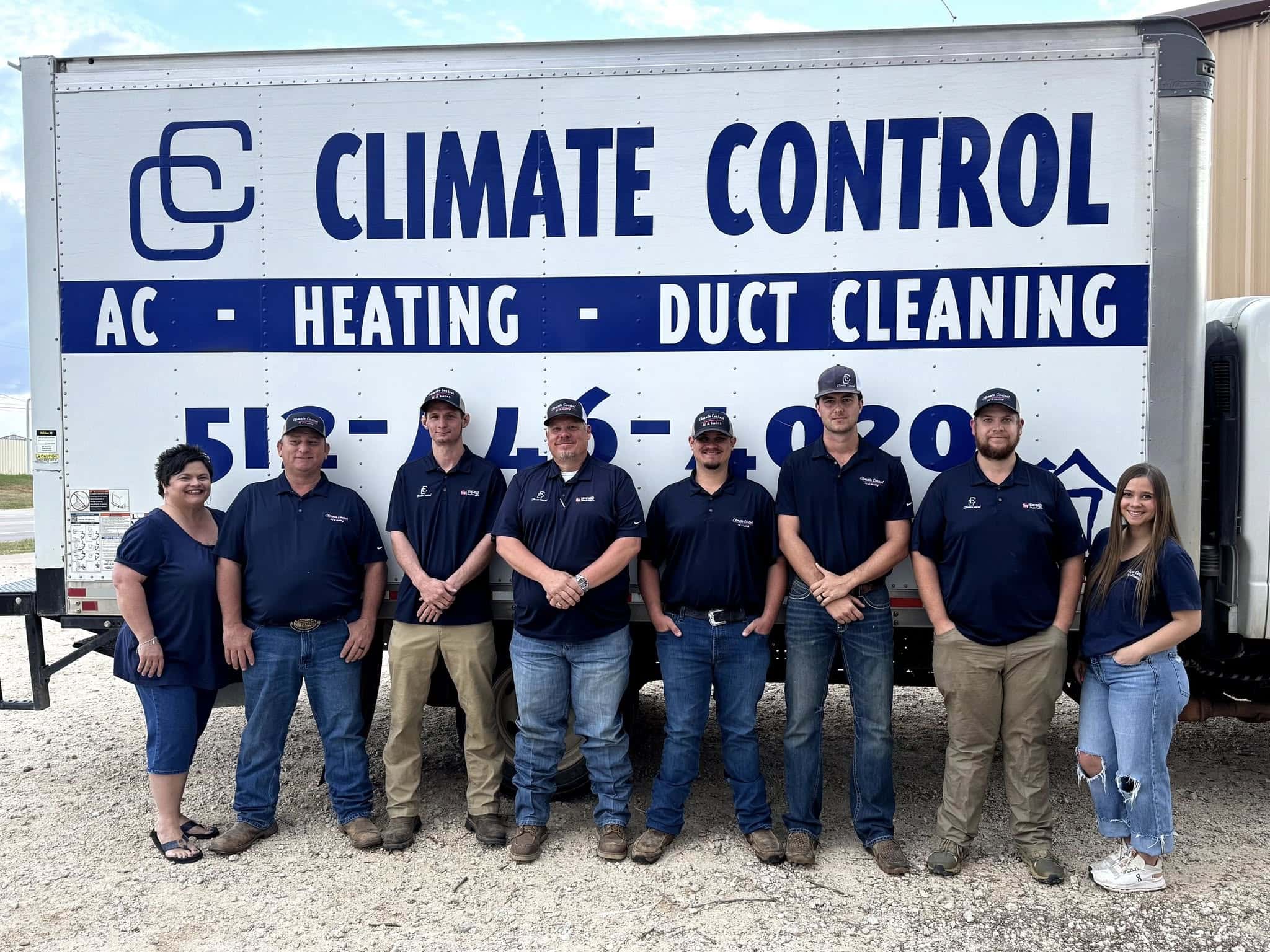
In need of Air Conditioning near Rockdale?
Climate Control A/C & Heating looks after comfort equipment of every kind close to home.
Call 512-446-4020 to describe what your equipment is doing.
Heat and Humidity: the Climate Behind the Equipment
A Rockdale summer stacks hot afternoon after hot afternoon, and the equipment that carries the load is working harder than its owner tends to notice.
Water vapor rides along with the heat on a muggy afternoon; the indoor coil acts as the dehumidifier, collecting water that leaves through a drain line.
Proper equipment size, good airflow and clean surfaces separate a comfortable house from a clammy one, long before a breakdown ever happens.
The Refrigerant Cycle – Parts and Their Jobs
Nothing in a cooling system generates cold air from scratch; it collects heat inside the house and dumps it into the outdoor air.
The air handler holds the indoor coil and the blower that pushes air across it, and the outdoor unit holds the compressor and condenser coil that push that heat away.
Wear tends to show up in the electrical components before the big mechanical ones, and the larger parts usually go on to last much longer.
Problems Behind a Warm House – Finding the Real Cause
Air conditioning repair begins with finding out why the system quit, not with swapping parts, and each of those causes needs a different fix.
A unit that clicks and does nothing may be waiting on a bad contactor or a dead control board, and these are among the quicker repairs when the technician has the part.
A frozen evaporator coil blocks the very air it is supposed to cool; switching the system off and letting it thaw protects the equipment until it can be checked.
A properly working system keeps its charge for good, since nothing burns it off, which is why measuring pressures and temperatures matters more than adding gas.
A blocked drain line can back water into the pan and trip a safety switch, though a stopped system after heavy use is a good moment to check it.
Warning Signs: Small Changes, Big Hints
The system tends to behave differently well before the day it stops; these are the signs a homeowner can see, hear or feel without any tools:
- Uneven temperatures from room to room though the unit sounds normal.
- Loud banging when the compressor starts, often getting louder from one week to the next.
- Short, frequent cycling of the outdoor unit, with indoor humidity climbing.
- Pooling water under the furnace or air handler, often tracing back to the drain line.
Tune-Ups for Cooling Gear – Small Tasks, Long Equipment Life
Routine AC maintenance heads off the kind of failure that arrives on a hot afternoon, with attention paid to coils, drains, belts and wiring.
Changing the filter on schedule protects the coil, the blower and the ductwork, and a quick check each month is a good habit through the summer.
The visit usually includes the condenser coil, the evaporator coil and a flush of the drain line; the report reflects measurements rather than guesses.
Deciding on a New System – Age, Condition and Efficiency
The conversation about replacement starts when age, condition and comfort all point the same way, and an honest technician explains both paths.
Older equipment may use a refrigerant that has been phased out of new production; current equipment follows the refrigerant rules in force today.
Efficiency numbers on new equipment, such as SEER2, give a way to compare models fairly; the benefit grows in houses that rely on cooling much of the year.
Sizing and Setup – Bigger Is Not Better
An air conditioning install starts with a load calculation, not a rule of thumb, and the standard method for homes is a room-by-room heat gain calculation.
A unit that is too large satisfies the thermostat fast and leaves the humidity behind; careful sizing protects comfort and the equipment.
The outdoor pad, the line set, the electrical disconnect and the drain all need planning, and a startup check confirms the charge, the airflow and the temperature drop.
Ducts – What Hides Above the Ceiling
Good duct work delivers the right amount of air to each room and brings it back again; a house with comfort problems deserves a look at its air paths.
Leaks at joints pull attic air into the system and push cooled air out into the rafters, and a technician can often find the leaks with a pressure test.
Clearing Out the Channels – Reasons and Limits
A duct cleaning visit reaches the trunk lines, the branches and the grilles, and it makes the most sense after a renovation, a pest problem or visible contamination.
Clean ducts work best alongside a good filter and sealed connections; ask to see before-and-after photos of the work.
Heat Pumps: Strengths and Limits
Instead of burning fuel, heat pumps pull warmth from outdoor air and carry it inside, and one system handles both seasons with a single set of equipment.
A heat pump may call on backup heat during a hard freeze or while defrosting its coil, but a heat pump that always needs the backup may have a fault.
Fuel-Fired Warmth – the Machinery in the Closet
The sequence in a gas furnace runs from thermostat call to draft fan, igniter, gas valve and flame proof; a cracked heat exchanger is a safety issue that calls for a prompt professional look.
Carbon monoxide detectors belong in any home with fuel-burning equipment; never ignore an alarm or a smell of gas.
All-Electric Warmth: What to Expect From It
An electric furnace passes air over banks of resistance elements that glow when energized; troubleshooting centers on power, controls and the blower motor.
Electricity makes heat at a steady rate, but resistance heat uses more power than a heat pump does for the same warmth; the decision rests on the building, not just the equipment.
Getting Ready for Cold Weather: Planning for Sudden Cold
A hard freeze can arrive with little warning, so heating equipment needs to be ready before it is called on; heating systems are better checked before they are needed.
Heating services cover igniters and burners on gas units, reversing valves on heat pumps and elements on electric ones, and a technician adjusts the visit to the equipment on site.
Boilers – Quiet, Even Heat
Boiler systems heat water or make steam and send it through pipes to radiators, baseboards or in-floor loops; an owner with a boiler should look for experience with water-based heat.
Pressure, temperature and flame quality are the numbers that matter in a boiler check; neglected boilers corrode inside, so water quality and venting matter.
Air Quality Basics – Sources, Symptoms and Solutions
Residential air quality is shaped by dust, pet dander, cooking fumes, cleaning products and moisture, which makes the HVAC system the natural place to improve air quality.
A better filter helps only if the blower can pull air through it without strain; a deeper media cabinet gives better filtering with less restriction.
Commercial air quality depends on ventilation rates, filtration and the upkeep of rooftop equipment, and a maintenance plan fits the building's size and hours.
Cleaning the Air Itself: Matching the Tool to the Problem
Purifiers remove particles or gases from the air, and they come as whole-home units or portable room models, and ozone-producing models are better avoided in occupied rooms.
Purifiers help most when the air handler is clean, the ducts are sealed and humidity is under control; the goal is a measurable improvement, not a gadget.
Managing Growth Inside the System: Understanding the Options
A UV lamp does not clean the air passing by, but it treats the surfaces it can see; bulbs lose strength over time and need changing.
Mist treatments use an approved solution applied by a technician in a controlled way; the underlying cause still has to be fixed.
Ventilating: Why Tight Buildings Need It
Bath fans, kitchen hoods and outdoor air intakes are all part of ventilating a modern building, and in a humid climate the incoming air needs dehumidifying.
Good attic airflow lowers the heat that leaks down into the living space; the equipment, the envelope and the airflow work as a team.
Business Climate Control – Planning Around the Business
Every commercial air conditioning system serves a space with different loads from a house, such as crowds, lighting and equipment, which is why many businesses plan service around their schedule.
Condensate drains on rooftops clog with debris, and the water can stain ceilings below, and replacement decisions weigh downtime as well as equipment.
Chiller Systems for Larger Buildings: Where They Make Sense
A building with chilled water pulls its cooling from a central plant rather than separate rooftop units; the equipment is larger, more complex and more closely monitored.
Refrigeration Service – Why Failures Matter Fast
Walk-in coolers rely on evaporators, condensing units, defrost systems and door seals working together, and temperature drift is the warning sign to act on.
How Climate Control A/C & Heating Looks at Air Conditioning throughout Rockdale
The technician asks what changed, what is happening and how long it has been going on; readings replace guesses, and the findings are explained in plain language.
A repair, a tune-up and a replacement are each described for what they are and what they involve; good service depends on trust running both ways.
Comfort Is a Phone Call Away
Call 512-446-4020 to set up a visit or talk through your options.
What to Remember: Attention Now Saves Trouble Later
Searching for Air Conditioning in Rockdale usually leads to the same few questions about size, age, airflow and care; Climate Control A/C & Heating can walk through the choices with you.