
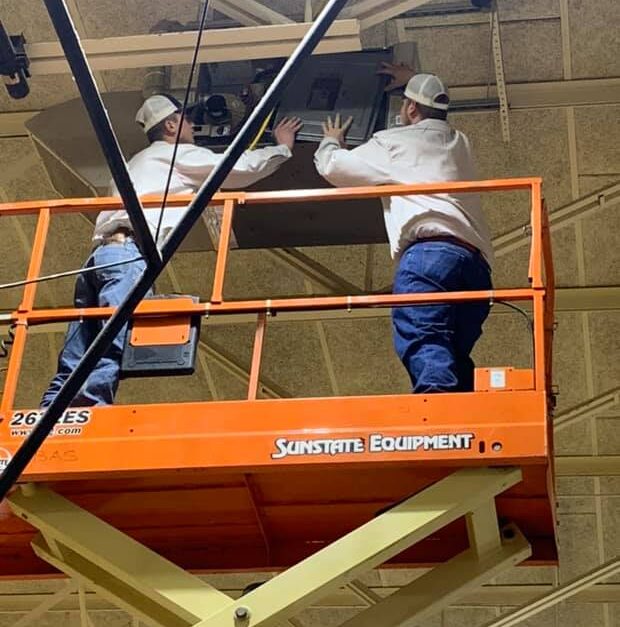
Shopping around for AC Replacement across Rockdale?
Climate Control A/C & Heating looks after heating, cooling and indoor comfort in the surrounding towns.
Reach us at 512-446-4020 to describe what your equipment is doing.
Summer Load – the Setting for Every Choice
Warm weather in Rockdale stretches across much of the calendar; a cooling system here logs far more running hours than one in a mild climate.
Humidity is half of the comfort problem, not an afterthought, and removing it takes steady run time rather than quick bursts.
Right size, steady airflow and a clean coil explain much of how a house feels, whatever the label on the box promises.
The Refrigerant Cycle: What Each Piece Does
Nothing in a cooling system generates cold air from scratch; refrigerant picks up warmth from indoor air and carries it outside.
A cold coil indoors takes in heat while the blower keeps air moving, and the condensing unit in the yard completes the loop by getting rid of the heat.
Wear tends to show up in the electrical components before the big mechanical ones, and that is good news, because they are far simpler to fix than a compressor.
Service Calls in Hot Weather: a Look at Common Failures
Good AC repair is detective work before it is wrench work; the same warm room can come from a dead capacitor, a frozen coil or a leak.
If the outdoor unit is silent, power, a breaker and the low-voltage wiring are the first suspects, and they usually repair cleanly because the parts are small.
Ice on the lines almost always means too little air or too little refrigerant; switching the system off and letting it thaw protects the equipment until it can be checked.
Refrigerant is not a consumable that needs topping off every season, which is why measuring pressures and temperatures matters more than adding gas.
Clogged condensate drains are a quiet cause of water stains and shutdowns; moisture removed from muggy air adds up to gallons a day.
Warning Signs – What Owners Notice First
Most breakdowns announce themselves with small changes in behavior; the list below covers what owners tend to notice:
- One end of the house that feels warmer even though the blower sounds normal.
- Loud banging when the compressor starts, whether or not the cooling seems to work.
- An outdoor unit that starts and stops every few minutes, along with a higher electric bill.
- Musty smells when the blower starts, particularly after long runs.
Keeping Equipment Healthy – Small Tasks, Long Equipment Life
Regular AC maintenance trims the chance of a breakdown during the hottest week; the technician cleans what gets dirty and measures what can drift.
Dirty filters are the single easiest thing for an owner to handle; the label on the filter and the look of its surface are a reliable guide.
Dirt on the condenser makes the compressor run hotter, so that coil gets cleaned too; tightening electrical connections is a standard part of the job.
Repair or Replace: Weighing the Options Honestly
The conversation about replacement starts when age, condition and comfort all point the same way, and a good evaluation lays out repair and replacement side by side.
Some older units run on refrigerant that is now scarce, which affects repair decisions; current equipment follows the refrigerant rules in force today.
Today's units move the same heat with less power than equipment from a generation ago, and comfort improves along with the numbers.
Sizing and Setup: the Groundwork Matters
AC install work succeeds or fails on sizing and airflow before any equipment is delivered; windows, attic insulation and ductwork all change the answer.
A unit that is too large satisfies the thermostat fast and leaves the humidity behind; the right size runs long, steady cycles that dry the air.
Every connection, from the refrigerant lines to the thermostat wire, gets sized and routed with care, and a startup check confirms the charge, the airflow and the temperature drop.
Air Distribution: the Lungs of the House
The duct system is as much a part of comfort as the unit that feeds it; undersized trunks, kinked runs and open seams all choke the flow.
Attic duct work in Texas sees extreme heat, so insulation and tight seams earn their keep; the usual fix is sealing the seams, supporting the runs and adding insulation.
Cleaning the Air Paths: Realistic Expectations
Cleaning the ducts means pulling loose material out with agitation tools and a strong vacuum; cleaning is not a substitute for fixing leaks or changing filters.
A cleaning that ignores leaks and filtration is a short-term fix at best, and claims about health benefits should be treated skeptically.
The Two-Way Heat Mover: Strengths and Limits
A heat pump is an air conditioner that can run backward to warm the house, and one system handles both seasons with a single set of equipment.
Auxiliary heat strips back up the heat pump on the coldest mornings, but a heat pump that always needs the backup may have a fault.
Furnace Basics: What Owners Should Know
A furnace heats air by passing it over a hot metal exchanger while exhaust gases leave through a flue, and a fault in any one step can stop the whole cycle.
Carbon monoxide detectors belong in any home with fuel-burning equipment; never ignore an alarm or a smell of gas.
Electric Heating Systems: What to Expect From It
Elements in an electric air handler turn current directly into heat, and the equipment is simple, with few moving parts.
Compared with a heat pump, strips and electric furnaces draw heavily for the heat they make, and many homes pair a heat pump with strips as a backup.
Warmth When the Front Arrives – Test Before You Need It
Heating season in this part of Texas is brief, with sudden swings between warm days and freezing nights; running the heater briefly in fall shows whether it lights, blows warm air and shuts off properly.
Heating systems come in several forms, and the same house may use gas furnaces, heat pumps or electric heating systems, which keeps the work simple to explain and easy to follow.
Heating With Water: Found in Older and Larger Buildings
A boiler warms water in a closed loop, and pumps circulate it to the rooms, and the parts, from circulators to expansion tanks, differ from forced-air equipment.
The relief valve and low-water cutoff protect a boiler, so they get tested during service, and bleeding air from the loops is a routine task.
Cleaner Air Indoors – the Part You Cannot See
The air in a house mixes outdoor pollen, indoor dust and chemicals from everyday products, and cleaner air depends on filtration, ventilation and moisture control working together.
Choosing a filter means balancing how much it removes against how much resistance it adds, and a technician can recommend what the equipment can handle.
Businesses face their own air issues, from shared air handlers to customers coming and going all day; scheduled filter changes and coil cleaning keep these systems honest.
Cleaning the Air Itself: Sorting Fact From Marketing
Some purifiers capture particles with high-efficiency filters, and others target odors with carbon, and ozone-producing models are better avoided in occupied rooms.
Equipment that cleans the air cannot make up for a dirty coil or a leaky return; the goal is a measurable improvement, not a gadget.
Add-On Air Treatments – Reasonable Expectations
Ultraviolet lamps near the coil are meant to keep it cleaner by discouraging growth on damp surfaces, and a technician can explain which kind fits a given air handler.
Mist treatments use an approved solution applied by a technician in a controlled way, and it works best where the source of moisture has been dealt with.
Bringing Outdoor Air In – Not Too Much, Not Too Little
Ventilating also removes moisture from kitchens and baths before it settles into the structure; the cooling equipment has to be sized to handle the fresh air coming in.
A hot attic loads up the ceiling and the ducts, so attic ventilation and insulation help the system; the equipment, the envelope and the airflow work as a team.
Cooling for Shops, Offices and Buildings – Equipment Built for Heavier Duty
A commercial AC system is sized for heat from people, lighting and machines as well as sunshine, and filters, belts, coils and drains are the usual checklist items.
Rooftop units sit in the sun and wind, so the cabinets, the coils and the curbs take a beating; a clear plan helps the business stay open.
Chillers – Big Buildings, Big Loads
Chiller systems cool water, and pumps carry the chilled water through pipes to air handlers throughout a building, and they need specialized service knowledge.
Keeping Food and Product Cold: Temperature Is the Whole Job
A refrigeration problem is often found in the condenser, the defrost control or a worn door gasket, and food safety rules set limits that equipment must keep.
How Climate Control A/C & Heating Works Through AC Replacement in Rockdale
Conversation comes first, because the owner knows the symptoms better than anyone, then examines the equipment and measures what can be measured.
The owner hears what needs to happen now, what can wait and what is optional; nothing starts without a clear understanding.
Comfort Is a Phone Call Away
Dial 512-446-4020 to line up service or learn what to expect.
What to Remember: Comfort Is a System
Interest in AC Replacement often starts with a problem, and the solution starts with a clear diagnosis; Climate Control A/C & Heating can walk through the choices with you.