
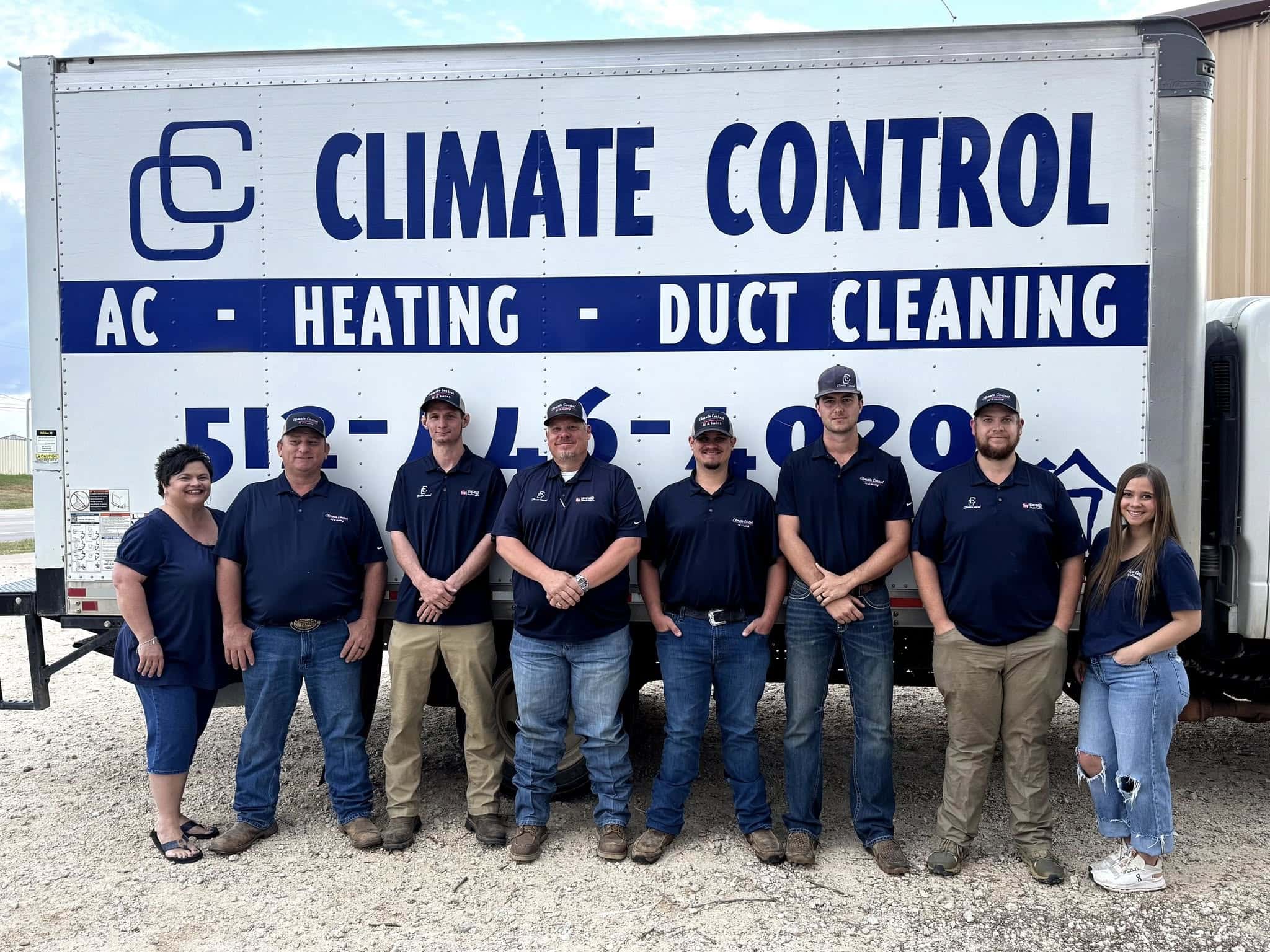
Looking for Electric Heating Systems around San Gabriel?
Climate Control A/C & Heating services cooling, heating and the air indoors in the surrounding towns.
Reach us at 512-446-4020 to describe what your equipment is doing.
A Hot, Wet Climate: Local Conditions Come First
Summers across San Gabriel run long, hot and humid; the machine on the pad outside is among the busiest appliances a household owns.
Moisture in the air matters as much as the thermometer reading, and removing it takes steady run time rather than quick bursts.
Proper equipment size, good airflow and clean surfaces separate a comfortable house from a clammy one, whatever the label on the box promises.
The Refrigerant Cycle: a Plain Explanation
A central air conditioner is a heat mover, not a cold maker; refrigerant picks up warmth from indoor air and carries it outside.
Inside the house, the evaporator coil does the absorbing, and the outdoor unit holds the compressor and condenser coil that push that heat away.
Parts that wear out fastest are usually the small electrical ones, and that is good news, because they are far simpler to fix than a compressor.
Problems Behind a Warm House: Repair Starts With Diagnosis
A thorough air conditioning repair starts with a diagnosis rather than a hunch, and each of those causes needs a different fix.
If the outdoor unit is silent, power, a breaker and the low-voltage wiring are the first suspects; the diagnosis comes before any decision about a bigger job.
Ice on the lines almost always means too little air or too little refrigerant, and running the system while it is frozen can damage the compressor.
A properly working system keeps its charge for good, since nothing burns it off; a responsible repair locates the leak instead of simply adding more.
Algae and debris plug the drain, and many systems have a float switch that stops the cooling; moisture removed from muggy air adds up to gallons a day.
Clues Your System Is Struggling: Spotting Problems Early
A struggling cooling system leaves clues around the house; these are the signs a homeowner can see, hear or feel without any tools:
- Uneven temperatures from room to room despite thin airflow at the vents.
- A burning smell from the vents, whether or not the cooling seems to work.
- Constant starting and stopping through the afternoon, with indoor humidity climbing.
- Water around the air handler, sometimes from a dirty coil.
Routine Care – Small Tasks, Long Equipment Life
Regular AC maintenance trims the chance of a breakdown during the hottest week; the checklist stays short enough to repeat every season.
Filters catch the dust that would otherwise coat the indoor coil; the label on the filter and the look of its surface are a reliable guide.
Heat flows through each of the coils, and each one loses capacity when it collects dirt; capacitors, contactors, wiring and motor amperage get checked as well.
Repair or Replace – Age, Condition and Efficiency
The conversation about replacement starts when age, condition and comfort all point the same way; the right answer differs from one house to the next.
The refrigerant a system uses is worth asking about when a repair involves the sealed loop, which is another reason to get a clear diagnosis before deciding.
Today's units move the same heat with less power than equipment from a generation ago, and comfort improves along with the numbers.
Sizing and Setup: Where Good Results Begin
An air conditioning install starts with a load calculation, not a rule of thumb; orientation and shading matter as much as floor area.
Equipment that is too big runs in bursts, which hurts comfort and efficiency alike; careful sizing protects comfort and the equipment.
Matched components perform to their design efficiency, while mismatched ones fall short, and the installer verifies airflow and charge before leaving the job.
The Hidden Network in the Walls and Attic: the Lungs of the House
Good duct work delivers the right amount of air to each room and brings it back again, which is why the airflow measurement is part of a proper diagnosis.
Ducts that run through a hot attic lose a surprising amount of cooling on the way to the rooms, and sealing with mastic rather than cloth tape holds up better in the heat.
Duct Cleaning: What It Can and Cannot Do
A duct cleaning visit reaches the trunk lines, the branches and the grilles, and the decision should rest on what is actually in the ducts.
A cleaning that ignores leaks and filtration is a short-term fix at best, and claims about health benefits should be treated skeptically.
Cooling and Heating in One – Why They Suit the Region
A heat pump is an air conditioner that can run backward to warm the house, and that makes them efficient in climates with mild winters.
When outdoor temperatures fall far enough, electric strips or a furnace add the missing warmth, but a heat pump that always needs the backup may have a fault.
Furnace Basics – Parts, Safety and Service
A furnace heats air by passing it over a hot metal exchanger while exhaust gases leave through a flue, and a fault in any one step can stop the whole cycle.
Combustion appliances produce carbon monoxide, which is why detectors and clear vents matter, and homeowners should keep the area around the furnace clear of clutter.
All-Electric Warmth: Simple Equipment, Steady Output
Elements in an electric air handler turn current directly into heat, and the main wear items are the elements, the sequencers and the blower.
The trade-off with electric heat is simple equipment against higher running use, and many homes pair a heat pump with strips as a backup.
Getting Ready for Cold Weather: Short Winters Still Bite
A hard freeze can arrive with little warning, so heating equipment needs to be ready before it is called on, which is why heating services are well scheduled in fall.
Furnaces, heat pumps and electric air handlers all heat homes, and each has its own checkup list; one failed switch can shut down an otherwise healthy system.
Hydronic Warmth: Less Common, Still Important
Radiant floor and baseboard heating both rely on a boiler to heat the water, and they are less common in Texas than furnaces and heat pumps.
A boiler tune-up checks combustion, water level, pressure and the controls that keep it safe, and annual attention keeps these systems running quietly.
The Air Inside Your Walls – Sources, Symptoms and Solutions
Indoor air quality describes what is floating in the air inside a building, from dust and pollen to odors and humidity, which makes the HVAC system the natural place to improve air quality.
Filter grade matters, but a very dense filter in the wrong system can choke the airflow, and sealing return leaks keeps unfiltered air from sneaking around the filter.
Commercial air quality depends on ventilation rates, filtration and the upkeep of rooftop equipment, and employee and customer comfort both depend on it.
Filters, Purifiers and Their Limits – Whole-Home or Single Room
Whole-home purifiers treat air as it passes through the system, while portable ones clean a single space; pollen and dust call for filtration, while odors call for carbon.
Good results come from a purifier chosen to complement the rest of the system, and sizing matters here as much as anywhere.
Managing Growth Inside the System: What They Do and What They Do Not
Lamps inside the cabinet work on the coil and pan, and they need replacing on a schedule; ask what the lamp targets and how often it needs service.
An antimicrobial mist is sprayed or fogged onto surfaces inside the system or the building, and ventilation and occupant safety are part of the process.
Bringing Outdoor Air In – Not Too Much, Not Too Little
Ventilating a building means replacing stale indoor air with fresh outdoor air in a controlled way, and dampers, filters and controls keep the supply of fresh air in balance.
Attic ventilation is a separate matter, but it affects how hard the cooling system works, and this is another reason the whole building matters.
Business Climate Control: From Rooftop Units to Split Systems
Shops, restaurants, offices and churches often rely on rooftop equipment that serves a zone of the building, and when it fails the business feels it quickly.
Condensate drains on rooftops clog with debris, and the water can stain ceilings below, and larger properties may phase work across several units.
Cooling at Scale – Water Carries the Cold
Instead of cooling air directly, chiller systems cool a water loop that serves coils across the property, and the plant includes a chiller, pumps, a cooling tower or air-cooled condenser, and controls.
Cold Storage Equipment: Temperature Is the Whole Job
Walk-in coolers rely on evaporators, condensing units, defrost systems and door seals working together; frost buildup, warm product and constant running all point to trouble.
How Climate Control A/C & Heating Goes About Electric Heating Systems throughout San Gabriel
The technician asks what changed, what is happening and how long it has been going on, then examines the equipment and measures what can be measured.
A repair, a tune-up and a replacement are each described for what they are and what they involve; nothing starts without a clear understanding.
Ready When You Are
Dial 512-446-4020 to schedule service or ask what makes sense for your building.
What to Remember – Equipment, Airflow and Air Quality
Whether the need falls under Electric Heating Systems or elsewhere in the heating, cooling and air quality family, the same principles apply, with Climate Control A/C & Heating at 512-446-4020 to start the conversation.