
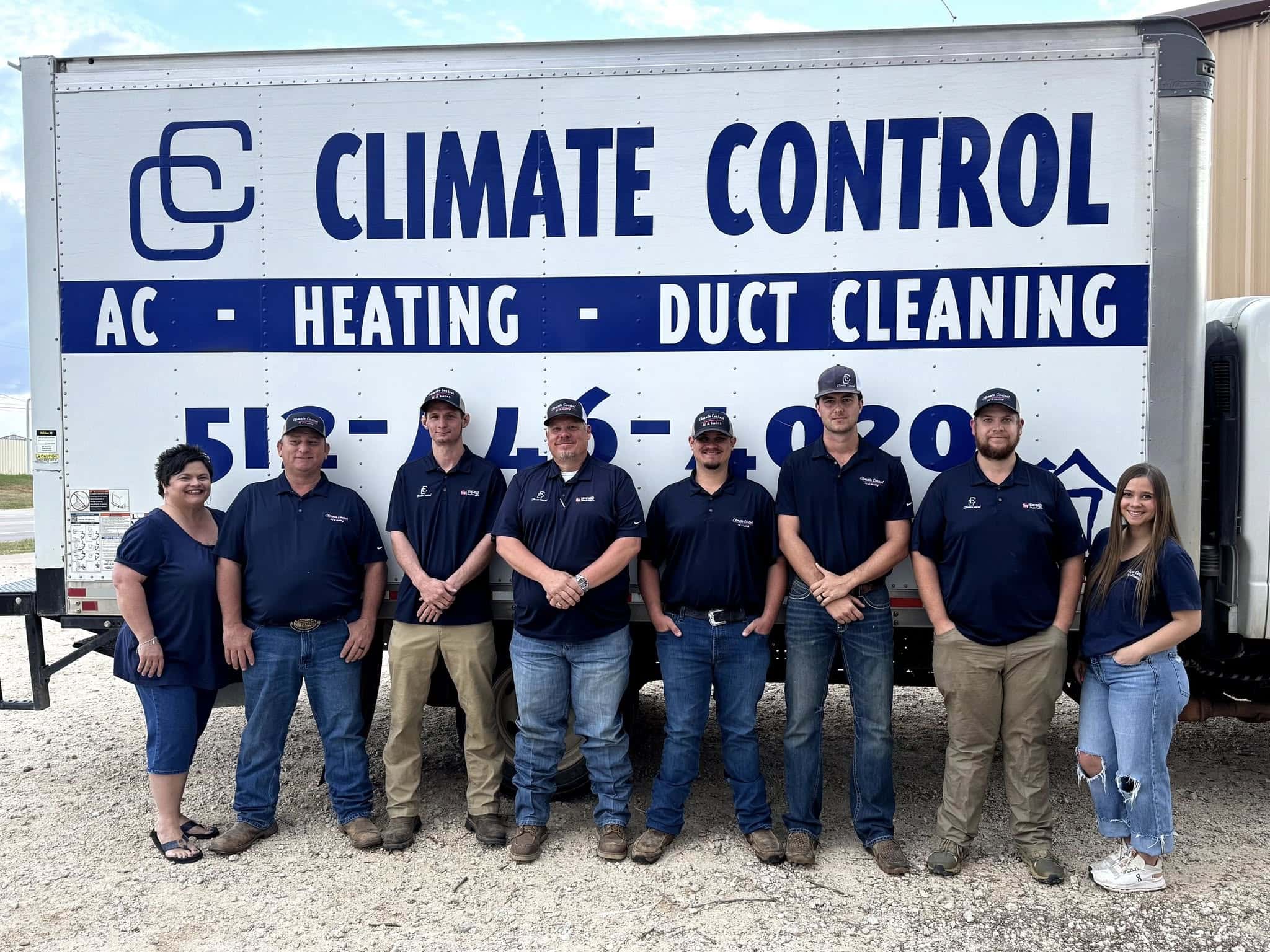
Trying to find AC Repair near Ben Arnold?
Climate Control A/C & Heating looks after climate equipment for homes and businesses in the surrounding towns.
Phone 512-446-4020 to talk it through.
What Summer Asks of a System – the Setting for Every Choice
A Ben Arnold summer stacks hot afternoon after hot afternoon; the machine on the pad outside is among the busiest appliances a household owns.
Moisture in the air matters as much as the thermometer reading; the indoor coil acts as the dehumidifier, collecting water that leaves through a drain line.
Right size, steady airflow and a clean coil explain much of how a house feels, and each one is something a technician can check on site.
Moving Heat Outdoors – Parts and Their Jobs
Cooling equipment does not manufacture chill; it collects heat inside the house and dumps it into the outdoor air.
Warm indoor air passes over a cold coil in the air handler or furnace cabinet; outdoors, a fan pulls air across the condenser coil to shed the load.
Fan motors and start components do a great deal of work for their size; the compressor itself can last a long time when it is kept clean and properly charged.
Cooling Troubles: a Look at Common Failures
AC repair that works starts with measurements, because guessing wastes time and parts, and each of those causes needs a different fix.
A tripped breaker, a failed capacitor or a worn contactor keeps the outdoor unit from starting, though a part that failed once can point to heat or a loose connection that needs attention.
Ice building up near the air handler tells a technician where to look; the coil needs to thaw completely before anyone can measure what is going on.
Refrigerant is sealed in a loop and does not get used up, and the leak is the thing that has to be found and dealt with.
Algae and debris plug the drain, and many systems have a float switch that stops the cooling; moisture removed from muggy air adds up to gallons a day.
Clues Your System Is Struggling: Spotting Problems Early
Cooling equipment usually gives notice before it fails outright, and every item below is a reason to schedule a visit:
- Uneven temperatures from room to room even with the thermostat set low.
- A buzzing or clicking sound at startup, often getting louder from one week to the next.
- Short, frequent cycling of the outdoor unit; parts wear faster.
- Musty smells when the blower starts, which deserves a look before damage spreads.
Preventive Service – Small Tasks, Long Equipment Life
Air conditioning maintenance keeps dust, grime and wear from piling up unseen, with attention paid to coils, drains, belts and wiring.
The air filter is the part most under the homeowner's own control; the label on the filter and the look of its surface are a reliable guide.
A technician cleans or inspects the outdoor coil, the indoor coil and the condensate drain; temperature drop and refrigerant pressures are measured to show how the loop is behaving.
Time for a Change: Weighing the Options Honestly
Replacement is worth considering once repairs pile up on equipment that was already aging; the right answer differs from one house to the next.
Refrigerant types have changed over time, so older systems may use one that is hard to find; current equipment follows the refrigerant rules in force today.
Efficiency numbers on new equipment, such as SEER2, give a way to compare models fairly, which matters most where the system runs for months.
Getting an Install Right: Where Good Results Begin
Choosing equipment for an AC install means working out how much heat the structure gains, which is why square footage alone is a poor guide.
An oversized system cools the air quickly and then shuts off before it removes moisture; one that is too small never reaches the setpoint on the hottest days.
A complete installation pairs the condenser, the coil and the air handler as one system; the owner then gets a walk-through of the thermostat and the filter.
Air Distribution: Moving Air Efficiently
In many houses, the ducts decide whether a new system performs as promised; undersized trunks, kinked runs and open seams all choke the flow.
Attic duct work in Texas sees extreme heat, so insulation and tight seams earn their keep; the usual fix is sealing the seams, supporting the runs and adding insulation.
Duct Cleaning – Reasons and Limits
A duct cleaning visit reaches the trunk lines, the branches and the grilles; cleaning is not a substitute for fixing leaks or changing filters.
Cleaning pays off only when the source of the dirt is also addressed, and claims about health benefits should be treated skeptically.
Cooling and Heating in One – Efficient Most of the Year
A heat pump is an air conditioner that can run backward to warm the house, and one system handles both seasons with a single set of equipment.
A heat pump may call on backup heat during a hard freeze or while defrosting its coil, but a heat pump that always needs the backup may have a fault.
Fuel-Fired Warmth: How a Furnace Heats a House
Gas furnaces rely on an igniter, a flame sensor and a gas valve working in sequence, and a dirty flame sensor is a frequent reason for a furnace that lights and then shuts off.
Safe furnace operation depends on clear venting and working carbon monoxide alarms, and a detector near the sleeping areas gives early warning.
Heating With Electricity: Simple Equipment, Steady Output
Elements in an electric air handler turn current directly into heat, and the equipment is simple, with few moving parts.
The trade-off with electric heat is simple equipment against higher running use, and many homes pair a heat pump with strips as a backup.
Winter Preparation – Test Before You Need It
Winters in Texas are short, but cold fronts can drop temperatures sharply in a matter of hours; problems found early can be repaired before a cold front arrives.
Heating systems come in several forms, and the same house may use gas furnaces, heat pumps or electric heating systems, and the safety controls get tested along with the comfort ones.
Hot-Water Heating: How Hydronic Systems Differ
Radiant floor and baseboard heating both rely on a boiler to heat the water, but a building with a boiler needs service from someone who knows hydronics.
Service on boiler systems covers the burner, the water pressure, the circulator pump, the expansion tank and the safety relief valve, and annual attention keeps these systems running quietly.
What You Breathe at Home – Sources, Symptoms and Solutions
Indoor air quality describes what is floating in the air inside a building, from dust and pollen to odors and humidity, and in Texas, cedar pollen and spring dust can find their way inside.
Residential air quality improves when the filter fits the system and gets changed on schedule; a deeper media cabinet gives better filtering with less restriction.
Larger buildings circulate air through central equipment, so one fault can reach every room, and employee and customer comfort both depend on it.
Choosing an Air Cleaner: What the Labels Mean
Whole-home purifiers treat air as it passes through the system, while portable ones clean a single space; a device that makes bold promises deserves a second look.
Good results come from a purifier chosen to complement the rest of the system; a technician looks at the system before recommending a device.
Keeping Coils Clean Between Visits – Tools for a Damp Climate
Lamps inside the cabinet work on the coil and pan, and they need replacing on a schedule, and results depend on placement, dose and the lamp type.
An antimicrobial mist is sprayed or fogged onto surfaces inside the system or the building; the underlying cause still has to be fixed.
Fresh Air and Exhaust – Not Too Much, Not Too Little
Ventilating a building means replacing stale indoor air with fresh outdoor air in a controlled way, and in a humid climate the incoming air needs dehumidifying.
Exhaust fans that move air out of kitchens and baths should vent outdoors, not into the attic; improvements can start with simple, low-effort fixes.
Business Climate Control – Planning Around the Business
A commercial AC system is often a rooftop package unit that holds the compressor, the coils and the blower in one cabinet; planned maintenance keeps surprises to a minimum.
Condensate drains on rooftops clog with debris, and the water can stain ceilings below, and larger properties may phase work across several units.
Chiller Systems for Larger Buildings – Big Buildings, Big Loads
Instead of cooling air directly, chiller systems cool a water loop that serves coils across the property, and the plant includes a chiller, pumps, a cooling tower or air-cooled condenser, and controls.
Refrigeration Service: Temperature Is the Whole Job
Refrigeration service covers walk-in coolers, reach-in units, freezers, display cases and ice machines, and food safety rules set limits that equipment must keep.
How Climate Control A/C & Heating Looks at AC Repair throughout Ben Arnold
Every visit starts with questions about what the equipment has been doing and when, and then the system gets inspected with gauges, meters and a careful eye.
A repair, a tune-up and a replacement are each described for what they are and what they involve; nothing starts without a clear understanding.
Comfort Is a Phone Call Away
Reach out at 512-446-4020 to line up service or learn what to expect.
A Last Word: Comfort Is a System
Interest in AC Repair often starts with a problem, and the solution starts with a clear diagnosis, and Climate Control A/C & Heating is ready to help with it.