
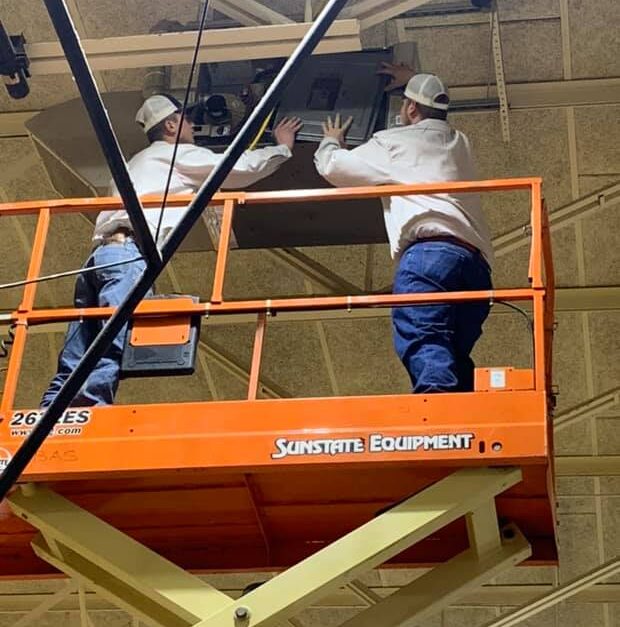
In need of Commercial Air Conditioning System throughout Ben Arnold?
Climate Control A/C & Heating works on the equipment that keeps buildings comfortable in the local area.
Contact us at 512-446-4020 to talk it through.
What Summer Asks of a System – Built for a Long Haul
Hot weather in Ben Arnold settles in for months at a time; a cooling system here logs far more running hours than one in a mild climate.
Moisture in the air matters as much as the thermometer reading, and the coil is where the moisture condenses and drains away.
Right sizing, steady airflow and a clean coil therefore decide how a house feels, and each one is something a technician can check on site.
The Refrigerant Cycle – Parts and Their Jobs
An air conditioner does not create cold; a sealed loop of refrigerant absorbs heat at one point and releases it at another.
The air handler holds the indoor coil and the blower that pushes air across it; outdoors, a fan pulls air across the condenser coil to shed the load.
Parts that wear out fastest are usually the small electrical ones, and that is good news, because they are far simpler to fix than a compressor.
Diagnosing a Weak Cooling System: Repair Starts With Diagnosis
Good AC repair is detective work before it is wrench work; weak cooling is a symptom that many separate faults share.
A tripped breaker, a failed capacitor or a worn contactor keeps the outdoor unit from starting, and each can be tested with a meter in a few minutes.
Ice building up near the air handler tells a technician where to look; the coil needs to thaw completely before anyone can measure what is going on.
The charge in a cooling system is fixed, so a shortage points to escape; topping off a leaking system is a temporary patch that lets the problem return.
Condensate has to leave the house, so a blocked line sends it somewhere less welcome; moisture removed from muggy air adds up to gallons a day.
When to Call for Service: Spotting Problems Early
The system tends to behave differently well before the day it stops; these are the signs a homeowner can see, hear or feel without any tools:
- One end of the house that feels warmer despite thin airflow at the vents.
- A buzzing or clicking sound at startup, often getting louder from one week to the next.
- Short, frequent cycling of the outdoor unit, along with a higher electric bill.
- Water around the air handler, often tracing back to the drain line.
Preventive Service: What a Maintenance Visit Covers
Scheduled air conditioning maintenance gives a technician a look at the system while it still works; the technician cleans what gets dirty and measures what can drift.
Changing the filter on schedule protects the coil, the blower and the ductwork, and a quick check each month is a good habit through the summer.
The visit usually includes the condenser coil, the evaporator coil and a flush of the drain line; capacitors, contactors, wiring and motor amperage get checked as well.
Time for a Change – a Decision Worth Making Carefully
Replacement is worth considering once repairs pile up on equipment that was already aging, and a good evaluation lays out repair and replacement side by side.
Refrigerant types have changed over time, so older systems may use one that is hard to find; current equipment follows the refrigerant rules in force today.
Efficiency numbers on new equipment, such as SEER2, give a way to compare models fairly, and in a long cooling season those savings add up.
Getting an Install Right – a Calculation, Not a Guess
An air conditioning install starts with a load calculation, not a rule of thumb; windows, attic insulation and ductwork all change the answer.
Equipment that is too big runs in bursts, which hurts comfort and efficiency alike, and a proper calculation avoids both extremes.
A complete installation pairs the condenser, the coil and the air handler as one system, and the installer verifies airflow and charge before leaving the job.
Ducts: Moving Air Efficiently
Good duct work delivers the right amount of air to each room and brings it back again, and leaks, bad bends and poor insulation waste a large share of the effort.
Attic duct work in Texas sees extreme heat, so insulation and tight seams earn their keep, and a technician can often find the leaks with a pressure test.
Dust, Debris and Ductwork – Reasons and Limits
Cleaning the ducts means pulling loose material out with agitation tools and a strong vacuum; construction dust, rodents or visible mold growth are the usual reasons to schedule it.
Clean ducts work best alongside a good filter and sealed connections, and a careful provider will show the owner what was found inside.
Heat Pumps – Efficient Most of the Year
Heat pumps use the same refrigerant loop as an air conditioner, with a reversing valve added, which suits places where freezing weather is brief.
When outdoor temperatures fall far enough, electric strips or a furnace add the missing warmth; watch for unusually high bills as a hint.
Fuel-Fired Warmth: What Owners Should Know
The sequence in a gas furnace runs from thermostat call to draft fan, igniter, gas valve and flame proof; a cracked heat exchanger is a safety issue that calls for a prompt professional look.
Carbon monoxide detectors belong in any home with fuel-burning equipment, and homeowners should keep the area around the furnace clear of clutter.
Electric Furnaces and Air Handlers – Where It Fits Best
Electric heating systems warm the air with heating elements instead of a flame, and the main wear items are the elements, the sequencers and the blower.
Resistance heat converts every unit of power to heat, while a heat pump moves several units for each one consumed, particularly where cold stretches are brief.
Heating Systems of Every Type: Planning for Sudden Cold
The heating season is short enough that equipment sits unused for months, then must work on the first cold night; running the heater briefly in fall shows whether it lights, blows warm air and shuts off properly.
From gas furnaces to heat pumps, each heating system needs different attention before winter, which keeps the work simple to explain and easy to follow.
Heating With Water: Less Common, Still Important
Boiler systems appear in older buildings, larger properties and some commercial spaces, and they are less common in Texas than furnaces and heat pumps.
Service on boiler systems covers the burner, the water pressure, the circulator pump, the expansion tank and the safety relief valve, and bleeding air from the loops is a routine task.
Cleaner Air Indoors: Starting With Facts
Indoor air quality describes what is floating in the air inside a building, from dust and pollen to odors and humidity, which makes the HVAC system the natural place to improve air quality.
Choosing a filter means balancing how much it removes against how much resistance it adds, and a technician can recommend what the equipment can handle.
Offices, shops and restaurants need steady fresh air so that crowds do not make the space stuffy, which is why commercial properties usually benefit from regular service visits.
Air Purification Options: Matching the Tool to the Problem
Purifiers vary widely, from simple filters to units combining filtration, carbon and other methods; any claims about performance should be checked against the specification.
Buying a purifier without fixing a moisture problem treats a symptom and misses the cause; the goal is a measurable improvement, not a gadget.
Managing Growth Inside the System – Reasonable Expectations
UV lights are a common add-on in humid climates, where the evaporator coil stays wet for months; ask what the lamp targets and how often it needs service.
Mist treatments use an approved solution applied by a technician in a controlled way; the underlying cause still has to be fixed.
Ventilating – Controlled and Filtered
Ventilating also removes moisture from kitchens and baths before it settles into the structure; an energy recovery ventilator can trade heat and moisture between the two airstreams.
A hot attic loads up the ceiling and the ducts, so attic ventilation and insulation help the system; improvements can start with simple, low-effort fixes.
Cooling for Shops, Offices and Buildings – Equipment Built for Heavier Duty
Shops, restaurants, offices and churches often rely on rooftop equipment that serves a zone of the building, and when it fails the business feels it quickly.
Commercial equipment is built to run long hours, and it still depends on clean coils and clear drains, and a technician can map out options on site.
Central Plant Equipment: Parts and Service Needs
Chiller systems are used in large offices, schools, hospitals and industrial plants, and the plant includes a chiller, pumps, a cooling tower or air-cooled condenser, and controls.
Coolers, Freezers and Ice Machines: What Service Involves
Refrigeration equipment uses the same basic cycle as air conditioning but at much lower temperatures, and temperature drift is the warning sign to act on.
How Climate Control A/C & Heating Approaches Commercial Air Conditioning System around Ben Arnold
Every visit starts with questions about what the equipment has been doing and when, and then the system gets inspected with gauges, meters and a careful eye.
The owner hears what needs to happen now, what can wait and what is optional; nothing starts without a clear understanding.
Start With a Conversation
Contact us at 512-446-4020 to schedule service or ask what makes sense for your building.
Bringing It Home: Small Habits, Big Difference
Equipment, ducts and air quality are connected, so a question about Commercial Air Conditioning System is rarely a stand-alone one; reach Climate Control A/C & Heating at 512-446-4020 when you are ready.