
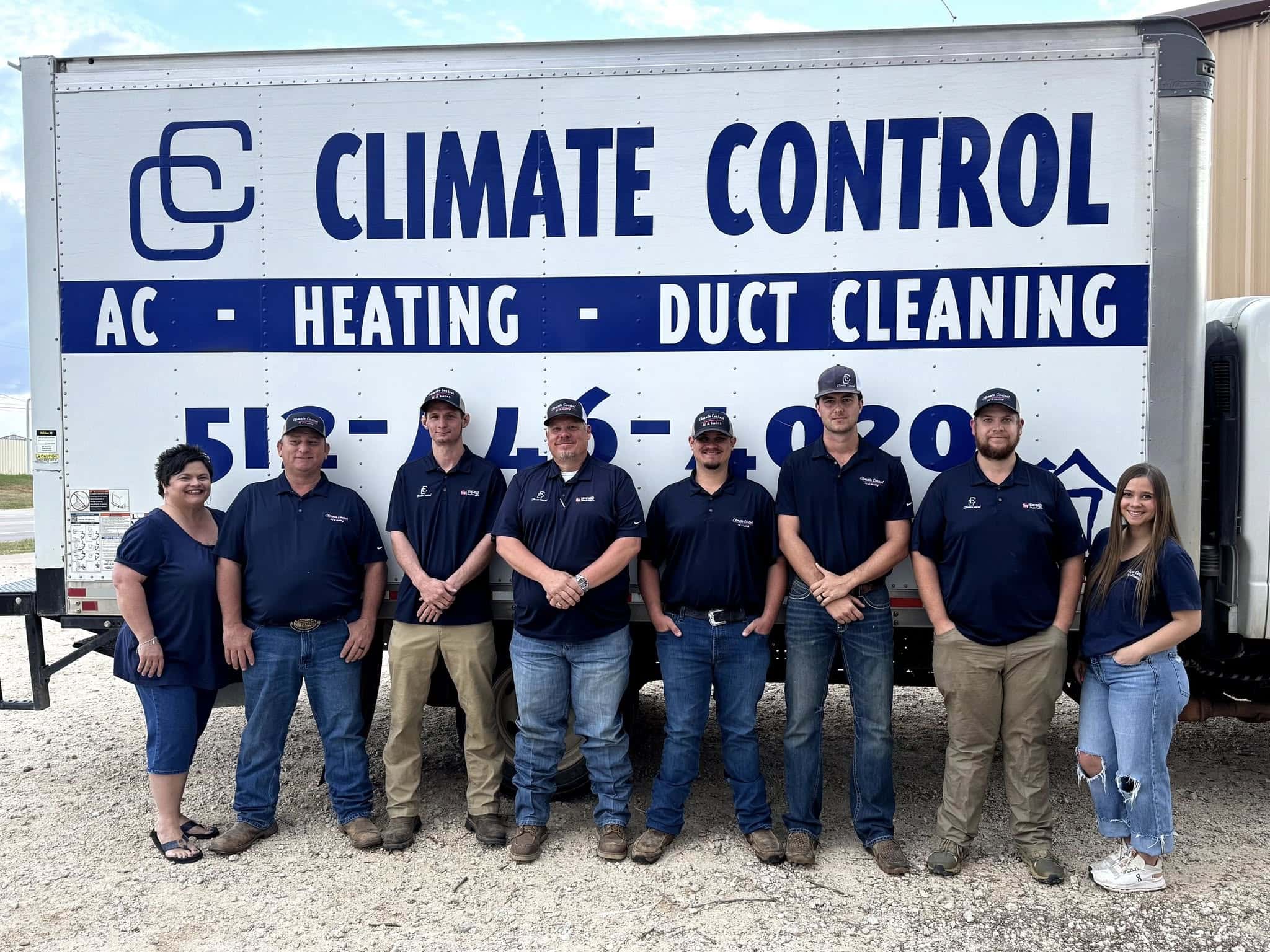
Shopping around for Boiler Systems in Branchville?
Climate Control A/C & Heating takes on cooling, heating and the air indoors in the local area.
Reach us at 512-446-4020 to talk it through.
A Hot, Wet Climate: the Climate Behind the Equipment
The cooling season in Branchville starts early and finishes late, and the equipment that carries the load is working harder than its owner tends to notice.
Sticky air can make a cool room feel uncomfortable, and the coil is where the moisture condenses and drains away.
Proper equipment size, good airflow and clean surfaces separate a comfortable house from a clammy one, and each one is something a technician can check on site.
The Refrigerant Cycle: a Plain Explanation
Cooling equipment does not manufacture chill; refrigerant picks up warmth from indoor air and carries it outside.
Warm indoor air passes over a cold coil in the air handler or furnace cabinet; the outdoor cabinet houses the compressor, the condenser coil and a fan.
Fan motors and start components do a great deal of work for their size, and the larger parts usually go on to last much longer.
Service Calls in Hot Weather: Where the Fault Usually Hides
A proper air conditioning repair sorts the symptom from the cause before anything is replaced; the same warm room can come from a dead capacitor, a frozen coil or a leak.
A tripped breaker, a failed capacitor or a worn contactor keeps the outdoor unit from starting, though a part that failed once can point to heat or a loose connection that needs attention.
A coil that ices over points toward airflow or refrigerant; switching the system off and letting it thaw protects the equipment until it can be checked.
Refrigerant is sealed in a loop and does not get used up; topping off a leaking system is a temporary patch that lets the problem return.
Water around the air handler often means the condensate line has clogged with slime, though a stopped system after heavy use is a good moment to check it.
When to Call for Service: Trust Your Senses
A struggling cooling system leaves clues around the house; the list below covers what owners tend to notice:
- Some rooms that never cool down though the unit sounds normal.
- A burning smell from the vents, whether or not the cooling seems to work.
- Short, frequent cycling of the outdoor unit, even though the thermostat is satisfied.
- Pooling water under the furnace or air handler, sometimes from a dirty coil.
Preventive Service: What a Maintenance Visit Covers
Scheduled air conditioning maintenance gives a technician a look at the system while it still works, with attention paid to coils, drains, belts and wiring.
A clogged filter chokes the blower and starves the coil of air; the label on the filter and the look of its surface are a reliable guide.
Coils, drain pans and drain lines all get attention during a complete tune-up; tightening electrical connections is a standard part of the job.
Time for a Change: How Owners Decide
Replacement is worth considering once repairs pile up on equipment that was already aging, and an honest technician explains both paths.
Refrigerant types have changed over time, so older systems may use one that is hard to find, and that can tip a close decision toward replacement.
Efficiency numbers on new equipment, such as SEER2, give a way to compare models fairly, which matters most where the system runs for months.
Matching a System to a House: Details That Shape Comfort
Proper AC install planning measures the house, the windows, the insulation and the sun exposure, which is why square footage alone is a poor guide.
An oversized system cools the air quickly and then shuts off before it removes moisture, and a unit that is too small runs constantly without catching up.
Matched components perform to their design efficiency, while mismatched ones fall short; commissioning measurements confirm that the system performs as designed.
Air Distribution – What Hides Above the Ceiling
Good duct work delivers the right amount of air to each room and brings it back again; a house with comfort problems deserves a look at its air paths.
Runs through an unconditioned attic or crawl space gain heat or lose chill unless sealed and wrapped; return air paths deserve the same attention as the supply side.
Clearing Out the Channels: What It Can and Cannot Do
Duct cleaning removes dust and debris from the supply and return runs, the registers and the blower compartment, and it makes the most sense after a renovation, a pest problem or visible contamination.
Filtering, sealing and cleaning form one plan, not three separate jobs, and a careful provider will show the owner what was found inside.
Heat Pump Basics – Efficient Most of the Year
The reversing valve is what lets heat pumps switch between cooling and heating; in Texas, cold snaps are short, so a heat pump covers most of the heating season.
Auxiliary heat strips back up the heat pump on the coldest mornings, and a system that runs strips constantly deserves a diagnostic visit.
Fuel-Fired Warmth: How a Furnace Heats a House
A furnace heats air by passing it over a hot metal exchanger while exhaust gases leave through a flue; the flue and combustion air must be clear for safe operation.
A technician checks venting, gas pressure and the heat exchanger during a furnace tune-up, and the furnace check is well timed before the first cold front arrives.
All-Electric Warmth: How the Elements Work
Electric heating systems warm the air with heating elements instead of a flame, which keeps the mechanical side straightforward.
Compared with a heat pump, strips and electric furnaces draw heavily for the heat they make, particularly where cold stretches are brief.
Heating Systems of Every Type: What to Do Before the First Freeze
A norther can send temperatures tumbling, and heating systems that sat idle all summer must start right up, which is why heating services are well scheduled in fall.
Furnaces, heat pumps and electric air handlers all heat homes, and each has its own checkup list, which keeps the work simple to explain and easy to follow.
Hydronic Warmth – Quiet, Even Heat
Boiler systems heat water or make steam and send it through pipes to radiators, baseboards or in-floor loops, and the parts, from circulators to expansion tanks, differ from forced-air equipment.
Service on boiler systems covers the burner, the water pressure, the circulator pump, the expansion tank and the safety relief valve; water damage can grow quickly.
Indoor Air Quality: Starting With Facts
Air inside a home can carry particles, gases and moisture that the thermostat never shows, and cleaner air depends on filtration, ventilation and moisture control working together.
Filter grade matters, but a very dense filter in the wrong system can choke the airflow, and sealing return leaks keeps unfiltered air from sneaking around the filter.
Commercial air quality involves larger volumes, more occupants and strict airflow requirements, which is why commercial properties usually benefit from regular service visits.
Purifiers: Sorting Fact From Marketing
Purifiers remove particles or gases from the air, and they come as whole-home units or portable room models, and the right choice depends on what needs removing.
Good results come from a purifier chosen to complement the rest of the system, and sizing matters here as much as anywhere.
UV Lights and Antimicrobial Mist – Tools for a Damp Climate
Lamps inside the cabinet work on the coil and pan, and they need replacing on a schedule; ask what the lamp targets and how often it needs service.
Treatments with antimicrobial mist are used after cleaning, when surfaces are dry and accessible, and ventilation and occupant safety are part of the process.
Ventilating – Not Too Much, Not Too Little
Modern buildings are tight, so ventilating on purpose keeps carbon dioxide and odors from building up; the cooling equipment has to be sized to handle the fresh air coming in.
Good attic airflow lowers the heat that leaks down into the living space; improvements can start with simple, low-effort fixes.
Commercial Cooling: Comfort That Supports the Work
A commercial AC system is sized for heat from people, lighting and machines as well as sunshine; a break in cooling can mean lost customers or a workday cut short.
Control settings, schedules and thermostats on commercial systems deserve a look when comfort complaints begin, and replacement decisions weigh downtime as well as equipment.
Chiller Systems for Larger Buildings: Parts and Service Needs
Instead of cooling air directly, chiller systems cool a water loop that serves coils across the property; the equipment is larger, more complex and more closely monitored.
Coolers, Freezers and Ice Machines: What Service Involves
Refrigeration service covers walk-in coolers, reach-in units, freezers, display cases and ice machines, and food safety rules set limits that equipment must keep.
How Climate Control A/C & Heating Looks at Boiler Systems near Branchville
Conversation comes first, because the owner knows the symptoms better than anyone, and then the system gets inspected with gauges, meters and a careful eye.
The owner hears what needs to happen now, what can wait and what is optional, and questions are welcome at every stage.
Questions About Your System Are Welcome
Dial 512-446-4020 to line up service or learn what to expect.
A Last Word: Attention Now Saves Trouble Later
Whether the need falls under Boiler Systems or elsewhere in the heating, cooling and air quality family, the same principles apply, and Climate Control A/C & Heating is ready to help with it.