
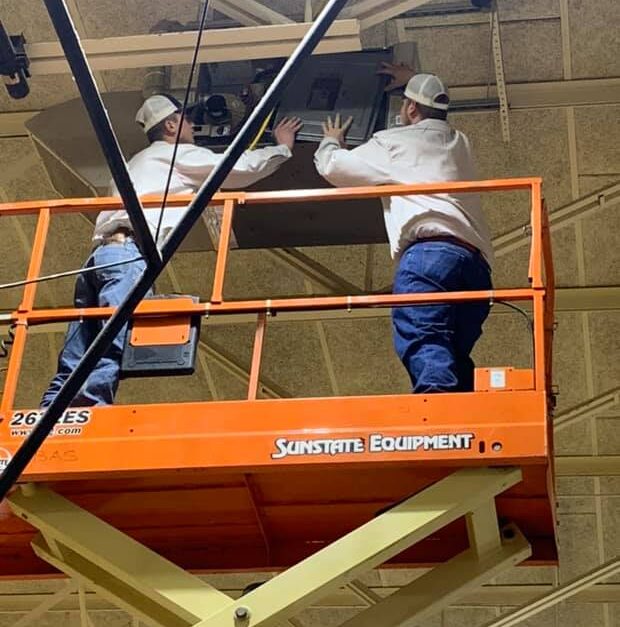
Shopping around for Commercial Air Conditioning System near Branchville?
Climate Control A/C & Heating services climate equipment for homes and businesses around the community.
Dial 512-446-4020 and tell us what you are noticing.
What Summer Asks of a System: Local Conditions Come First
The cooling season in Branchville starts early and finishes late; the machine on the pad outside is among the busiest appliances a household owns.
Water vapor rides along with the heat on a muggy afternoon; a cooling system dehumidifies only when the compressor is on and air is moving across the coil.
Proper equipment size, good airflow and clean surfaces separate a comfortable house from a clammy one, even before anything breaks.
Inside an Air Conditioner: a Plain Explanation
Cooling equipment does not manufacture chill; it collects heat inside the house and dumps it into the outdoor air.
A cold coil indoors takes in heat while the blower keeps air moving; the outdoor cabinet houses the compressor, the condenser coil and a fan.
Starting and stopping thousands of times a season is hard on switches and capacitors, and the larger parts usually go on to last much longer.
Cooling Troubles: a Look at Common Failures
A thorough air conditioning repair starts with a diagnosis rather than a hunch; three very different faults can feel identical from the thermostat.
Electrical faults are common, with capacitors and contactors leading the list of small failures, though a part that failed once can point to heat or a loose connection that needs attention.
A frozen evaporator coil blocks the very air it is supposed to cool; switching the system off and letting it thaw protects the equipment until it can be checked.
A properly working system keeps its charge for good, since nothing burns it off, and the leak is the thing that has to be found and dealt with.
Algae and debris plug the drain, and many systems have a float switch that stops the cooling, though a stopped system after heavy use is a good moment to check it.
Trouble You Can See and Hear: Trust Your Senses
The system tends to behave differently well before the day it stops, and the items below are easy to check from inside the house:
- Some rooms that never cool down even with the thermostat set low.
- Grinding, squealing or rattling from the outdoor cabinet, often getting louder from one week to the next.
- Short, frequent cycling of the outdoor unit; parts wear faster.
- Water around the air handler, which deserves a look before damage spreads.
Preventive Service – Small Tasks, Long Equipment Life
AC maintenance is a set of simple, repeatable tasks that keep a cooling system efficient, and the work centers on airflow, cleanliness and electrical health.
Filters catch the dust that would otherwise coat the indoor coil, and a quick check each month is a good habit through the summer.
The visit usually includes the condenser coil, the evaporator coil and a flush of the drain line; capacitors, contactors, wiring and motor amperage get checked as well.
When Replacement Makes Sense: Questions to Ask First
Replacement is worth considering once repairs pile up on equipment that was already aging, and an honest technician explains both paths.
A system built around a retired refrigerant can be a poor candidate for major repairs, and newer equipment is built for current refrigerants.
Today's units move the same heat with less power than equipment from a generation ago; the benefit grows in houses that rely on cooling much of the year.
Matching a System to a House: Where Good Results Begin
An air conditioning install starts with a load calculation, not a rule of thumb, which is why square footage alone is a poor guide.
A unit that is too large satisfies the thermostat fast and leaves the humidity behind; careful sizing protects comfort and the equipment.
The outdoor pad, the line set, the electrical disconnect and the drain all need planning, and the installer verifies airflow and charge before leaving the job.
Ductwork Matters – Where Comfort Is Won or Lost
In many houses, the ducts decide whether a new system performs as promised; a house with comfort problems deserves a look at its air paths.
Ducts that run through a hot attic lose a surprising amount of cooling on the way to the rooms; the usual fix is sealing the seams, supporting the runs and adding insulation.
Dust, Debris and Ductwork: What It Can and Cannot Do
Air passages collect dust, and duct cleaning is the way to clear it from the inside, and it makes the most sense after a renovation, a pest problem or visible contamination.
Clean ducts work best alongside a good filter and sealed connections, and a plain look inside the duct tells the real story.
Reversible Systems – Why They Suit the Region
Heat pumps move heat in both directions, cooling in summer and heating in winter; one outdoor unit does the work of two.
A heat pump may call on backup heat during a hard freeze or while defrosting its coil, but a heat pump that always needs the backup may have a fault.
Burners, Igniters and Flues – Parts, Safety and Service
Gas furnaces rely on an igniter, a flame sensor and a gas valve working in sequence; a cracked heat exchanger is a safety issue that calls for a prompt professional look.
Safe furnace operation depends on clear venting and working carbon monoxide alarms; never ignore an alarm or a smell of gas.
All-Electric Warmth – Features and Trade-Offs
Electric heating systems have no burner, no flue and no combustion byproducts, which keeps the mechanical side straightforward.
Compared with a heat pump, strips and electric furnaces draw heavily for the heat they make; the decision rests on the building, not just the equipment.
Heating Systems of Every Type: What to Do Before the First Freeze
A hard freeze can arrive with little warning, so heating equipment needs to be ready before it is called on; problems found early can be repaired before a cold front arrives.
Furnaces, heat pumps and electric air handlers all heat homes, and each has its own checkup list, and the safety controls get tested along with the comfort ones.
Hydronic Warmth: Found in Older and Larger Buildings
Radiant floor and baseboard heating both rely on a boiler to heat the water, but a building with a boiler needs service from someone who knows hydronics.
Air in the lines, a stuck valve or a weak pump are common reasons a boiler heats unevenly, and bleeding air from the loops is a routine task.
The Air Inside Your Walls – the Part You Cannot See
Indoor air quality describes what is floating in the air inside a building, from dust and pollen to odors and humidity; the equipment that moves air is also the equipment that carries the contaminants.
Choosing a filter means balancing how much it removes against how much resistance it adds; a deeper media cabinet gives better filtering with less restriction.
Offices, shops and restaurants need steady fresh air so that crowds do not make the space stuffy, and a maintenance plan fits the building's size and hours.
Filters, Purifiers and Their Limits: Sorting Fact From Marketing
Purifiers remove particles or gases from the air, and they come as whole-home units or portable room models; pollen and dust call for filtration, while odors call for carbon.
Buying a purifier without fixing a moisture problem treats a symptom and misses the cause; a technician looks at the system before recommending a device.
UV Lights and Antimicrobial Mist – Tools for a Damp Climate
Lamps inside the cabinet work on the coil and pan, and they need replacing on a schedule; the lamp supplements regular cleaning rather than replacing it.
Fogging a space with antimicrobial mist is a surface treatment, not a cure for a moisture problem; the label for the product spells out how it is to be used.
Letting a Building Breathe: Balance in a Humid Climate
Modern buildings are tight, so ventilating on purpose keeps carbon dioxide and odors from building up; the cooling equipment has to be sized to handle the fresh air coming in.
Attic ventilation is a separate matter, but it affects how hard the cooling system works; improvements can start with simple, low-effort fixes.
Commercial AC Systems: Comfort That Supports the Work
A commercial AC system is often a rooftop package unit that holds the compressor, the coils and the blower in one cabinet, and when it fails the business feels it quickly.
Coil cleaning, belt checks and economizer inspections are part of keeping commercial equipment dependable; planning a changeout around business hours limits disruption.
Central Plant Equipment – Big Buildings, Big Loads
A chiller is a large refrigeration machine that chills water for use in many spaces, and they need specialized service knowledge.
Coolers, Freezers and Ice Machines – Why Failures Matter Fast
A refrigeration problem is often found in the condenser, the defrost control or a worn door gasket, and temperature drift is the warning sign to act on.
How Climate Control A/C & Heating Works Through Commercial Air Conditioning System across Branchville
A good service call begins with listening to what the owner has noticed, and then the system gets inspected with gauges, meters and a careful eye.
Recommendations come with explanations, so choices rest on information rather than pressure; nothing starts without a clear understanding.
Questions About Your System Are Welcome
Contact us at 512-446-4020 to set up a visit or talk through your options.
A Last Word – Keep Things Simple
From Commercial Air Conditioning System to routine upkeep, good outcomes come from understanding the equipment and caring for it, and Climate Control A/C & Heating answers questions at 512-446-4020.