
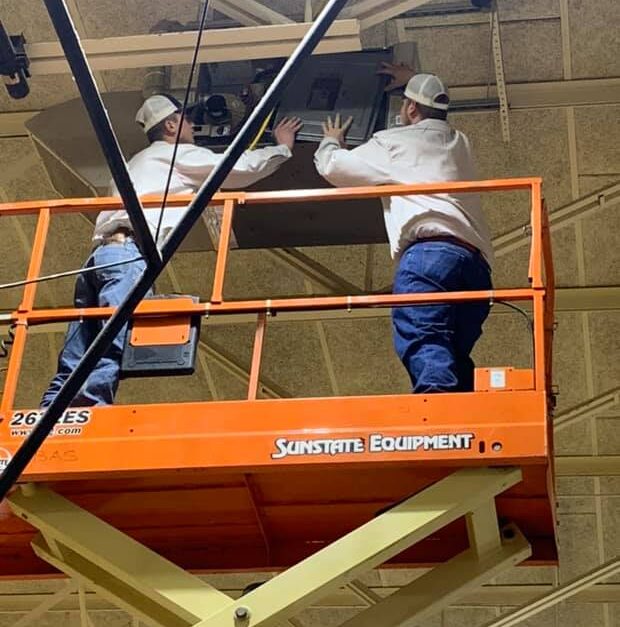
Shopping around for Air Conditioning Maintenance throughout Buckholts?
Climate Control A/C & Heating supports climate equipment for homes and businesses in the surrounding towns.
Dial 512-446-4020 to talk it through.
Summer Load – Built for a Long Haul
Hot weather in Buckholts settles in for months at a time; a cooling system here logs far more running hours than one in a mild climate.
Humidity is half of the comfort problem, not an afterthought; a cooling system dehumidifies only when the compressor is on and air is moving across the coil.
Matching capacity to the house, moving enough air and keeping the coil clean all shape the result, and each one is something a technician can check on site.
Inside an Air Conditioner: the Basics Worth Knowing
A central air conditioner is a heat mover, not a cold maker; warmth is absorbed in one coil and released in another.
A cold coil indoors takes in heat while the blower keeps air moving; outdoors, a fan pulls air across the condenser coil to shed the load.
Starting and stopping thousands of times a season is hard on switches and capacitors, and that is good news, because they are far simpler to fix than a compressor.
Problems Behind a Warm House: Where the Fault Usually Hides
AC repair that works starts with measurements, because guessing wastes time and parts; three very different faults can feel identical from the thermostat.
If the outdoor unit is silent, power, a breaker and the low-voltage wiring are the first suspects; the diagnosis comes before any decision about a bigger job.
Ice building up near the air handler tells a technician where to look; switching the system off and letting it thaw protects the equipment until it can be checked.
Refrigerant is not a consumable that needs topping off every season; a responsible repair locates the leak instead of simply adding more.
Clogged condensate drains are a quiet cause of water stains and shutdowns; moisture removed from muggy air adds up to gallons a day.
Warning Signs – What Owners Notice First
Cooling equipment usually gives notice before it fails outright, and every item below is a reason to schedule a visit:
- One end of the house that feels warmer even with the thermostat set low.
- A hissing noise near the refrigerant lines, sometimes only on the hottest afternoons.
- A system that turns on and off in short cycles, with indoor humidity climbing.
- Condensation where there should be none, particularly after long runs.
Regular Maintenance – the Work Behind Reliable Comfort
Routine AC maintenance heads off the kind of failure that arrives on a hot afternoon, with attention paid to coils, drains, belts and wiring.
Changing the filter on schedule protects the coil, the blower and the ductwork, and how often it needs changing depends on the filter type, pets and the season.
Dirt on the condenser makes the compressor run hotter, so that coil gets cleaned too; tightening electrical connections is a standard part of the job.
Time for a Change: How Owners Decide
Air conditioning equipment reaches a point where a new system makes more sense than another fix; the right answer differs from one house to the next.
Refrigerant types have changed over time, so older systems may use one that is hard to find, which is another reason to get a clear diagnosis before deciding.
Newer cooling equipment is generally more efficient than older models, and in a long cooling season those savings add up.
Planning a New Installation: Where Good Results Begin
Choosing equipment for an AC install means working out how much heat the structure gains, and the standard method for homes is a room-by-room heat gain calculation.
An oversized system cools the air quickly and then shuts off before it removes moisture; careful sizing protects comfort and the equipment.
Every connection, from the refrigerant lines to the thermostat wire, gets sized and routed with care, and a startup check confirms the charge, the airflow and the temperature drop.
Ductwork Matters: the Lungs of the House
In many houses, the ducts decide whether a new system performs as promised, and a unit can be fine while the ducts hold the whole system back.
A long flexible run through a hot attic needs support, sealing and good insulation, and sealing with mastic rather than cloth tape holds up better in the heat.
Clearing Out the Channels: What It Can and Cannot Do
A duct cleaning visit reaches the trunk lines, the branches and the grilles, and it makes the most sense after a renovation, a pest problem or visible contamination.
Clean ducts work best alongside a good filter and sealed connections, and a careful provider will show the owner what was found inside.
Heat Pumps – Efficient Most of the Year
Instead of burning fuel, heat pumps pull warmth from outdoor air and carry it inside, and that makes them efficient in climates with mild winters.
On extremely cold days the heat pump leans on supplemental heat to keep up, but a heat pump that always needs the backup may have a fault.
Fuel-Fired Warmth – Parts, Safety and Service
Inside a gas furnace, a burner lights, a heat exchanger warms up and the blower pushes air across it, and a dirty flame sensor is a frequent reason for a furnace that lights and then shuts off.
Safe furnace operation depends on clear venting and working carbon monoxide alarms, and the furnace check is well timed before the first cold front arrives.
Electric Heating Systems – Features and Trade-Offs
An electric furnace passes air over banks of resistance elements that glow when energized, and the equipment is simple, with few moving parts.
Resistance heat converts every unit of power to heat, while a heat pump moves several units for each one consumed, particularly where cold stretches are brief.
Heating Systems of Every Type – Test Before You Need It
The heating season is short enough that equipment sits unused for months, then must work on the first cold night; problems found early can be repaired before a cold front arrives.
A heating service call looks at the heat source, the blower, the filter, the thermostat and the airflow, and the safety controls get tested along with the comfort ones.
Boiler Systems: Less Common, Still Important
Boiler systems appear in older buildings, larger properties and some commercial spaces, and the parts, from circulators to expansion tanks, differ from forced-air equipment.
The relief valve and low-water cutoff protect a boiler, so they get tested during service; leaks near joints deserve prompt attention.
The Air Inside Your Walls: Why It Deserves Attention
The air in a house mixes outdoor pollen, indoor dust and chemicals from everyday products, and in Texas, cedar pollen and spring dust can find their way inside.
Residential air quality improves when the filter fits the system and gets changed on schedule, and a technician can recommend what the equipment can handle.
Businesses face their own air issues, from shared air handlers to customers coming and going all day; ventilation rules for occupied spaces set a baseline.
Air Purification Options – Useful, With Realistic Goals
Some purifiers capture particles with high-efficiency filters, and others target odors with carbon; any claims about performance should be checked against the specification.
Equipment that cleans the air cannot make up for a dirty coil or a leaky return; the goal is a measurable improvement, not a gadget.
Add-On Air Treatments: What They Do and What They Do Not
Ultraviolet lamps near the coil are meant to keep it cleaner by discouraging growth on damp surfaces; the lamp supplements regular cleaning rather than replacing it.
Treatments with antimicrobial mist are used after cleaning, when surfaces are dry and accessible; the underlying cause still has to be fixed.
Ventilating – Controlled and Filtered
Modern buildings are tight, so ventilating on purpose keeps carbon dioxide and odors from building up, and dampers, filters and controls keep the supply of fresh air in balance.
A hot attic loads up the ceiling and the ducts, so attic ventilation and insulation help the system; the equipment, the envelope and the airflow work as a team.
Business Climate Control – Equipment Built for Heavier Duty
A commercial AC system is sized for heat from people, lighting and machines as well as sunshine; planned maintenance keeps surprises to a minimum.
Control settings, schedules and thermostats on commercial systems deserve a look when comfort complaints begin; planning a changeout around business hours limits disruption.
Chiller Systems for Larger Buildings: Parts and Service Needs
A building with chilled water pulls its cooling from a central plant rather than separate rooftop units; air-cooled and water-cooled designs differ in how they reject heat.
Refrigeration Service: Temperature Is the Whole Job
Businesses that sell or store food depend on refrigeration service to hold safe temperatures, and temperature drift is the warning sign to act on.
How Climate Control A/C & Heating Works Through Air Conditioning Maintenance near Buckholts
Every visit starts with questions about what the equipment has been doing and when, followed by an explanation of what was found and what the choices are.
Recommendations come with explanations, so choices rest on information rather than pressure; nothing starts without a clear understanding.
Questions About Your System Are Welcome
Phone 512-446-4020 to book a technician or get a straight answer.
Putting It Together: Attention Now Saves Trouble Later
From Air Conditioning Maintenance to routine upkeep, good outcomes come from understanding the equipment and caring for it, with Climate Control A/C & Heating at 512-446-4020 to start the conversation.