
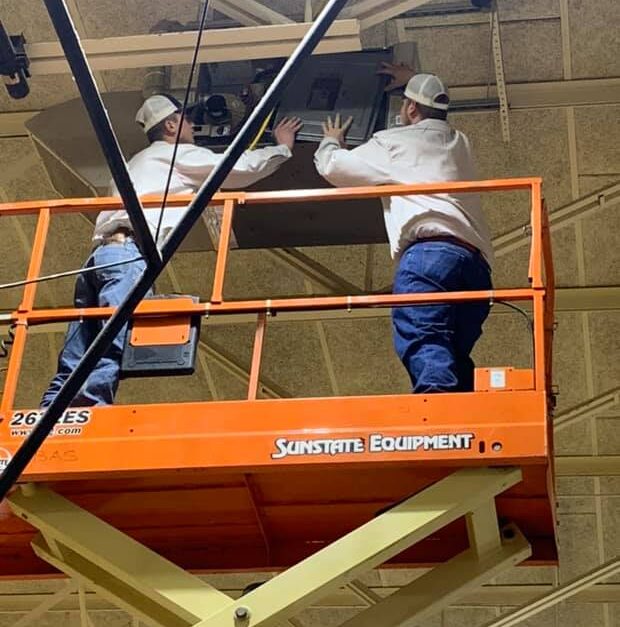
Trying to find Commercial Air Quality across Burlington?
Climate Control A/C & Heating works on the equipment that keeps buildings comfortable close to home.
Contact us at 512-446-4020 to describe what your equipment is doing.
Heat and Humidity: the Climate Behind the Equipment
Warm weather in Burlington stretches across much of the calendar; the machine on the pad outside is among the busiest appliances a household owns.
Sticky air can make a cool room feel uncomfortable; an air conditioner pulls it out as a side effect of cooling, but only while it is actually running.
Proper equipment size, good airflow and clean surfaces separate a comfortable house from a clammy one, long before a breakdown ever happens.
Inside an Air Conditioner – Heat Moves, Cold Is Not Made
Nothing in a cooling system generates cold air from scratch; the refrigerant carries heat out of the house and leaves the cool behind.
The indoor coil is where the cooling happens; outdoors, a fan pulls air across the condenser coil to shed the load.
The contactor, the capacitor and the motors take a beating in hot weather, and that is good news, because they are far simpler to fix than a compressor.
Problems Behind a Warm House: Where the Fault Usually Hides
AC repair that works starts with measurements, because guessing wastes time and parts; weak cooling is a symptom that many separate faults share.
A tripped breaker, a failed capacitor or a worn contactor keeps the outdoor unit from starting, and these are among the quicker repairs when the technician has the part.
A coil that ices over points toward airflow or refrigerant; the coil needs to thaw completely before anyone can measure what is going on.
Low refrigerant means a leak, because the charge stays put when the loop is tight, and adding more without finding the leak only delays the same problem.
Algae and debris plug the drain, and many systems have a float switch that stops the cooling, though a stopped system after heavy use is a good moment to check it.
Warning Signs: Trust Your Senses
Most breakdowns announce themselves with small changes in behavior, and every item below is a reason to schedule a visit:
- One end of the house that feels warmer though the unit sounds normal.
- A burning smell from the vents, often getting louder from one week to the next.
- Constant starting and stopping through the afternoon, with indoor humidity climbing.
- Pooling water under the furnace or air handler, which deserves a look before damage spreads.
Routine Care – Small Tasks, Long Equipment Life
Air conditioning maintenance keeps dust, grime and wear from piling up unseen, and the visit usually combines cleaning, measuring and tightening.
Filters catch the dust that would otherwise coat the indoor coil; the label on the filter and the look of its surface are a reliable guide.
The visit usually includes the condenser coil, the evaporator coil and a flush of the drain line; the report reflects measurements rather than guesses.
Repair or Replace: How Owners Decide
An old unit that needs repair after repair may be a candidate for AC replacement; the decision belongs to the owner, who deserves the facts.
A system built around a retired refrigerant can be a poor candidate for major repairs; current equipment follows the refrigerant rules in force today.
Today's units move the same heat with less power than equipment from a generation ago; the benefit grows in houses that rely on cooling much of the year.
Choosing Capacity: Where Good Results Begin
An air conditioning install starts with a load calculation, not a rule of thumb, and two houses of the same size can need very different equipment.
Too much capacity leads to short cycling, uneven rooms and a clammy feel; careful sizing protects comfort and the equipment.
Matched components perform to their design efficiency, while mismatched ones fall short; commissioning measurements confirm that the system performs as designed.
Ducts: Sizing, Sealing and Insulation
Duct work moves the air that the equipment has cooled or heated, so its design shapes every room, and leaks, bad bends and poor insulation waste a large share of the effort.
A long flexible run through a hot attic needs support, sealing and good insulation; return air paths deserve the same attention as the supply side.
Cleaning the Air Paths – Reasons and Limits
Cleaning the ducts means pulling loose material out with agitation tools and a strong vacuum, and the decision should rest on what is actually in the ducts.
A cleaning that ignores leaks and filtration is a short-term fix at best, and claims about health benefits should be treated skeptically.
The Two-Way Heat Mover: Strengths and Limits
The reversing valve is what lets heat pumps switch between cooling and heating, and that makes them efficient in climates with mild winters.
Defrost cycles and backup heat are normal parts of winter operation, and a technician can check whether the strips are running more than they should.
Furnace Basics: Reliable Heat for Cold Fronts
Inside a gas furnace, a burner lights, a heat exchanger warms up and the blower pushes air across it; the flue and combustion air must be clear for safe operation.
A technician checks venting, gas pressure and the heat exchanger during a furnace tune-up, and homeowners should keep the area around the furnace clear of clutter.
Heating With Electricity: How the Elements Work
Elements in an electric air handler turn current directly into heat; the electrical safety devices do the most important work.
Electricity makes heat at a steady rate, but resistance heat uses more power than a heat pump does for the same warmth; the choice depends on what fuel is available at the property.
Getting Ready for Cold Weather: Short Winters Still Bite
The heating season is short enough that equipment sits unused for months, then must work on the first cold night; problems found early can be repaired before a cold front arrives.
Furnaces, heat pumps and electric air handlers all heat homes, and each has its own checkup list; the common thread is clean air passages and a blower that moves enough air.
Boiler Systems: Less Common, Still Important
Boiler systems heat water or make steam and send it through pipes to radiators, baseboards or in-floor loops; the region mostly uses forced air, so boilers are the exception.
Air in the lines, a stuck valve or a weak pump are common reasons a boiler heats unevenly, and annual attention keeps these systems running quietly.
The Air Inside Your Walls: Starting With Facts
Air inside a home can carry particles, gases and moisture that the thermostat never shows, and cleaner air depends on filtration, ventilation and moisture control working together.
MERV numbers describe how fine a filter catches, and the right one balances capture with airflow; the system and the filter are chosen together.
Businesses face their own air issues, from shared air handlers to customers coming and going all day, and employee and customer comfort both depend on it.
Choosing an Air Cleaner – Useful, With Realistic Goals
Whole-home purifiers treat air as it passes through the system, while portable ones clean a single space; pollen and dust call for filtration, while odors call for carbon.
A purifier works alongside good ventilation and a clean system, not in place of them; a technician looks at the system before recommending a device.
Managing Growth Inside the System: Where They Fit
Lamps inside the cabinet work on the coil and pan, and they need replacing on a schedule; the lamp supplements regular cleaning rather than replacing it.
Antimicrobial mist is a liquid treatment applied to coils, ducts or surfaces to discourage growth; the product and method should be explained in advance.
Fresh Air and Exhaust: the Case for Planned Airflow
Ventilating a building means replacing stale indoor air with fresh outdoor air in a controlled way; the cooling equipment has to be sized to handle the fresh air coming in.
Exhaust fans that move air out of kitchens and baths should vent outdoors, not into the attic, and the same attention applies to the whole building.
Commercial AC Systems: From Rooftop Units to Split Systems
A commercial AC system is sized for heat from people, lighting and machines as well as sunshine, and filters, belts, coils and drains are the usual checklist items.
Condensate drains on rooftops clog with debris, and the water can stain ceilings below, and replacement decisions weigh downtime as well as equipment.
Chilled Water Cooling – Water Carries the Cold
A chiller is a large refrigeration machine that chills water for use in many spaces; the equipment is larger, more complex and more closely monitored.
Commercial Refrigeration: Walk-Ins, Reach-Ins and More
Walk-in coolers rely on evaporators, condensing units, defrost systems and door seals working together, which is why restaurants and stores plan service ahead of busy seasons.
How Climate Control A/C & Heating Approaches Commercial Air Quality across Burlington
The technician asks what changed, what is happening and how long it has been going on; the owner understands the situation before any decision.
A repair, a tune-up and a replacement are each described for what they are and what they involve, and questions are welcome at every stage.
Let's Talk About Your Equipment
Call 512-446-4020 to book a technician or get a straight answer.
Putting It Together – Equipment, Airflow and Air Quality
Equipment, ducts and air quality are connected, so a question about Commercial Air Quality is rarely a stand-alone one, and Climate Control A/C & Heating is ready to help with it.