
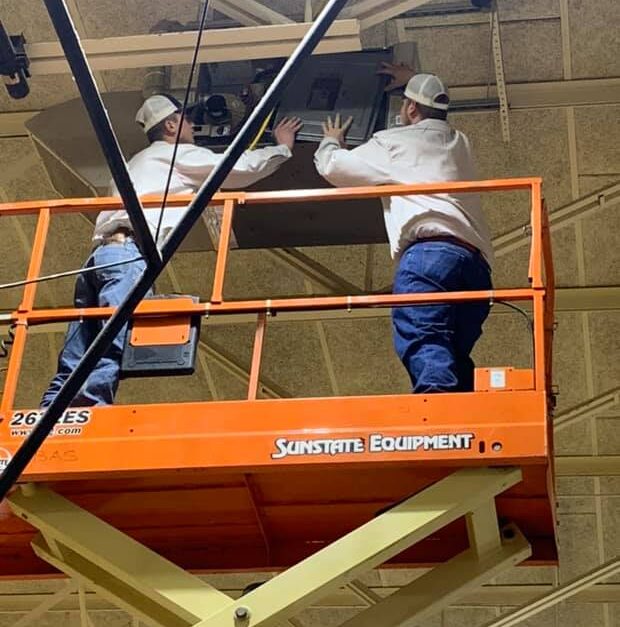
Shopping around for Commercial Air Conditioning System near Cameron?
Climate Control A/C & Heating services cooling, heating and the air indoors in the surrounding towns.
Dial 512-446-4020 and tell us what you are noticing.
A Hot, Wet Climate: Why Equipment Works Hard Here
A Cameron summer stacks hot afternoon after hot afternoon, and the equipment that carries the load is working harder than its owner tends to notice.
Sticky air can make a cool room feel uncomfortable; the indoor coil acts as the dehumidifier, collecting water that leaves through a drain line.
Right size, steady airflow and a clean coil explain much of how a house feels, and each one is something a technician can check on site.
Moving Heat Outdoors: the Basics Worth Knowing
Cooling equipment does not manufacture chill; it collects heat inside the house and dumps it into the outdoor air.
The air handler holds the indoor coil and the blower that pushes air across it, with the compressor outside squeezing the refrigerant so the heat can leave.
The contactor, the capacitor and the motors take a beating in hot weather; a failed capacitor is often a small repair rather than the end of the system.
Service Calls in Hot Weather – Finding the Real Cause
A proper air conditioning repair sorts the symptom from the cause before anything is replaced, and each of those causes needs a different fix.
A tripped breaker, a failed capacitor or a worn contactor keeps the outdoor unit from starting, though a part that failed once can point to heat or a loose connection that needs attention.
Frost on the indoor coil or the copper line is a warning sign, not a cooling success; the coil needs to thaw completely before anyone can measure what is going on.
Refrigerant is not a consumable that needs topping off every season, and the leak is the thing that has to be found and dealt with.
Clogged condensate drains are a quiet cause of water stains and shutdowns, and a flush of the line during regular service often prevents the problem.
When to Call for Service: Trust Your Senses
Cooling equipment usually gives notice before it fails outright, and the following signs are worth acting on:
- Some rooms that never cool down even with the thermostat set low.
- A hissing noise near the refrigerant lines, especially when the weather is hot.
- A system that turns on and off in short cycles, even though the thermostat is satisfied.
- Damp spots on the ceiling below the indoor cabinet, especially in humid weather.
Preventive Service: Habits That Pay Off Later
Air conditioning maintenance keeps dust, grime and wear from piling up unseen, with attention paid to coils, drains, belts and wiring.
Changing the filter on schedule protects the coil, the blower and the ductwork, and a quick check each month is a good habit through the summer.
Dirt on the condenser makes the compressor run hotter, so that coil gets cleaned too; tightening electrical connections is a standard part of the job.
When Replacement Makes Sense: Weighing the Options Honestly
AC replacement becomes a real question when a system is old, repeatedly broken or hard to keep comfortable; the right answer differs from one house to the next.
Older equipment may use a refrigerant that has been phased out of new production; matching parts and refrigerant correctly keeps the whole loop reliable.
Today's units move the same heat with less power than equipment from a generation ago, and in a long cooling season those savings add up.
Choosing Capacity: Where Good Results Begin
An air conditioning install starts with a load calculation, not a rule of thumb, and the standard method for homes is a room-by-room heat gain calculation.
Equipment that is too big runs in bursts, which hurts comfort and efficiency alike; careful sizing protects comfort and the equipment.
Matched components perform to their design efficiency, while mismatched ones fall short, and local permit and inspection rules apply in most towns.
Ductwork Matters: the Lungs of the House
In many houses, the ducts decide whether a new system performs as promised, and a unit can be fine while the ducts hold the whole system back.
Leaks at joints pull attic air into the system and push cooled air out into the rafters, which can improve comfort without touching the equipment.
Cleaning the Air Paths: What It Can and Cannot Do
Air passages collect dust, and duct cleaning is the way to clear it from the inside; cleaning is not a substitute for fixing leaks or changing filters.
Cleaning pays off only when the source of the dirt is also addressed, and be cautious of anyone who promises that cleaning will cure every problem.
Heat Pumps – Why They Suit the Region
Heat pumps use the same refrigerant loop as an air conditioner, with a reversing valve added; in Texas, cold snaps are short, so a heat pump covers most of the heating season.
Defrost cycles and backup heat are normal parts of winter operation, and a technician can check whether the strips are running more than they should.
Furnace Basics: How a Furnace Heats a House
The sequence in a gas furnace runs from thermostat call to draft fan, igniter, gas valve and flame proof, and a dirty flame sensor is a frequent reason for a furnace that lights and then shuts off.
The annual furnace check is also a safety check on combustion and exhaust, and stored items near the unit can block airflow and combustion air.
Electric Furnaces and Air Handlers: How the Elements Work
An electric furnace passes air over banks of resistance elements that glow when energized, and the equipment is simple, with few moving parts.
Homes with strip heat often see bigger winter bills than homes with efficient heat pumps; the choice depends on what fuel is available at the property.
Winter Preparation – Reliable Heat on Demand
Winters in Texas are short, but cold fronts can drop temperatures sharply in a matter of hours, and a test on a mild day beats a surprise on a freezing one.
A heating service call looks at the heat source, the blower, the filter, the thermostat and the airflow, and the safety controls get tested along with the comfort ones.
Heating With Water – Radiators, Coils and Radiant Floors
Boiler systems appear in older buildings, larger properties and some commercial spaces; the region mostly uses forced air, so boilers are the exception.
Air in the lines, a stuck valve or a weak pump are common reasons a boiler heats unevenly; leaks near joints deserve prompt attention.
Indoor Air Quality: Beyond Temperature and Humidity
Air inside a home can carry particles, gases and moisture that the thermostat never shows, and in Texas, cedar pollen and spring dust can find their way inside.
Residential air quality improves when the filter fits the system and gets changed on schedule, and a technician can recommend what the equipment can handle.
Larger buildings circulate air through central equipment, so one fault can reach every room; ventilation rules for occupied spaces set a baseline.
Air Purification Options – Whole-Home or Single Room
Whole-home purifiers treat air as it passes through the system, while portable ones clean a single space, and the right choice depends on what needs removing.
A purifier works alongside good ventilation and a clean system, not in place of them, and sizing matters here as much as anywhere.
Light and Mist Treatments: What They Do and What They Do Not
Lamps inside the cabinet work on the coil and pan, and they need replacing on a schedule, and results depend on placement, dose and the lamp type.
Antimicrobial mist is a liquid treatment applied to coils, ducts or surfaces to discourage growth, and it works best where the source of moisture has been dealt with.
Letting a Building Breathe – Controlled and Filtered
Ventilating a building means replacing stale indoor air with fresh outdoor air in a controlled way; the cooling equipment has to be sized to handle the fresh air coming in.
Good attic airflow lowers the heat that leaks down into the living space; improvements can start with simple, low-effort fixes.
Keeping a Workplace Comfortable – Planning Around the Business
Every commercial air conditioning system serves a space with different loads from a house, such as crowds, lighting and equipment, and filters, belts, coils and drains are the usual checklist items.
Control settings, schedules and thermostats on commercial systems deserve a look when comfort complaints begin, and replacement decisions weigh downtime as well as equipment.
Central Plant Equipment – Water Carries the Cold
A chiller is a large refrigeration machine that chills water for use in many spaces; air-cooled and water-cooled designs differ in how they reject heat.
Coolers, Freezers and Ice Machines – Equipment With Little Room for Error
Businesses that sell or store food depend on refrigeration service to hold safe temperatures, and temperature drift is the warning sign to act on.
How Climate Control A/C & Heating Looks at Commercial Air Conditioning System across Cameron
Before touching a tool, the technician hears the history of the problem from the person who lives with it; readings replace guesses, and the findings are explained in plain language.
Options are laid out clearly, with the reasons behind each recommendation, and the work proceeds only when the owner agrees.
Let's Talk About Your Equipment
Phone 512-446-4020 to schedule service or ask what makes sense for your building.
What to Remember: Small Habits, Big Difference
Interest in Commercial Air Conditioning System often starts with a problem, and the solution starts with a clear diagnosis, and Climate Control A/C & Heating is ready to help with it.