
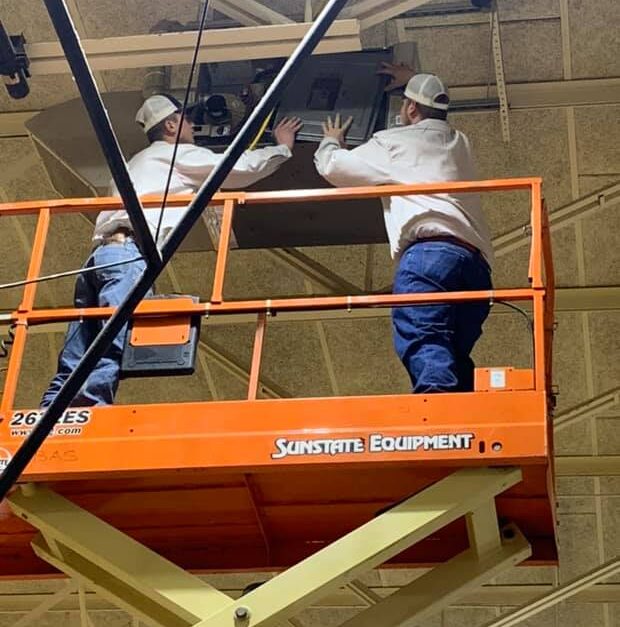
Trying to find Duct Work across Cameron?
Climate Control A/C & Heating supports the equipment that keeps buildings comfortable here at home.
Reach us at 512-446-4020 to describe what your equipment is doing.
Summer Load – Built for a Long Haul
The cooling season in Cameron starts early and finishes late; the machine on the pad outside is among the busiest appliances a household owns.
Damp air changes how a house feels at any given temperature; the indoor coil acts as the dehumidifier, collecting water that leaves through a drain line.
Capacity, airflow and cleanliness work together, and a weakness in one shows up as a house that never feels quite right, even before anything breaks.
Moving Heat Outdoors – Heat Moves, Cold Is Not Made
Air conditioning is the business of relocating heat; a sealed loop of refrigerant absorbs heat at one point and releases it at another.
The air handler holds the indoor coil and the blower that pushes air across it, and the outdoor unit holds the compressor and condenser coil that push that heat away.
Wear tends to show up in the electrical components before the big mechanical ones, which is why a quick diagnosis matters before anyone talks about replacement.
Cooling Troubles – Finding the Real Cause
Air conditioning repair begins with finding out why the system quit, not with swapping parts; three very different faults can feel identical from the thermostat.
A tripped breaker, a failed capacitor or a worn contactor keeps the outdoor unit from starting, and each can be tested with a meter in a few minutes.
A frozen evaporator coil blocks the very air it is supposed to cool; the coil needs to thaw completely before anyone can measure what is going on.
Refrigerant is sealed in a loop and does not get used up, and the leak is the thing that has to be found and dealt with.
Algae and debris plug the drain, and many systems have a float switch that stops the cooling; moisture removed from muggy air adds up to gallons a day.
When to Call for Service: Trust Your Senses
The system tends to behave differently well before the day it stops; these are the signs a homeowner can see, hear or feel without any tools:
- Supply air that feels weak or lukewarm while the system runs nonstop.
- Grinding, squealing or rattling from the outdoor cabinet, particularly at the start of a cycle.
- An outdoor unit that starts and stops every few minutes, with indoor humidity climbing.
- Water around the air handler, especially in humid weather.
Routine Care: What a Maintenance Visit Covers
Routine AC maintenance heads off the kind of failure that arrives on a hot afternoon; the technician cleans what gets dirty and measures what can drift.
Changing the filter on schedule protects the coil, the blower and the ductwork; the label on the filter and the look of its surface are a reliable guide.
The visit usually includes the condenser coil, the evaporator coil and a flush of the drain line; temperature drop and refrigerant pressures are measured to show how the loop is behaving.
Deciding on a New System: Weighing the Options Honestly
An old unit that needs repair after repair may be a candidate for AC replacement; the decision belongs to the owner, who deserves the facts.
The refrigerant a system uses is worth asking about when a repair involves the sealed loop; current equipment follows the refrigerant rules in force today.
Today's units move the same heat with less power than equipment from a generation ago; the benefit grows in houses that rely on cooling much of the year.
Getting an Install Right – a Calculation, Not a Guess
Choosing equipment for an AC install means working out how much heat the structure gains; orientation and shading matter as much as floor area.
Too much capacity leads to short cycling, uneven rooms and a clammy feel; one that is too small never reaches the setpoint on the hottest days.
The indoor and outdoor parts have to match each other and the ductwork; the owner then gets a walk-through of the thermostat and the filter.
Air Distribution: Sizing, Sealing and Insulation
Good duct work delivers the right amount of air to each room and brings it back again; a house with comfort problems deserves a look at its air paths.
A long flexible run through a hot attic needs support, sealing and good insulation; return air paths deserve the same attention as the supply side.
Cleaning the Air Paths – Deciding if It Fits
Duct cleaning removes dust and debris from the supply and return runs, the registers and the blower compartment; a house with no such history may not need it often.
Cleaning pays off only when the source of the dirt is also addressed, and a plain look inside the duct tells the real story.
Heat Pump Basics: a Natural Fit for Mild Winters
Heat pumps use the same refrigerant loop as an air conditioner, with a reversing valve added; in Texas, cold snaps are short, so a heat pump covers most of the heating season.
When outdoor temperatures fall far enough, electric strips or a furnace add the missing warmth; steam from the outdoor unit during defrost is normal.
Heating With Gas – Parts, Safety and Service
A furnace heats air by passing it over a hot metal exchanger while exhaust gases leave through a flue, and a dirty flame sensor is a frequent reason for a furnace that lights and then shuts off.
Safe furnace operation depends on clear venting and working carbon monoxide alarms, and stored items near the unit can block airflow and combustion air.
Resistance and Strip Heat – Features and Trade-Offs
Elements in an electric air handler turn current directly into heat; troubleshooting centers on power, controls and the blower motor.
Compared with a heat pump, strips and electric furnaces draw heavily for the heat they make; the choice depends on what fuel is available at the property.
Heating Systems of Every Type: Planning for Sudden Cold
Winters in Texas are short, but cold fronts can drop temperatures sharply in a matter of hours, which is why heating services are well scheduled in fall.
Heating systems come in several forms, and the same house may use gas furnaces, heat pumps or electric heating systems, and a technician adjusts the visit to the equipment on site.
Heating With Water: Found in Older and Larger Buildings
Hydronic heating moves heat with water instead of air, which makes for quiet, even warmth, but a building with a boiler needs service from someone who knows hydronics.
The relief valve and low-water cutoff protect a boiler, so they get tested during service; water damage can grow quickly.
What You Breathe at Home – Sources, Symptoms and Solutions
Indoor air quality describes what is floating in the air inside a building, from dust and pollen to odors and humidity, which makes the HVAC system the natural place to improve air quality.
Filter grade matters, but a very dense filter in the wrong system can choke the airflow, and sealing return leaks keeps unfiltered air from sneaking around the filter.
Offices, shops and restaurants need steady fresh air so that crowds do not make the space stuffy; scheduled filter changes and coil cleaning keep these systems honest.
Cleaning the Air Itself: Matching the Tool to the Problem
Purifiers remove particles or gases from the air, and they come as whole-home units or portable room models; a device that makes bold promises deserves a second look.
Purifiers help most when the air handler is clean, the ducts are sealed and humidity is under control; a technician looks at the system before recommending a device.
UV Lights and Antimicrobial Mist: Where They Fit
Ultraviolet lamps near the coil are meant to keep it cleaner by discouraging growth on damp surfaces, and results depend on placement, dose and the lamp type.
Antimicrobial mist is a liquid treatment applied to coils, ducts or surfaces to discourage growth, and ventilation and occupant safety are part of the process.
Fresh Air and Exhaust: the Case for Planned Airflow
Planned ventilation brings in measured amounts of outdoor air and exhausts the stale air; an energy recovery ventilator can trade heat and moisture between the two airstreams.
Exhaust fans that move air out of kitchens and baths should vent outdoors, not into the attic, and the same attention applies to the whole building.
Commercial Cooling: Comfort That Supports the Work
Shops, restaurants, offices and churches often rely on rooftop equipment that serves a zone of the building, which is why many businesses plan service around their schedule.
Control settings, schedules and thermostats on commercial systems deserve a look when comfort complaints begin; a clear plan helps the business stay open.
Chilled Water Cooling: Parts and Service Needs
Instead of cooling air directly, chiller systems cool a water loop that serves coils across the property, and water treatment, tube cleaning and refrigerant checks are routine tasks.
Cold Storage Equipment: What Service Involves
Refrigeration service covers walk-in coolers, reach-in units, freezers, display cases and ice machines; regular cleaning of condenser coils matters even more than in comfort cooling.
How Climate Control A/C & Heating Looks at Duct Work around Cameron
Before touching a tool, the technician hears the history of the problem from the person who lives with it, and then the system gets inspected with gauges, meters and a careful eye.
Honest advice separates the necessary from the optional, and questions are welcome at every stage.
Start With a Conversation
Reach out at 512-446-4020 to line up service or learn what to expect.
Closing Thoughts – Equipment, Airflow and Air Quality
Searching for Duct Work in Cameron usually leads to the same few questions about size, age, airflow and care; reach Climate Control A/C & Heating at 512-446-4020 when you are ready.