
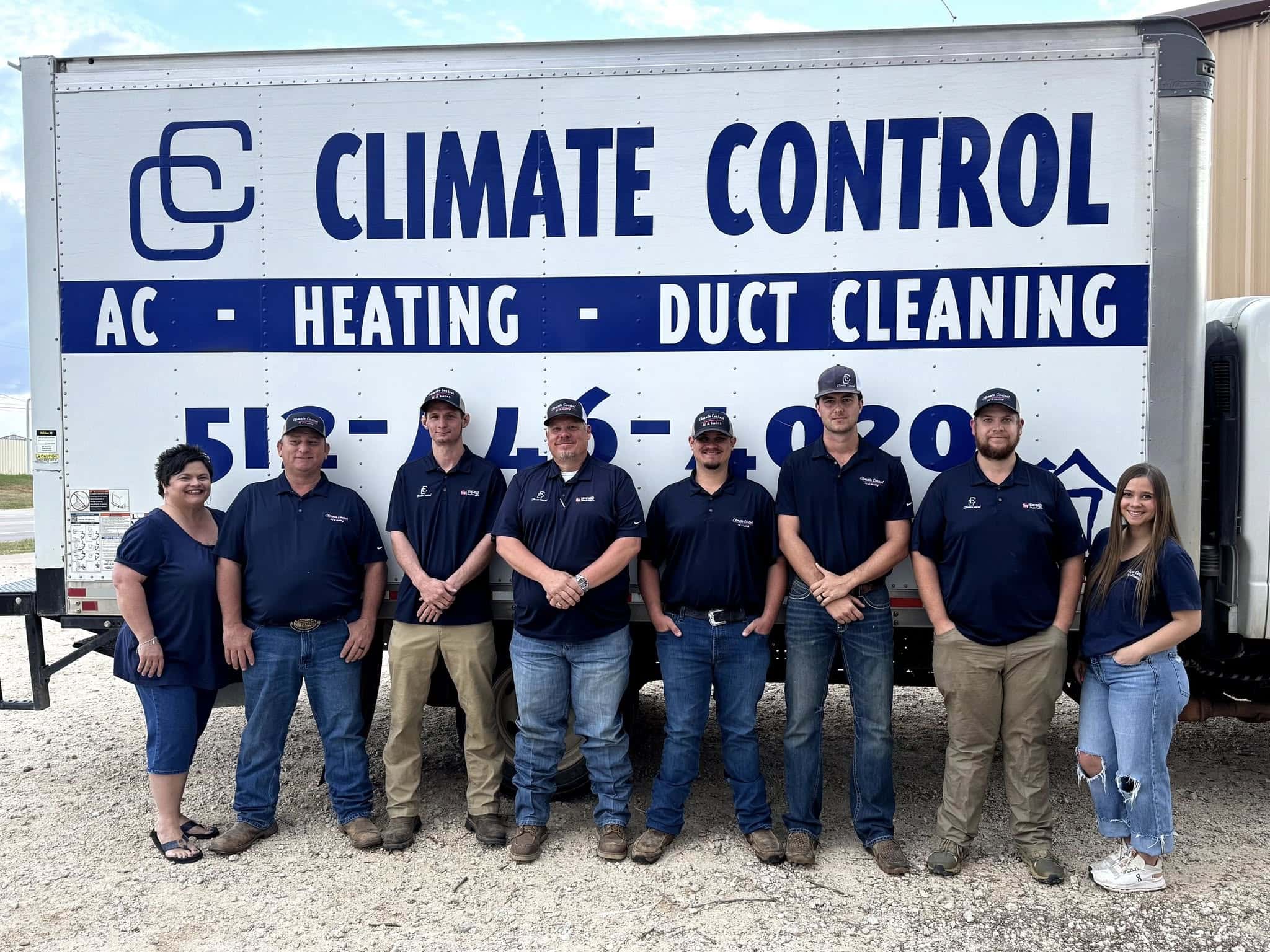
In need of AC Maintenance throughout Corinth?
Climate Control A/C & Heating takes on heating, cooling and indoor comfort around the community.
Contact us at 512-446-4020 to talk it through.
Summer Load – Built for a Long Haul
A Corinth summer stacks hot afternoon after hot afternoon, which means a cooling unit seldom rests between spring and fall.
Moisture in the air matters as much as the thermometer reading, and the coil is where the moisture condenses and drains away.
Right size, steady airflow and a clean coil explain much of how a house feels, long before a breakdown ever happens.
How Air Conditioning Works – Heat Moves, Cold Is Not Made
Nothing in a cooling system generates cold air from scratch; refrigerant picks up warmth from indoor air and carries it outside.
A cold coil indoors takes in heat while the blower keeps air moving; outdoors, a fan pulls air across the condenser coil to shed the load.
Wear tends to show up in the electrical components before the big mechanical ones; the compressor itself can last a long time when it is kept clean and properly charged.
Service Calls in Hot Weather – Finding the Real Cause
A thorough air conditioning repair starts with a diagnosis rather than a hunch; the same warm room can come from a dead capacitor, a frozen coil or a leak.
If the outdoor unit is silent, power, a breaker and the low-voltage wiring are the first suspects, and they usually repair cleanly because the parts are small.
Ice building up near the air handler tells a technician where to look; shutting the cooling off is the safest response until someone inspects it.
Low refrigerant means a leak, because the charge stays put when the loop is tight, which is why measuring pressures and temperatures matters more than adding gas.
A blocked drain line can back water into the pan and trip a safety switch, and a flush of the line during regular service often prevents the problem.
Clues Your System Is Struggling: Spotting Problems Early
Cooling equipment usually gives notice before it fails outright, and the following signs are worth acting on:
- Supply air that feels weak or lukewarm even with the thermostat set low.
- Loud banging when the compressor starts, often getting louder from one week to the next.
- Short, frequent cycling of the outdoor unit, with indoor humidity climbing.
- Pooling water under the furnace or air handler, sometimes from a dirty coil.
Tune-Ups for Cooling Gear: Habits That Pay Off Later
AC maintenance is a set of simple, repeatable tasks that keep a cooling system efficient, with attention paid to coils, drains, belts and wiring.
Dirty filters are the single easiest thing for an owner to handle, and a quick check each month is a good habit through the summer.
Coils, drain pans and drain lines all get attention during a complete tune-up; tightening electrical connections is a standard part of the job.
Deciding on a New System: Questions to Ask First
Replacement is worth considering once repairs pile up on equipment that was already aging, with the condition of the compressor and coils weighing heavily.
A system built around a retired refrigerant can be a poor candidate for major repairs, and that can tip a close decision toward replacement.
Newer cooling equipment is generally more efficient than older models, and comfort improves along with the numbers.
Getting an Install Right – Bigger Is Not Better
Air conditioning install quality depends on matching capacity to what the building actually needs, which is why square footage alone is a poor guide.
A unit that is too large satisfies the thermostat fast and leaves the humidity behind, and a proper calculation avoids both extremes.
The indoor and outdoor parts have to match each other and the ductwork, and local permit and inspection rules apply in most towns.
Ducts – What Hides Above the Ceiling
A duct system is the network of channels that carry conditioned air to every room and returns it for re-cooling; a house with comfort problems deserves a look at its air paths.
Attic duct work in Texas sees extreme heat, so insulation and tight seams earn their keep, and a technician can often find the leaks with a pressure test.
Duct Cleaning: Worth Doing at the Right Time
Cleaning the ducts means pulling loose material out with agitation tools and a strong vacuum, and the decision should rest on what is actually in the ducts.
Cleaning pays off only when the source of the dirt is also addressed; ask to see before-and-after photos of the work.
Cooling and Heating in One: a Natural Fit for Mild Winters
A heat pump is an air conditioner that can run backward to warm the house; one outdoor unit does the work of two.
When outdoor temperatures fall far enough, electric strips or a furnace add the missing warmth; watch for unusually high bills as a hint.
Fuel-Fired Warmth – Parts, Safety and Service
Gas furnaces rely on an igniter, a flame sensor and a gas valve working in sequence; a cracked heat exchanger is a safety issue that calls for a prompt professional look.
Safe furnace operation depends on clear venting and working carbon monoxide alarms, and homeowners should keep the area around the furnace clear of clutter.
All-Electric Warmth – Features and Trade-Offs
Electric heating systems warm the air with heating elements instead of a flame; troubleshooting centers on power, controls and the blower motor.
Homes with strip heat often see bigger winter bills than homes with efficient heat pumps, particularly where cold stretches are brief.
Winter Preparation – Test Before You Need It
A norther can send temperatures tumbling, and heating systems that sat idle all summer must start right up, which is why heating services are well scheduled in fall.
Heating services cover igniters and burners on gas units, reversing valves on heat pumps and elements on electric ones, and the safety controls get tested along with the comfort ones.
Hydronic Warmth: How Hydronic Systems Differ
A boiler warms water in a closed loop, and pumps circulate it to the rooms; an owner with a boiler should look for experience with water-based heat.
Pressure, temperature and flame quality are the numbers that matter in a boiler check; neglected boilers corrode inside, so water quality and venting matter.
The Air Inside Your Walls: Why It Deserves Attention
Residential air quality is shaped by dust, pet dander, cooking fumes, cleaning products and moisture, and in Texas, cedar pollen and spring dust can find their way inside.
A better filter helps only if the blower can pull air through it without strain, and sealing return leaks keeps unfiltered air from sneaking around the filter.
Larger buildings circulate air through central equipment, so one fault can reach every room; ventilation rules for occupied spaces set a baseline.
Choosing an Air Cleaner: What the Labels Mean
Some purifiers capture particles with high-efficiency filters, and others target odors with carbon; a device that makes bold promises deserves a second look.
A purifier works alongside good ventilation and a clean system, not in place of them; the goal is a measurable improvement, not a gadget.
Light and Mist Treatments – Tools for a Damp Climate
A UV lamp does not clean the air passing by, but it treats the surfaces it can see, and a technician can explain which kind fits a given air handler.
Treatments with antimicrobial mist are used after cleaning, when surfaces are dry and accessible, and it works best where the source of moisture has been dealt with.
Bringing Outdoor Air In – Controlled and Filtered
Ventilating also removes moisture from kitchens and baths before it settles into the structure, and in a humid climate the incoming air needs dehumidifying.
Exhaust fans that move air out of kitchens and baths should vent outdoors, not into the attic, and this is another reason the whole building matters.
Business Climate Control: Comfort That Supports the Work
Commercial air conditioning system designs range from rooftop packages to split systems and multi-zone setups; planned maintenance keeps surprises to a minimum.
Coil cleaning, belt checks and economizer inspections are part of keeping commercial equipment dependable, and replacement decisions weigh downtime as well as equipment.
Cooling at Scale: Where They Make Sense
Chiller systems cool water, and pumps carry the chilled water through pipes to air handlers throughout a building; air-cooled and water-cooled designs differ in how they reject heat.
Refrigeration Service: What Service Involves
Refrigeration equipment uses the same basic cycle as air conditioning but at much lower temperatures; regular cleaning of condenser coils matters even more than in comfort cooling.
How Climate Control A/C & Heating Approaches AC Maintenance across Corinth
Conversation comes first, because the owner knows the symptoms better than anyone, and then the system gets inspected with gauges, meters and a careful eye.
The owner hears what needs to happen now, what can wait and what is optional; good service depends on trust running both ways.
Start With a Conversation
Call 512-446-4020 to schedule service or ask what makes sense for your building.
Closing Thoughts – Equipment, Airflow and Air Quality
Interest in AC Maintenance often starts with a problem, and the solution starts with a clear diagnosis, and Climate Control A/C & Heating is ready to help with it.