
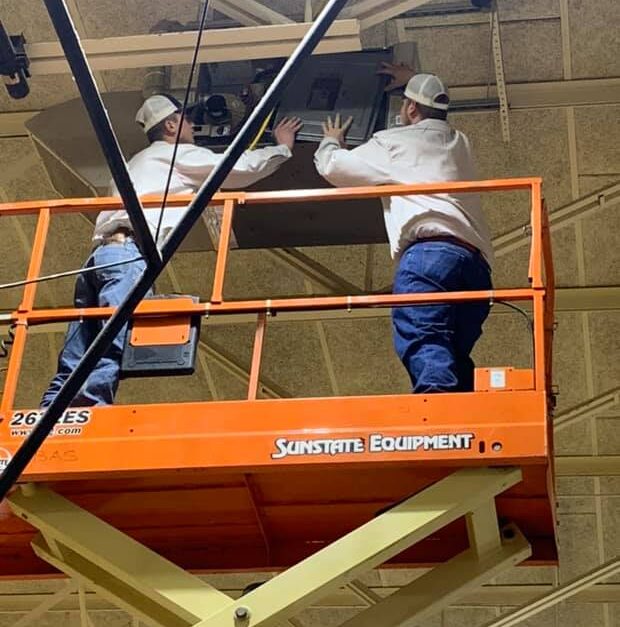
Trying to find AC Replacement near Corinth?
Climate Control A/C & Heating takes on the equipment that keeps buildings comfortable in the surrounding towns.
Contact us at 512-446-4020 to talk it through.
Summer Load – Built for a Long Haul
The cooling season in Corinth starts early and finishes late; the machine on the pad outside is among the busiest appliances a household owns.
Sticky air can make a cool room feel uncomfortable, and removing it takes steady run time rather than quick bursts.
Matching capacity to the house, moving enough air and keeping the coil clean all shape the result, even before anything breaks.
Anatomy of a Cooling System: the Basics Worth Knowing
Nothing in a cooling system generates cold air from scratch; a sealed loop of refrigerant absorbs heat at one point and releases it at another.
The indoor coil is where the cooling happens; outdoors, a fan pulls air across the condenser coil to shed the load.
Starting and stopping thousands of times a season is hard on switches and capacitors, and that is good news, because they are far simpler to fix than a compressor.
Service Calls in Hot Weather: a Look at Common Failures
A proper air conditioning repair sorts the symptom from the cause before anything is replaced, and each of those causes needs a different fix.
If the outdoor unit is silent, power, a breaker and the low-voltage wiring are the first suspects, and each can be tested with a meter in a few minutes.
Ice on the lines almost always means too little air or too little refrigerant; shutting the cooling off is the safest response until someone inspects it.
Low refrigerant means a leak, because the charge stays put when the loop is tight; a responsible repair locates the leak instead of simply adding more.
Water around the air handler often means the condensate line has clogged with slime, though a stopped system after heavy use is a good moment to check it.
Clues Your System Is Struggling: Trust Your Senses
The system tends to behave differently well before the day it stops; these are the signs a homeowner can see, hear or feel without any tools:
- Supply air that feels weak or lukewarm despite thin airflow at the vents.
- A buzzing or clicking sound at startup, sometimes only on the hottest afternoons.
- Repeated short runs that never finish a cooling cycle; parts wear faster.
- Musty smells when the blower starts, which deserves a look before damage spreads.
Routine Care – Small Tasks, Long Equipment Life
Regular AC maintenance trims the chance of a breakdown during the hottest week; the checklist stays short enough to repeat every season.
A clogged filter chokes the blower and starves the coil of air, and a quick check each month is a good habit through the summer.
A technician cleans or inspects the outdoor coil, the indoor coil and the condensate drain; tightening electrical connections is a standard part of the job.
When Replacement Makes Sense: Questions to Ask First
Replacement is worth considering once repairs pile up on equipment that was already aging, with the condition of the compressor and coils weighing heavily.
Older equipment may use a refrigerant that has been phased out of new production, and newer equipment is built for current refrigerants.
Efficiency has improved steadily, and a modern system can use noticeably less electricity, which matters most where the system runs for months.
Choosing Capacity – a Calculation, Not a Guess
An air conditioning install starts with a load calculation, not a rule of thumb; windows, attic insulation and ductwork all change the answer.
An oversized system cools the air quickly and then shuts off before it removes moisture; one that is too small never reaches the setpoint on the hottest days.
The outdoor pad, the line set, the electrical disconnect and the drain all need planning, and local permit and inspection rules apply in most towns.
Air Distribution: Sizing, Sealing and Insulation
Good duct work delivers the right amount of air to each room and brings it back again; a house with comfort problems deserves a look at its air paths.
Runs through an unconditioned attic or crawl space gain heat or lose chill unless sealed and wrapped; return air paths deserve the same attention as the supply side.
Duct Cleaning: Realistic Expectations
Cleaning the ducts means pulling loose material out with agitation tools and a strong vacuum, and the decision should rest on what is actually in the ducts.
A cleaning that ignores leaks and filtration is a short-term fix at best, and claims about health benefits should be treated skeptically.
Heat Pumps: How the Technology Works
Heat pumps use the same refrigerant loop as an air conditioner, with a reversing valve added; one outdoor unit does the work of two.
When outdoor temperatures fall far enough, electric strips or a furnace add the missing warmth; watch for unusually high bills as a hint.
Furnace Basics: Reliable Heat for Cold Fronts
A furnace heats air by passing it over a hot metal exchanger while exhaust gases leave through a flue, and the sequence is why furnaces need testing before cold weather.
The annual furnace check is also a safety check on combustion and exhaust, and the furnace check is well timed before the first cold front arrives.
Heating With Electricity: What to Expect From It
Elements in an electric air handler turn current directly into heat, and the equipment is simple, with few moving parts.
Resistance heat converts every unit of power to heat, while a heat pump moves several units for each one consumed, and many homes pair a heat pump with strips as a backup.
Winter Preparation – Reliable Heat on Demand
A norther can send temperatures tumbling, and heating systems that sat idle all summer must start right up; problems found early can be repaired before a cold front arrives.
From gas furnaces to heat pumps, each heating system needs different attention before winter, which keeps the work simple to explain and easy to follow.
Boilers – Radiators, Coils and Radiant Floors
Boiler systems heat water or make steam and send it through pipes to radiators, baseboards or in-floor loops, and they are less common in Texas than furnaces and heat pumps.
Pressure, temperature and flame quality are the numbers that matter in a boiler check; leaks near joints deserve prompt attention.
The Air Inside Your Walls – the Part You Cannot See
Residential air quality is shaped by dust, pet dander, cooking fumes, cleaning products and moisture; allergy seasons put extra load on filters and ducts.
A better filter helps only if the blower can pull air through it without strain; a deeper media cabinet gives better filtering with less restriction.
Offices, shops and restaurants need steady fresh air so that crowds do not make the space stuffy; scheduled filter changes and coil cleaning keep these systems honest.
Air Purification Options – Whole-Home or Single Room
Purifiers vary widely, from simple filters to units combining filtration, carbon and other methods; any claims about performance should be checked against the specification.
Purifiers help most when the air handler is clean, the ducts are sealed and humidity is under control; the goal is a measurable improvement, not a gadget.
Managing Growth Inside the System: Where They Fit
Ultraviolet lamps near the coil are meant to keep it cleaner by discouraging growth on damp surfaces, and a technician can explain which kind fits a given air handler.
Fogging a space with antimicrobial mist is a surface treatment, not a cure for a moisture problem; the underlying cause still has to be fixed.
Ventilation Done Right – Not Too Much, Not Too Little
Ventilating also removes moisture from kitchens and baths before it settles into the structure, and in a humid climate the incoming air needs dehumidifying.
Attic ventilation is a separate matter, but it affects how hard the cooling system works, and a technician who looks at the surroundings sees more than the unit alone.
Commercial Cooling – Equipment Built for Heavier Duty
A commercial AC system is sized for heat from people, lighting and machines as well as sunshine, which is why many businesses plan service around their schedule.
Coil cleaning, belt checks and economizer inspections are part of keeping commercial equipment dependable, and larger properties may phase work across several units.
Central Plant Equipment: How They Differ From Packaged Units
Chiller systems are used in large offices, schools, hospitals and industrial plants; air-cooled and water-cooled designs differ in how they reject heat.
Keeping Food and Product Cold: Temperature Is the Whole Job
Walk-in coolers rely on evaporators, condensing units, defrost systems and door seals working together, and food safety rules set limits that equipment must keep.
How Climate Control A/C & Heating Works Through AC Replacement across Corinth
Conversation comes first, because the owner knows the symptoms better than anyone; readings replace guesses, and the findings are explained in plain language.
Honest advice separates the necessary from the optional, and the work proceeds only when the owner agrees.
Ready When You Are
Call 512-446-4020 to set up a visit or talk through your options.
Putting It Together: Comfort Is a System
Interest in AC Replacement often starts with a problem, and the solution starts with a clear diagnosis; Climate Control A/C & Heating can walk through the choices with you.