
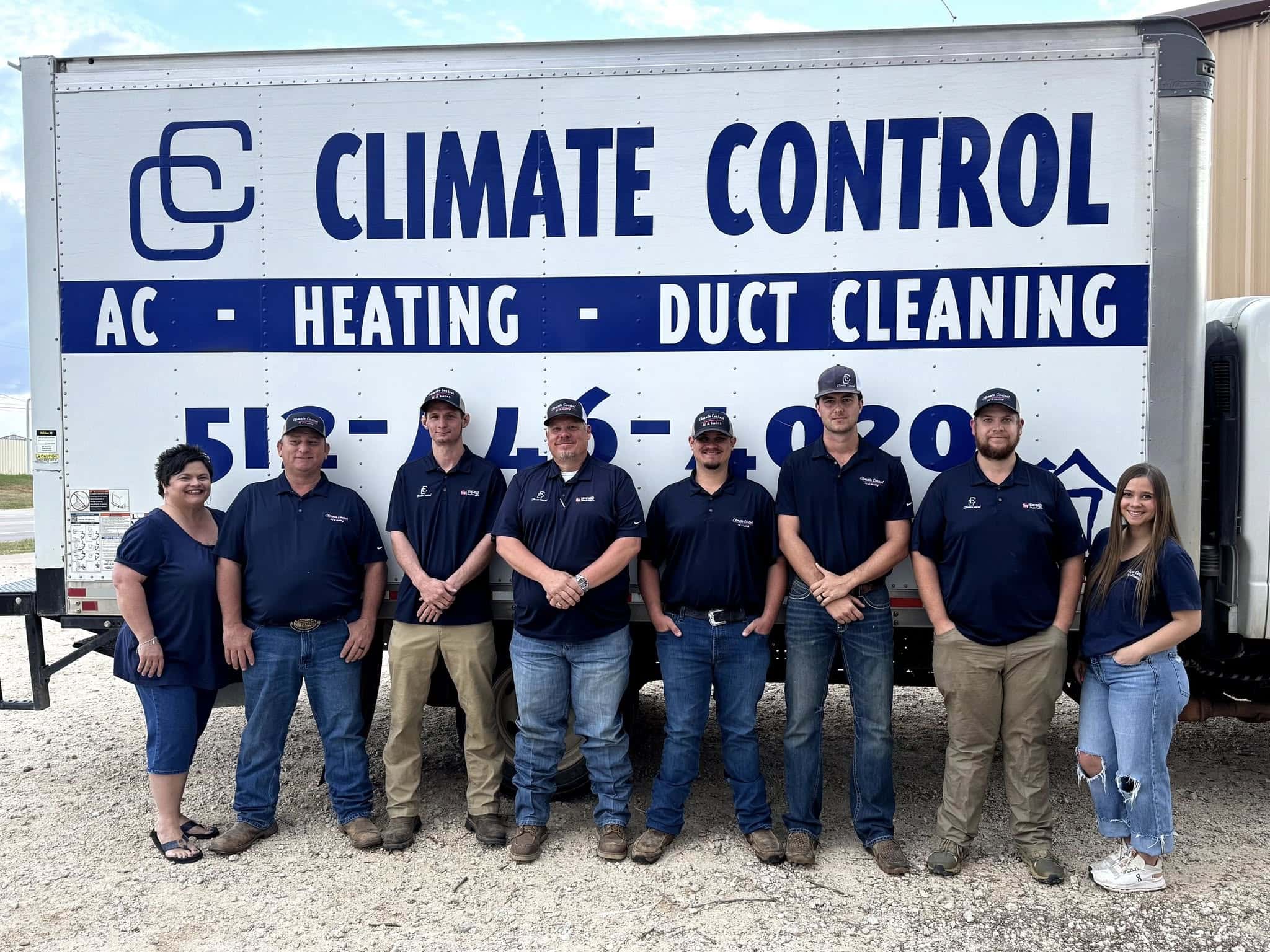
Shopping around for Commercial AC System in Corinth?
Climate Control A/C & Heating takes on cooling, heating and the air indoors around the community.
Reach us at 512-446-4020 and ask a real question.
What Summer Asks of a System – Built for a Long Haul
The cooling season in Corinth starts early and finishes late; the machine on the pad outside is among the busiest appliances a household owns.
Sticky air can make a cool room feel uncomfortable; the indoor coil acts as the dehumidifier, collecting water that leaves through a drain line.
Proper equipment size, good airflow and clean surfaces separate a comfortable house from a clammy one, whatever the label on the box promises.
Inside an Air Conditioner: the Basics Worth Knowing
An air conditioner does not create cold; the refrigerant carries heat out of the house and leaves the cool behind.
A cold coil indoors takes in heat while the blower keeps air moving; outdoors, a fan pulls air across the condenser coil to shed the load.
Starting and stopping thousands of times a season is hard on switches and capacitors, and that is good news, because they are far simpler to fix than a compressor.
Cooling Troubles: Repair Starts With Diagnosis
A proper air conditioning repair sorts the symptom from the cause before anything is replaced, and a house that is warm may have an electrical fault, an airflow problem or a refrigerant problem.
A tripped breaker, a failed capacitor or a worn contactor keeps the outdoor unit from starting, though a part that failed once can point to heat or a loose connection that needs attention.
Ice building up near the air handler tells a technician where to look; shutting the cooling off is the safest response until someone inspects it.
The charge in a cooling system is fixed, so a shortage points to escape; topping off a leaking system is a temporary patch that lets the problem return.
Water around the air handler often means the condensate line has clogged with slime, and clearing the line is routine maintenance work.
Clues Your System Is Struggling – Before a Breakdown
Cooling equipment usually gives notice before it fails outright; the list below covers what owners tend to notice:
- Rooms that stay warm even with the thermostat set low.
- A hissing noise near the refrigerant lines, especially when the weather is hot.
- Repeated short runs that never finish a cooling cycle; parts wear faster.
- Damp spots on the ceiling below the indoor cabinet, sometimes from a dirty coil.
Regular Maintenance – the Work Behind Reliable Comfort
AC maintenance is a set of simple, repeatable tasks that keep a cooling system efficient, and the work centers on airflow, cleanliness and electrical health.
Filters catch the dust that would otherwise coat the indoor coil, which is a quick job that helps the entire system.
The visit usually includes the condenser coil, the evaporator coil and a flush of the drain line; the report reflects measurements rather than guesses.
Time for a Change – Age, Condition and Efficiency
The conversation about replacement starts when age, condition and comfort all point the same way, with the condition of the compressor and coils weighing heavily.
Refrigerant types have changed over time, so older systems may use one that is hard to find, and that can tip a close decision toward replacement.
Newer cooling equipment is generally more efficient than older models; the benefit grows in houses that rely on cooling much of the year.
Planning a New Installation – a Calculation, Not a Guess
Choosing equipment for an AC install means working out how much heat the structure gains, which is why square footage alone is a poor guide.
A unit that is too large satisfies the thermostat fast and leaves the humidity behind; one that is too small never reaches the setpoint on the hottest days.
Matched components perform to their design efficiency, while mismatched ones fall short; commissioning measurements confirm that the system performs as designed.
Ductwork Matters: Sizing, Sealing and Insulation
In many houses, the ducts decide whether a new system performs as promised, and a unit can be fine while the ducts hold the whole system back.
Ducts that run through a hot attic lose a surprising amount of cooling on the way to the rooms, and a technician can often find the leaks with a pressure test.
Duct Cleaning: What It Can and Cannot Do
Duct cleaning removes dust and debris from the supply and return runs, the registers and the blower compartment; construction dust, rodents or visible mold growth are the usual reasons to schedule it.
Filtering, sealing and cleaning form one plan, not three separate jobs; ask to see before-and-after photos of the work.
Reversible Systems: Strengths and Limits
Instead of burning fuel, heat pumps pull warmth from outdoor air and carry it inside, and that makes them efficient in climates with mild winters.
Auxiliary heat strips back up the heat pump on the coldest mornings, but a heat pump that always needs the backup may have a fault.
Heating With Gas: How a Furnace Heats a House
The sequence in a gas furnace runs from thermostat call to draft fan, igniter, gas valve and flame proof; a cracked heat exchanger is a safety issue that calls for a prompt professional look.
Combustion appliances produce carbon monoxide, which is why detectors and clear vents matter, and homeowners should keep the area around the furnace clear of clutter.
Electric Heating Systems: Simple Equipment, Steady Output
Electric heat uses sequenced elements, relays and limit switches to warm the house, and the equipment is simple, with few moving parts.
Homes with strip heat often see bigger winter bills than homes with efficient heat pumps, and many homes pair a heat pump with strips as a backup.
Warmth When the Front Arrives: Planning for Sudden Cold
Heating season in this part of Texas is brief, with sudden swings between warm days and freezing nights, and a test on a mild day beats a surprise on a freezing one.
Heating systems come in several forms, and the same house may use gas furnaces, heat pumps or electric heating systems, and the safety controls get tested along with the comfort ones.
Heating With Water: How Hydronic Systems Differ
Boiler systems appear in older buildings, larger properties and some commercial spaces, and they are less common in Texas than furnaces and heat pumps.
Service on boiler systems covers the burner, the water pressure, the circulator pump, the expansion tank and the safety relief valve; neglected boilers corrode inside, so water quality and venting matter.
What You Breathe at Home: Starting With Facts
The air in a house mixes outdoor pollen, indoor dust and chemicals from everyday products, and cleaner air depends on filtration, ventilation and moisture control working together.
Residential air quality improves when the filter fits the system and gets changed on schedule, and sealing return leaks keeps unfiltered air from sneaking around the filter.
Commercial air quality involves larger volumes, more occupants and strict airflow requirements; ventilation rules for occupied spaces set a baseline.
Purifiers: Sorting Fact From Marketing
Purifiers remove particles or gases from the air, and they come as whole-home units or portable room models, and ozone-producing models are better avoided in occupied rooms.
Buying a purifier without fixing a moisture problem treats a symptom and misses the cause; the goal is a measurable improvement, not a gadget.
Add-On Air Treatments – Reasonable Expectations
Ultraviolet lamps near the coil are meant to keep it cleaner by discouraging growth on damp surfaces, and results depend on placement, dose and the lamp type.
Antimicrobial mist is a liquid treatment applied to coils, ducts or surfaces to discourage growth, and it works best where the source of moisture has been dealt with.
Ventilation Done Right: Balance in a Humid Climate
Planned ventilation brings in measured amounts of outdoor air and exhausts the stale air, which is where design and service make a real difference.
Attic ventilation is a separate matter, but it affects how hard the cooling system works, and the same attention applies to the whole building.
Cooling for Shops, Offices and Buildings: Uptime Matters
A commercial AC system is often a rooftop package unit that holds the compressor, the coils and the blower in one cabinet; a break in cooling can mean lost customers or a workday cut short.
Control settings, schedules and thermostats on commercial systems deserve a look when comfort complaints begin; planning a changeout around business hours limits disruption.
Chilled Water Cooling – Big Buildings, Big Loads
A building with chilled water pulls its cooling from a central plant rather than separate rooftop units; the equipment is larger, more complex and more closely monitored.
Commercial Refrigeration – Why Failures Matter Fast
Refrigeration service covers walk-in coolers, reach-in units, freezers, display cases and ice machines; frost buildup, warm product and constant running all point to trouble.
How Climate Control A/C & Heating Goes About Commercial AC System across Corinth
Before touching a tool, the technician hears the history of the problem from the person who lives with it; the owner understands the situation before any decision.
Honest advice separates the necessary from the optional; nothing starts without a clear understanding.
Questions About Your System Are Welcome
Dial 512-446-4020 to book a technician or get a straight answer.
What to Remember: Small Habits, Big Difference
Interest in Commercial AC System often starts with a problem, and the solution starts with a clear diagnosis, and Climate Control A/C & Heating is ready to help with it.