
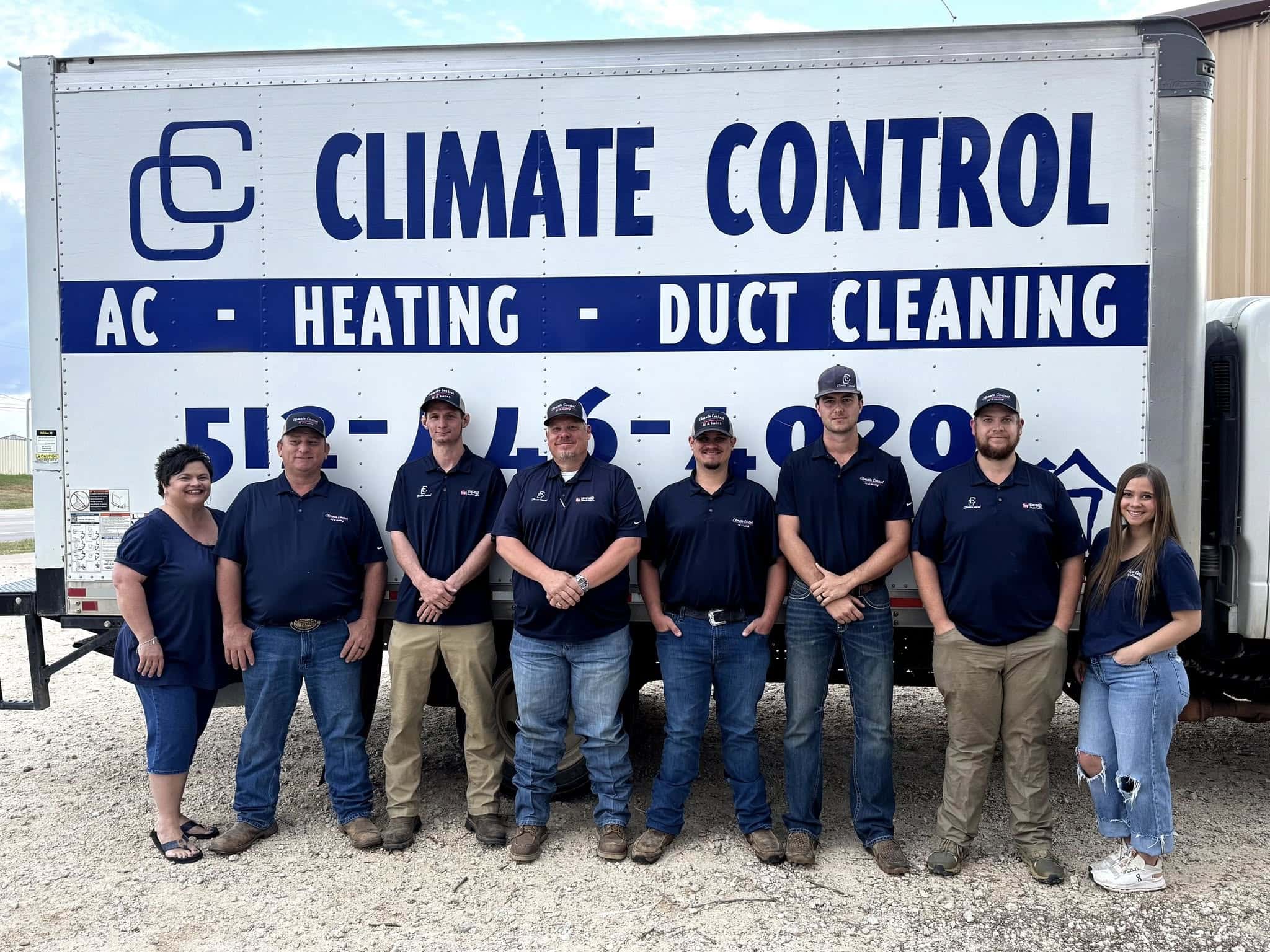
Shopping around for Heating Services in Corinth?
Climate Control A/C & Heating works on comfort equipment of every kind around the community.
Reach us at 512-446-4020 to describe what your equipment is doing.
A Hot, Wet Climate – Built for a Long Haul
Warm weather in Corinth stretches across much of the calendar; the machine on the pad outside is among the busiest appliances a household owns.
Water vapor rides along with the heat on a muggy afternoon, and the coil is where the moisture condenses and drains away.
Capacity, airflow and cleanliness work together, and a weakness in one shows up as a house that never feels quite right, regardless of which brand is on the cabinet.
Anatomy of a Cooling System – Heat Moves, Cold Is Not Made
Cooling equipment does not manufacture chill; warmth is absorbed in one coil and released in another.
Warm indoor air passes over a cold coil in the air handler or furnace cabinet, with the compressor outside squeezing the refrigerant so the heat can leave.
Wear tends to show up in the electrical components before the big mechanical ones, which is why a quick diagnosis matters before anyone talks about replacement.
Diagnosing a Weak Cooling System – Finding the Real Cause
Good AC repair is detective work before it is wrench work, and a house that is warm may have an electrical fault, an airflow problem or a refrigerant problem.
A unit that clicks and does nothing may be waiting on a bad contactor or a dead control board, and these are among the quicker repairs when the technician has the part.
Ice on the lines almost always means too little air or too little refrigerant; switching the system off and letting it thaw protects the equipment until it can be checked.
A properly working system keeps its charge for good, since nothing burns it off, and adding more without finding the leak only delays the same problem.
Clogged condensate drains are a quiet cause of water stains and shutdowns, and a flush of the line during regular service often prevents the problem.
Warning Signs: Small Changes, Big Hints
Cooling equipment usually gives notice before it fails outright, and every item below is a reason to schedule a visit:
- Some rooms that never cool down while the system runs nonstop.
- Loud banging when the compressor starts, whether or not the cooling seems to work.
- Short, frequent cycling of the outdoor unit, along with a higher electric bill.
- Damp spots on the ceiling below the indoor cabinet, which deserves a look before damage spreads.
Tune-Ups for Cooling Gear: Catching Trouble Before It Grows
Routine AC maintenance heads off the kind of failure that arrives on a hot afternoon, and the visit usually combines cleaning, measuring and tightening.
Filters catch the dust that would otherwise coat the indoor coil, which is a quick job that helps the entire system.
Dirt on the condenser makes the compressor run hotter, so that coil gets cleaned too, and reading the numbers shows whether anything is drifting out of range.
Repair or Replace – Age, Condition and Efficiency
Replacement is worth considering once repairs pile up on equipment that was already aging, and an honest technician explains both paths.
Some older units run on refrigerant that is now scarce, which affects repair decisions, and that can tip a close decision toward replacement.
Efficiency numbers on new equipment, such as SEER2, give a way to compare models fairly, and comfort improves along with the numbers.
Choosing Capacity: the Groundwork Matters
An air conditioning install starts with a load calculation, not a rule of thumb; orientation and shading matter as much as floor area.
Oversizing is a common mistake, and it wears out parts through constant starting, and a proper calculation avoids both extremes.
A complete installation pairs the condenser, the coil and the air handler as one system, and the installer verifies airflow and charge before leaving the job.
Duct System Basics: Moving Air Efficiently
Duct work moves the air that the equipment has cooled or heated, so its design shapes every room, and a unit can be fine while the ducts hold the whole system back.
A long flexible run through a hot attic needs support, sealing and good insulation, which can improve comfort without touching the equipment.
Cleaning the Air Paths: What It Can and Cannot Do
Duct cleaning removes dust and debris from the supply and return runs, the registers and the blower compartment; construction dust, rodents or visible mold growth are the usual reasons to schedule it.
Clean ducts work best alongside a good filter and sealed connections, and claims about health benefits should be treated skeptically.
Heat Pumps – Efficient Most of the Year
A heat pump is an air conditioner that can run backward to warm the house, and one system handles both seasons with a single set of equipment.
A heat pump may call on backup heat during a hard freeze or while defrosting its coil; steam from the outdoor unit during defrost is normal.
Gas Furnaces – the Machinery in the Closet
Inside a gas furnace, a burner lights, a heat exchanger warms up and the blower pushes air across it, and the sequence is why furnaces need testing before cold weather.
The annual furnace check is also a safety check on combustion and exhaust, and the furnace check is well timed before the first cold front arrives.
Electric Heating Systems: What to Expect From It
An electric furnace passes air over banks of resistance elements that glow when energized; troubleshooting centers on power, controls and the blower motor.
Resistance heat converts every unit of power to heat, while a heat pump moves several units for each one consumed, and a technician can explain how each option behaves in a mild climate.
Heating Systems of Every Type – Test Before You Need It
A hard freeze can arrive with little warning, so heating equipment needs to be ready before it is called on; problems found early can be repaired before a cold front arrives.
Heating systems come in several forms, and the same house may use gas furnaces, heat pumps or electric heating systems, and a technician adjusts the visit to the equipment on site.
Hot-Water Heating: Less Common, Still Important
Boiler systems appear in older buildings, larger properties and some commercial spaces, and the parts, from circulators to expansion tanks, differ from forced-air equipment.
Service on boiler systems covers the burner, the water pressure, the circulator pump, the expansion tank and the safety relief valve; water damage can grow quickly.
Indoor Air Quality – Sources, Symptoms and Solutions
Residential air quality is shaped by dust, pet dander, cooking fumes, cleaning products and moisture, and in Texas, cedar pollen and spring dust can find their way inside.
Filter grade matters, but a very dense filter in the wrong system can choke the airflow, and sealing return leaks keeps unfiltered air from sneaking around the filter.
Commercial air quality involves larger volumes, more occupants and strict airflow requirements, and a maintenance plan fits the building's size and hours.
Air Purification Options – Whole-Home or Single Room
Whole-home purifiers treat air as it passes through the system, while portable ones clean a single space; any claims about performance should be checked against the specification.
A purifier works alongside good ventilation and a clean system, not in place of them; a technician looks at the system before recommending a device.
Add-On Air Treatments: Understanding the Options
Ultraviolet lamps near the coil are meant to keep it cleaner by discouraging growth on damp surfaces, and results depend on placement, dose and the lamp type.
Antimicrobial mist is a liquid treatment applied to coils, ducts or surfaces to discourage growth; the label for the product spells out how it is to be used.
Fresh Air and Exhaust: Why Tight Buildings Need It
Ventilating also removes moisture from kitchens and baths before it settles into the structure, and dampers, filters and controls keep the supply of fresh air in balance.
Attic ventilation is a separate matter, but it affects how hard the cooling system works, and a technician who looks at the surroundings sees more than the unit alone.
Commercial Cooling – Equipment Built for Heavier Duty
Commercial air conditioning system designs range from rooftop packages to split systems and multi-zone setups; a break in cooling can mean lost customers or a workday cut short.
Coil cleaning, belt checks and economizer inspections are part of keeping commercial equipment dependable, and larger properties may phase work across several units.
Chilled Water Cooling: Where They Make Sense
A building with chilled water pulls its cooling from a central plant rather than separate rooftop units, and they need specialized service knowledge.
Cold Storage Equipment: What Service Involves
Businesses that sell or store food depend on refrigeration service to hold safe temperatures, and food safety rules set limits that equipment must keep.
How Climate Control A/C & Heating Works Through Heating Services throughout Corinth
A good service call begins with listening to what the owner has noticed; the owner understands the situation before any decision.
Honest advice separates the necessary from the optional, and the work proceeds only when the owner agrees.
Let's Talk About Your Equipment
Reach out at 512-446-4020 to schedule service or ask what makes sense for your building.
Closing Thoughts – Keep Things Simple
Interest in Heating Services often starts with a problem, and the solution starts with a clear diagnosis; reach Climate Control A/C & Heating at 512-446-4020 when you are ready.