
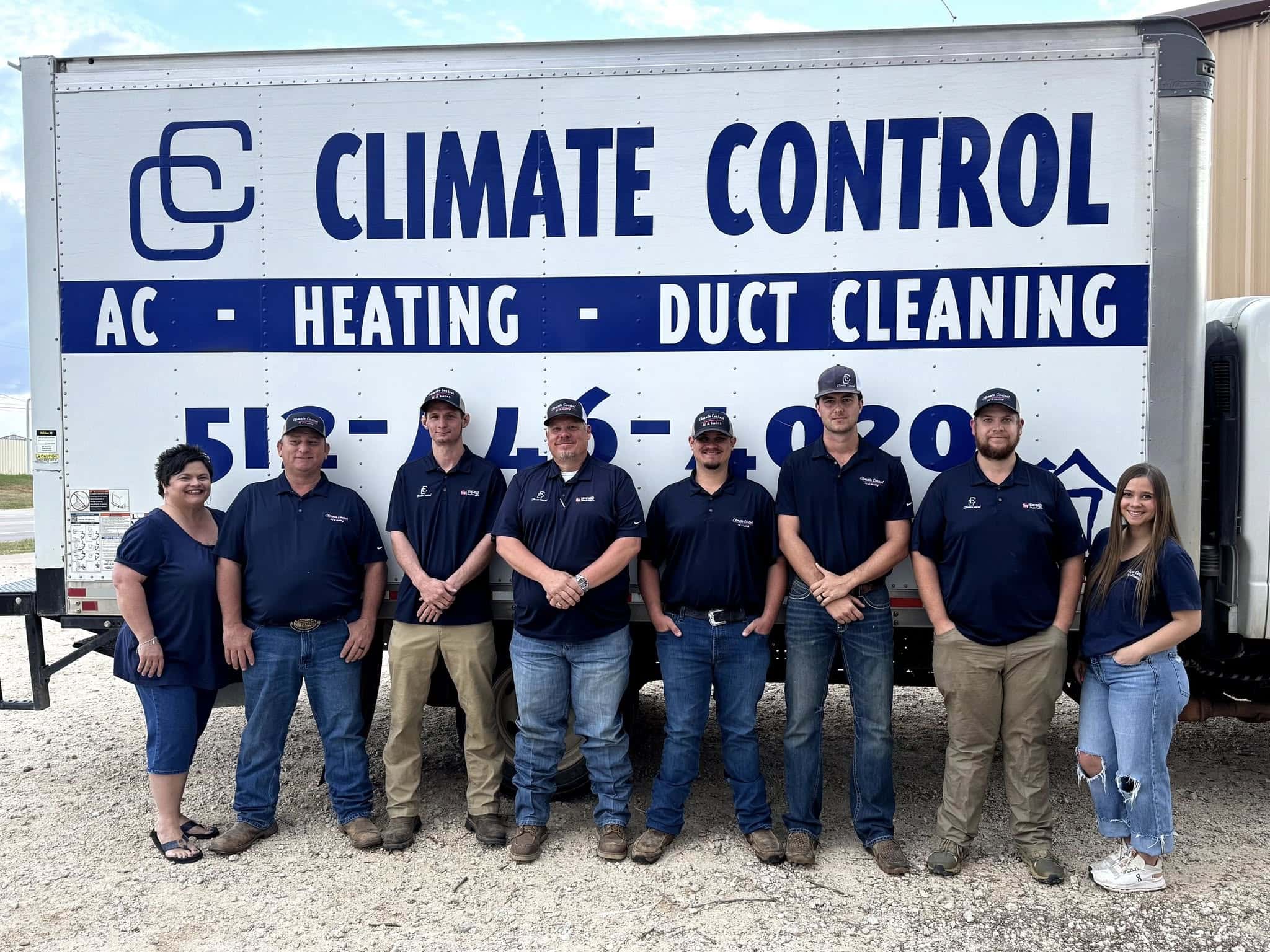
Searching for Residential Air Quality in Corinth?
Climate Control A/C & Heating looks after cooling, heating and the air indoors close to home.
Dial 512-446-4020 to describe what your equipment is doing.
The Cooling Season: Local Conditions Come First
A Corinth summer stacks hot afternoon after hot afternoon; a cooling system here logs far more running hours than one in a mild climate.
Damp air changes how a house feels at any given temperature; the indoor coil acts as the dehumidifier, collecting water that leaves through a drain line.
Capacity, airflow and cleanliness work together, and a weakness in one shows up as a house that never feels quite right, and each one is something a technician can check on site.
Moving Heat Outdoors – Heat Moves, Cold Is Not Made
Nothing in a cooling system generates cold air from scratch; warmth is absorbed in one coil and released in another.
Inside the house, the evaporator coil does the absorbing, and the outdoor unit holds the compressor and condenser coil that push that heat away.
Fan motors and start components do a great deal of work for their size, and the larger parts usually go on to last much longer.
Diagnosing a Weak Cooling System – Sorting Symptoms From Causes
A proper air conditioning repair sorts the symptom from the cause before anything is replaced; three very different faults can feel identical from the thermostat.
A tripped breaker, a failed capacitor or a worn contactor keeps the outdoor unit from starting, though a part that failed once can point to heat or a loose connection that needs attention.
Ice on the lines almost always means too little air or too little refrigerant, and running the system while it is frozen can damage the compressor.
A properly working system keeps its charge for good, since nothing burns it off, which is why measuring pressures and temperatures matters more than adding gas.
A blocked drain line can back water into the pan and trip a safety switch, and the fix is usually quick once the blockage is found.
Symptoms Worth Noticing – What Owners Notice First
Air conditioners seldom quit without hints along the way; the list below covers what owners tend to notice:
- One end of the house that feels warmer even with the thermostat set low.
- Loud banging when the compressor starts, especially when the weather is hot.
- Short, frequent cycling of the outdoor unit; parts wear faster.
- Water around the air handler, often tracing back to the drain line.
Regular Maintenance – the Work Behind Reliable Comfort
Routine AC maintenance heads off the kind of failure that arrives on a hot afternoon; the technician cleans what gets dirty and measures what can drift.
Dirty filters are the single easiest thing for an owner to handle, and a quick check each month is a good habit through the summer.
Dirt on the condenser makes the compressor run hotter, so that coil gets cleaned too; the report reflects measurements rather than guesses.
Aging Equipment: How Owners Decide
An old unit that needs repair after repair may be a candidate for AC replacement, with the condition of the compressor and coils weighing heavily.
The refrigerant a system uses is worth asking about when a repair involves the sealed loop, and newer equipment is built for current refrigerants.
Newer cooling equipment is generally more efficient than older models; replacement can pay back in comfort as well as in energy use.
Sizing and Setup – a Calculation, Not a Guess
Choosing equipment for an AC install means working out how much heat the structure gains; windows, attic insulation and ductwork all change the answer.
A unit that is too large satisfies the thermostat fast and leaves the humidity behind, and a unit that is too small runs constantly without catching up.
Matched components perform to their design efficiency, while mismatched ones fall short, and the installer verifies airflow and charge before leaving the job.
The Hidden Network in the Walls and Attic: the Lungs of the House
In many houses, the ducts decide whether a new system performs as promised, which is why the airflow measurement is part of a proper diagnosis.
Runs through an unconditioned attic or crawl space gain heat or lose chill unless sealed and wrapped, and a technician can often find the leaks with a pressure test.
Dust, Debris and Ductwork: Worth Doing at the Right Time
Duct cleaning is a mechanical job that brushes loose and vacuums out what has collected; construction dust, rodents or visible mold growth are the usual reasons to schedule it.
Clean ducts work best alongside a good filter and sealed connections; ask to see before-and-after photos of the work.
Reversible Systems: a Natural Fit for Mild Winters
The reversing valve is what lets heat pumps switch between cooling and heating, and one system handles both seasons with a single set of equipment.
When outdoor temperatures fall far enough, electric strips or a furnace add the missing warmth; steam from the outdoor unit during defrost is normal.
Furnace Basics – Parts, Safety and Service
The sequence in a gas furnace runs from thermostat call to draft fan, igniter, gas valve and flame proof, and the sequence is why furnaces need testing before cold weather.
The annual furnace check is also a safety check on combustion and exhaust, and stored items near the unit can block airflow and combustion air.
Electric Heating Systems: How the Elements Work
Electric heating systems warm the air with heating elements instead of a flame, and the main wear items are the elements, the sequencers and the blower.
The trade-off with electric heat is simple equipment against higher running use, and a technician can explain how each option behaves in a mild climate.
Winter Preparation – Test Before You Need It
Heating season in this part of Texas is brief, with sudden swings between warm days and freezing nights, and a test on a mild day beats a surprise on a freezing one.
Heating services cover igniters and burners on gas units, reversing valves on heat pumps and elements on electric ones, and a technician adjusts the visit to the equipment on site.
Hydronic Warmth – Quiet, Even Heat
Hydronic heating moves heat with water instead of air, which makes for quiet, even warmth, but a building with a boiler needs service from someone who knows hydronics.
A boiler tune-up checks combustion, water level, pressure and the controls that keep it safe; neglected boilers corrode inside, so water quality and venting matter.
Cleaner Air Indoors – the Part You Cannot See
Good indoor air quality means controlling particles, humidity, fresh air and sources of contamination, and cleaner air depends on filtration, ventilation and moisture control working together.
Filter grade matters, but a very dense filter in the wrong system can choke the airflow, and a technician can recommend what the equipment can handle.
Commercial air quality depends on ventilation rates, filtration and the upkeep of rooftop equipment, and employee and customer comfort both depend on it.
Purifiers – Whole-Home or Single Room
Whole-home purifiers treat air as it passes through the system, while portable ones clean a single space; pollen and dust call for filtration, while odors call for carbon.
Buying a purifier without fixing a moisture problem treats a symptom and misses the cause, which is why one device rarely fits every home.
Light and Mist Treatments – Reasonable Expectations
Lamps inside the cabinet work on the coil and pan, and they need replacing on a schedule, and results depend on placement, dose and the lamp type.
Treatments with antimicrobial mist are used after cleaning, when surfaces are dry and accessible, and it works best where the source of moisture has been dealt with.
Fresh Air and Exhaust – Not Too Much, Not Too Little
Bath fans, kitchen hoods and outdoor air intakes are all part of ventilating a modern building, which is where design and service make a real difference.
Attic ventilation is a separate matter, but it affects how hard the cooling system works, and the same attention applies to the whole building.
Business Climate Control: Comfort That Supports the Work
A commercial AC system is often a rooftop package unit that holds the compressor, the coils and the blower in one cabinet, and filters, belts, coils and drains are the usual checklist items.
Control settings, schedules and thermostats on commercial systems deserve a look when comfort complaints begin, and replacement decisions weigh downtime as well as equipment.
Chillers – Big Buildings, Big Loads
Chiller systems cool water, and pumps carry the chilled water through pipes to air handlers throughout a building, and the plant includes a chiller, pumps, a cooling tower or air-cooled condenser, and controls.
Keeping Food and Product Cold: Temperature Is the Whole Job
Refrigeration service covers walk-in coolers, reach-in units, freezers, display cases and ice machines, which is why restaurants and stores plan service ahead of busy seasons.
How Climate Control A/C & Heating Goes About Residential Air Quality across Corinth
Every visit starts with questions about what the equipment has been doing and when; readings replace guesses, and the findings are explained in plain language.
A repair, a tune-up and a replacement are each described for what they are and what they involve, and the owner stays in control of the decision.
Questions About Your System Are Welcome
Contact us at 512-446-4020 to book a technician or get a straight answer.
Bringing It Home – Keep Things Simple
Searching for Residential Air Quality in Corinth usually leads to the same few questions about size, age, airflow and care, and Climate Control A/C & Heating answers questions at 512-446-4020.