
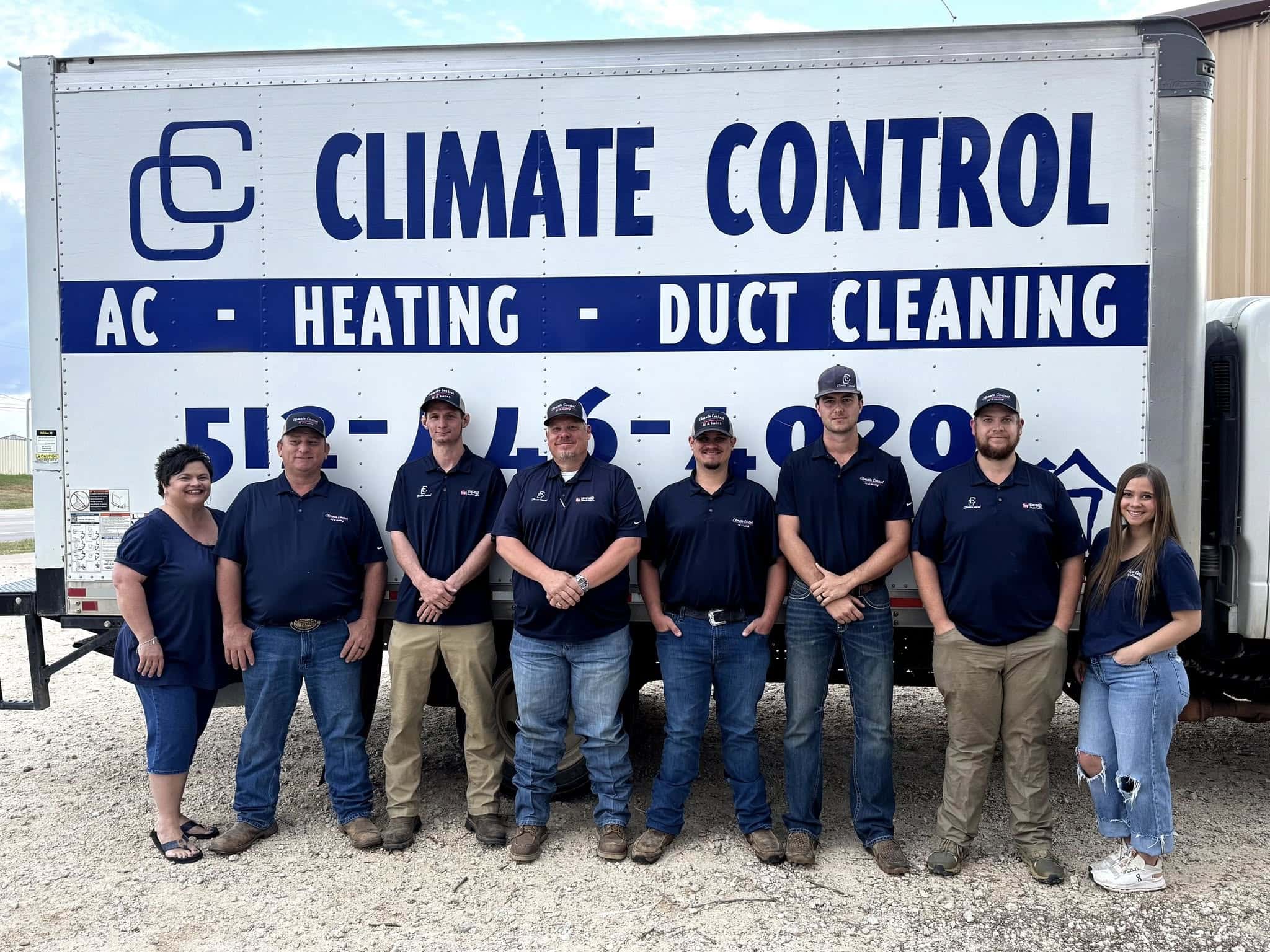
Looking for Antimicrobial Mist near Davilla?
Climate Control A/C & Heating works on heating, cooling and indoor comfort here at home.
Call 512-446-4020 and tell us what you are noticing.
What Summer Asks of a System: the Climate Behind the Equipment
A Davilla summer stacks hot afternoon after hot afternoon; the machine on the pad outside is among the busiest appliances a household owns.
Damp air changes how a house feels at any given temperature; the indoor coil acts as the dehumidifier, collecting water that leaves through a drain line.
Right sizing, steady airflow and a clean coil therefore decide how a house feels, regardless of which brand is on the cabinet.
The Refrigerant Cycle – Heat Moves, Cold Is Not Made
Air conditioning is the business of relocating heat; refrigerant picks up warmth from indoor air and carries it outside.
The air handler holds the indoor coil and the blower that pushes air across it, and the outdoor unit holds the compressor and condenser coil that push that heat away.
Fan motors and start components do a great deal of work for their size, which is why a quick diagnosis matters before anyone talks about replacement.
Service Calls in Hot Weather – Finding the Real Cause
A proper air conditioning repair sorts the symptom from the cause before anything is replaced; weak cooling is a symptom that many separate faults share.
If the outdoor unit is silent, power, a breaker and the low-voltage wiring are the first suspects, and each can be tested with a meter in a few minutes.
A frozen evaporator coil blocks the very air it is supposed to cool; the coil needs to thaw completely before anyone can measure what is going on.
Refrigerant is not a consumable that needs topping off every season, and the leak is the thing that has to be found and dealt with.
Clogged condensate drains are a quiet cause of water stains and shutdowns; moisture removed from muggy air adds up to gallons a day.
Warning Signs: Trust Your Senses
The system tends to behave differently well before the day it stops; these are the signs a homeowner can see, hear or feel without any tools:
- One end of the house that feels warmer while the system runs nonstop.
- A buzzing or clicking sound at startup, particularly at the start of a cycle.
- Repeated short runs that never finish a cooling cycle; parts wear faster.
- Musty smells when the blower starts, especially in humid weather.
Preventive Service – the Work Behind Reliable Comfort
AC maintenance is a set of simple, repeatable tasks that keep a cooling system efficient; the checklist stays short enough to repeat every season.
The air filter is the part most under the homeowner's own control, and a quick check each month is a good habit through the summer.
Heat flows through each of the coils, and each one loses capacity when it collects dirt; the report reflects measurements rather than guesses.
Aging Equipment: How Owners Decide
An old unit that needs repair after repair may be a candidate for AC replacement, with the condition of the compressor and coils weighing heavily.
A system built around a retired refrigerant can be a poor candidate for major repairs; current equipment follows the refrigerant rules in force today.
Variable-speed designs hold temperature and humidity more precisely than single-stage units, which matters most where the system runs for months.
Sizing and Setup: Details That Shape Comfort
Air conditioning install quality depends on matching capacity to what the building actually needs, and two houses of the same size can need very different equipment.
Oversizing is a common mistake, and it wears out parts through constant starting; the right size runs long, steady cycles that dry the air.
A complete installation pairs the condenser, the coil and the air handler as one system; commissioning measurements confirm that the system performs as designed.
Air Distribution – Where Comfort Is Won or Lost
Duct work moves the air that the equipment has cooled or heated, so its design shapes every room, and a unit can be fine while the ducts hold the whole system back.
A long flexible run through a hot attic needs support, sealing and good insulation, which can improve comfort without touching the equipment.
Clearing Out the Channels – Deciding if It Fits
Duct cleaning is a mechanical job that brushes loose and vacuums out what has collected, and the decision should rest on what is actually in the ducts.
Cleaning pays off only when the source of the dirt is also addressed; ask to see before-and-after photos of the work.
The Two-Way Heat Mover: Strengths and Limits
Heat pumps move heat in both directions, cooling in summer and heating in winter, and one system handles both seasons with a single set of equipment.
Defrost cycles and backup heat are normal parts of winter operation; steam from the outdoor unit during defrost is normal.
Furnace Basics – Parts, Safety and Service
Inside a gas furnace, a burner lights, a heat exchanger warms up and the blower pushes air across it, and the sequence is why furnaces need testing before cold weather.
Combustion appliances produce carbon monoxide, which is why detectors and clear vents matter, and homeowners should keep the area around the furnace clear of clutter.
Heating With Electricity: What to Expect From It
An electric furnace passes air over banks of resistance elements that glow when energized; troubleshooting centers on power, controls and the blower motor.
Electricity makes heat at a steady rate, but resistance heat uses more power than a heat pump does for the same warmth; the decision rests on the building, not just the equipment.
Warmth When the Front Arrives: Short Winters Still Bite
A norther can send temperatures tumbling, and heating systems that sat idle all summer must start right up, and a test on a mild day beats a surprise on a freezing one.
Furnaces, heat pumps and electric air handlers all heat homes, and each has its own checkup list, which keeps the work simple to explain and easy to follow.
Boiler Systems – Radiators, Coils and Radiant Floors
Radiant floor and baseboard heating both rely on a boiler to heat the water; an owner with a boiler should look for experience with water-based heat.
Service on boiler systems covers the burner, the water pressure, the circulator pump, the expansion tank and the safety relief valve; water damage can grow quickly.
Cleaner Air Indoors: Starting With Facts
Indoor air quality describes what is floating in the air inside a building, from dust and pollen to odors and humidity; the equipment that moves air is also the equipment that carries the contaminants.
Filter grade matters, but a very dense filter in the wrong system can choke the airflow; a deeper media cabinet gives better filtering with less restriction.
Businesses face their own air issues, from shared air handlers to customers coming and going all day, which is why commercial properties usually benefit from regular service visits.
Choosing an Air Cleaner: What the Labels Mean
Purifiers remove particles or gases from the air, and they come as whole-home units or portable room models, and ozone-producing models are better avoided in occupied rooms.
A purifier works alongside good ventilation and a clean system, not in place of them, and sizing matters here as much as anywhere.
Managing Growth Inside the System: Where They Fit
UV lights install in the air handler and shine on the indoor coil and drain pan to limit microbial growth; ask what the lamp targets and how often it needs service.
An antimicrobial mist is sprayed or fogged onto surfaces inside the system or the building; the underlying cause still has to be fixed.
Ventilation Done Right: the Case for Planned Airflow
Ventilating also removes moisture from kitchens and baths before it settles into the structure, and in a humid climate the incoming air needs dehumidifying.
Exhaust fans that move air out of kitchens and baths should vent outdoors, not into the attic; the equipment, the envelope and the airflow work as a team.
Keeping a Workplace Comfortable – Planning Around the Business
Shops, restaurants, offices and churches often rely on rooftop equipment that serves a zone of the building; planned maintenance keeps surprises to a minimum.
Condensate drains on rooftops clog with debris, and the water can stain ceilings below; a clear plan helps the business stay open.
Chiller Systems for Larger Buildings: Where They Make Sense
A building with chilled water pulls its cooling from a central plant rather than separate rooftop units; the equipment is larger, more complex and more closely monitored.
Cold Storage Equipment – Equipment With Little Room for Error
Businesses that sell or store food depend on refrigeration service to hold safe temperatures, which is why restaurants and stores plan service ahead of busy seasons.
How Climate Control A/C & Heating Thinks About Antimicrobial Mist in Davilla
Before touching a tool, the technician hears the history of the problem from the person who lives with it; readings replace guesses, and the findings are explained in plain language.
Options are laid out clearly, with the reasons behind each recommendation, and questions are welcome at every stage.
Ready When You Are
Dial 512-446-4020 to schedule service or ask what makes sense for your building.
Putting It Together: Comfort Is a System
Whether the need falls under Antimicrobial Mist or elsewhere in the heating, cooling and air quality family, the same principles apply; reach Climate Control A/C & Heating at 512-446-4020 when you are ready.