
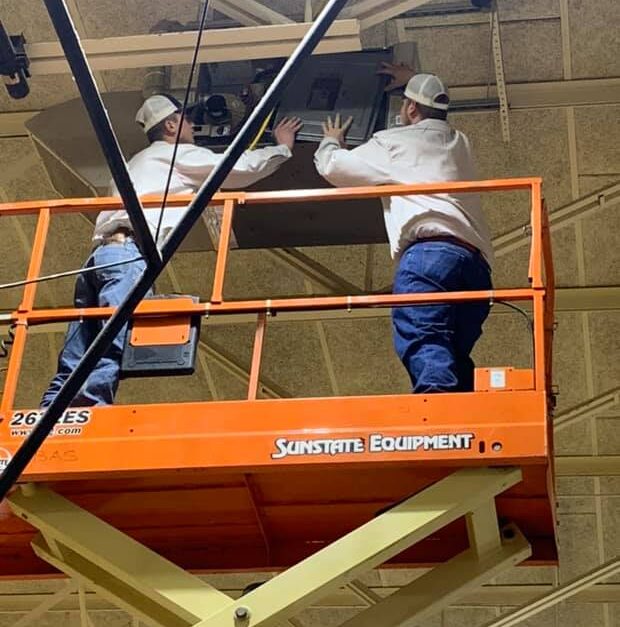
Searching for Commercial Air Conditioning System near Davilla?
Climate Control A/C & Heating supports comfort equipment of every kind in the local area.
Contact us at 512-446-4020 and tell us what you are noticing.
A Hot, Wet Climate: Local Conditions Come First
The cooling season in Davilla starts early and finishes late, and a home air conditioner may run most of the day through the worst of it.
Moisture in the air matters as much as the thermometer reading; a cooling system dehumidifies only when the compressor is on and air is moving across the coil.
Matching capacity to the house, moving enough air and keeping the coil clean all shape the result, whatever the label on the box promises.
Anatomy of a Cooling System – Heat Moves, Cold Is Not Made
An air conditioner does not create cold; a sealed loop of refrigerant absorbs heat at one point and releases it at another.
Warm indoor air passes over a cold coil in the air handler or furnace cabinet, and the condensing unit in the yard completes the loop by getting rid of the heat.
Wear tends to show up in the electrical components before the big mechanical ones; the compressor itself can last a long time when it is kept clean and properly charged.
Service Calls in Hot Weather: a Look at Common Failures
A proper air conditioning repair sorts the symptom from the cause before anything is replaced; three very different faults can feel identical from the thermostat.
When the outdoor fan hums but will not spin, a capacitor is often the reason, and they usually repair cleanly because the parts are small.
Frost on the indoor coil or the copper line is a warning sign, not a cooling success, and the cause may be as simple as a clogged filter or as involved as a leak.
The charge in a cooling system is fixed, so a shortage points to escape, and the leak is the thing that has to be found and dealt with.
Water around the air handler often means the condensate line has clogged with slime; moisture removed from muggy air adds up to gallons a day.
Symptoms Worth Noticing: Trust Your Senses
Air conditioners seldom quit without hints along the way, and every item below is a reason to schedule a visit:
- Some rooms that never cool down despite thin airflow at the vents.
- A burning smell from the vents, often getting louder from one week to the next.
- Constant starting and stopping through the afternoon; parts wear faster.
- Pooling water under the furnace or air handler, often tracing back to the drain line.
Preventive Service – the Work Behind Reliable Comfort
Scheduled air conditioning maintenance gives a technician a look at the system while it still works; the technician cleans what gets dirty and measures what can drift.
The air filter is the part most under the homeowner's own control, and how often it needs changing depends on the filter type, pets and the season.
Heat flows through each of the coils, and each one loses capacity when it collects dirt, and reading the numbers shows whether anything is drifting out of range.
Repair or Replace – Age, Condition and Efficiency
AC replacement becomes a real question when a system is old, repeatedly broken or hard to keep comfortable, with the condition of the compressor and coils weighing heavily.
Refrigerant types have changed over time, so older systems may use one that is hard to find; current equipment follows the refrigerant rules in force today.
Efficiency has improved steadily, and a modern system can use noticeably less electricity; the benefit grows in houses that rely on cooling much of the year.
Planning a New Installation – Bigger Is Not Better
AC install work succeeds or fails on sizing and airflow before any equipment is delivered; windows, attic insulation and ductwork all change the answer.
Oversizing is a common mistake, and it wears out parts through constant starting, and a unit that is too small runs constantly without catching up.
Every connection, from the refrigerant lines to the thermostat wire, gets sized and routed with care, and a startup check confirms the charge, the airflow and the temperature drop.
The Hidden Network in the Walls and Attic – What Hides Above the Ceiling
Duct work moves the air that the equipment has cooled or heated, so its design shapes every room, which is why the airflow measurement is part of a proper diagnosis.
Ducts that run through a hot attic lose a surprising amount of cooling on the way to the rooms; return air paths deserve the same attention as the supply side.
Dust, Debris and Ductwork – Deciding if It Fits
Duct cleaning removes dust and debris from the supply and return runs, the registers and the blower compartment; construction dust, rodents or visible mold growth are the usual reasons to schedule it.
Clean ducts work best alongside a good filter and sealed connections, and claims about health benefits should be treated skeptically.
Reversible Systems – Why They Suit the Region
Instead of burning fuel, heat pumps pull warmth from outdoor air and carry it inside; one outdoor unit does the work of two.
On extremely cold days the heat pump leans on supplemental heat to keep up; watch for unusually high bills as a hint.
Burners, Igniters and Flues: What Owners Should Know
Gas furnaces rely on an igniter, a flame sensor and a gas valve working in sequence, and the sequence is why furnaces need testing before cold weather.
Combustion appliances produce carbon monoxide, which is why detectors and clear vents matter, and the furnace check is well timed before the first cold front arrives.
Resistance and Strip Heat – Where It Fits Best
Electric heating systems warm the air with heating elements instead of a flame, which keeps the mechanical side straightforward.
Compared with a heat pump, strips and electric furnaces draw heavily for the heat they make; the choice depends on what fuel is available at the property.
Heating Systems of Every Type – Test Before You Need It
The heating season is short enough that equipment sits unused for months, then must work on the first cold night, and a test on a mild day beats a surprise on a freezing one.
Heating services cover igniters and burners on gas units, reversing valves on heat pumps and elements on electric ones; one failed switch can shut down an otherwise healthy system.
Hydronic Warmth: Less Common, Still Important
Hydronic heating moves heat with water instead of air, which makes for quiet, even warmth, and they are less common in Texas than furnaces and heat pumps.
Air in the lines, a stuck valve or a weak pump are common reasons a boiler heats unevenly; neglected boilers corrode inside, so water quality and venting matter.
Air Quality Basics – the Part You Cannot See
Residential air quality is shaped by dust, pet dander, cooking fumes, cleaning products and moisture; the equipment that moves air is also the equipment that carries the contaminants.
Choosing a filter means balancing how much it removes against how much resistance it adds; humidity control prevents the conditions mold needs.
Commercial air quality depends on ventilation rates, filtration and the upkeep of rooftop equipment; scheduled filter changes and coil cleaning keep these systems honest.
Filters, Purifiers and Their Limits: Sorting Fact From Marketing
Air purifiers range from a stand-alone machine in one room to a unit tied into the ductwork, and ozone-producing models are better avoided in occupied rooms.
Purifiers help most when the air handler is clean, the ducts are sealed and humidity is under control, which is why one device rarely fits every home.
UV Lights and Antimicrobial Mist: Understanding the Options
UV lights are a common add-on in humid climates, where the evaporator coil stays wet for months; bulbs lose strength over time and need changing.
Treatments with antimicrobial mist are used after cleaning, when surfaces are dry and accessible; the label for the product spells out how it is to be used.
Fresh Air and Exhaust – Controlled and Filtered
Ventilating also removes moisture from kitchens and baths before it settles into the structure, and dampers, filters and controls keep the supply of fresh air in balance.
Ductwork that dumps moisture into an attic can create damage far from the source, and the same attention applies to the whole building.
Cooling for Shops, Offices and Buildings: Uptime Matters
Commercial air conditioning system designs range from rooftop packages to split systems and multi-zone setups, and filters, belts, coils and drains are the usual checklist items.
Rooftop units sit in the sun and wind, so the cabinets, the coils and the curbs take a beating, and larger properties may phase work across several units.
Chiller Systems for Larger Buildings – Water Carries the Cold
A chiller is a large refrigeration machine that chills water for use in many spaces; the equipment is larger, more complex and more closely monitored.
Keeping Food and Product Cold: What Service Involves
Businesses that sell or store food depend on refrigeration service to hold safe temperatures; regular cleaning of condenser coils matters even more than in comfort cooling.
How Climate Control A/C & Heating Thinks About Commercial Air Conditioning System around Davilla
Conversation comes first, because the owner knows the symptoms better than anyone; readings replace guesses, and the findings are explained in plain language.
Options are laid out clearly, with the reasons behind each recommendation, and the owner stays in control of the decision.
Ready When You Are
Contact us at 512-446-4020 to describe what is going on and find the next step.
Putting It Together: Small Habits, Big Difference
Equipment, ducts and air quality are connected, so a question about Commercial Air Conditioning System is rarely a stand-alone one; reach Climate Control A/C & Heating at 512-446-4020 when you are ready.