
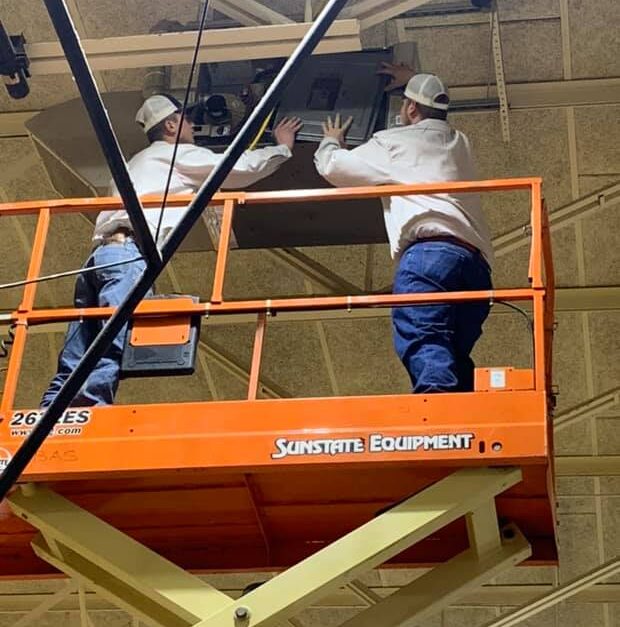
Shopping around for Duct Work near Davilla?
Climate Control A/C & Heating works on the equipment that keeps buildings comfortable close to home.
Call 512-446-4020 to talk it through.
What Summer Asks of a System: Why Equipment Works Hard Here
Hot weather in Davilla settles in for months at a time, and the equipment that carries the load is working harder than its owner tends to notice.
Humidity is half of the comfort problem, not an afterthought; a cooling system dehumidifies only when the compressor is on and air is moving across the coil.
Capacity, airflow and cleanliness work together, and a weakness in one shows up as a house that never feels quite right, regardless of which brand is on the cabinet.
Moving Heat Outdoors: the Basics Worth Knowing
Air conditioning is the business of relocating heat; it collects heat inside the house and dumps it into the outdoor air.
The indoor coil is where the cooling happens; outdoors, a fan pulls air across the condenser coil to shed the load.
Wear tends to show up in the electrical components before the big mechanical ones; the compressor itself can last a long time when it is kept clean and properly charged.
When the House Stops Cooling – Finding the Real Cause
A proper air conditioning repair sorts the symptom from the cause before anything is replaced, and a house that is warm may have an electrical fault, an airflow problem or a refrigerant problem.
When the outdoor fan hums but will not spin, a capacitor is often the reason, and they usually repair cleanly because the parts are small.
A frozen evaporator coil blocks the very air it is supposed to cool; shutting the cooling off is the safest response until someone inspects it.
The charge in a cooling system is fixed, so a shortage points to escape, and adding more without finding the leak only delays the same problem.
A blocked drain line can back water into the pan and trip a safety switch, and the fix is usually quick once the blockage is found.
Symptoms Worth Noticing – What Owners Notice First
Air conditioners seldom quit without hints along the way; the list below covers what owners tend to notice:
- Some rooms that never cool down despite thin airflow at the vents.
- A burning smell from the vents, sometimes only on the hottest afternoons.
- Repeated short runs that never finish a cooling cycle; parts wear faster.
- Condensation where there should be none, especially in humid weather.
Routine Care: Catching Trouble Before It Grows
Scheduled air conditioning maintenance gives a technician a look at the system while it still works; the technician cleans what gets dirty and measures what can drift.
Filters catch the dust that would otherwise coat the indoor coil, which is a quick job that helps the entire system.
The visit usually includes the condenser coil, the evaporator coil and a flush of the drain line; temperature drop and refrigerant pressures are measured to show how the loop is behaving.
Repair or Replace – Age, Condition and Efficiency
The conversation about replacement starts when age, condition and comfort all point the same way, and a good evaluation lays out repair and replacement side by side.
A system built around a retired refrigerant can be a poor candidate for major repairs, and newer equipment is built for current refrigerants.
Today's units move the same heat with less power than equipment from a generation ago; the benefit grows in houses that rely on cooling much of the year.
Getting an Install Right: Where Good Results Begin
Choosing equipment for an AC install means working out how much heat the structure gains, which is why square footage alone is a poor guide.
An oversized system cools the air quickly and then shuts off before it removes moisture; careful sizing protects comfort and the equipment.
Every connection, from the refrigerant lines to the thermostat wire, gets sized and routed with care, and the installer verifies airflow and charge before leaving the job.
Air Distribution: Moving Air Efficiently
A duct system is the network of channels that carry conditioned air to every room and returns it for re-cooling; a house with comfort problems deserves a look at its air paths.
Leaks at joints pull attic air into the system and push cooled air out into the rafters, which can improve comfort without touching the equipment.
Cleaning the Air Paths: What It Can and Cannot Do
Duct cleaning is a mechanical job that brushes loose and vacuums out what has collected, and the decision should rest on what is actually in the ducts.
Filtering, sealing and cleaning form one plan, not three separate jobs, and claims about health benefits should be treated skeptically.
Reversible Systems: a Natural Fit for Mild Winters
Heat pumps move heat in both directions, cooling in summer and heating in winter; one outdoor unit does the work of two.
On extremely cold days the heat pump leans on supplemental heat to keep up; watch for unusually high bills as a hint.
Burners, Igniters and Flues: Reliable Heat for Cold Fronts
Gas furnaces rely on an igniter, a flame sensor and a gas valve working in sequence, and a dirty flame sensor is a frequent reason for a furnace that lights and then shuts off.
The annual furnace check is also a safety check on combustion and exhaust, and a detector near the sleeping areas gives early warning.
All-Electric Warmth: How the Elements Work
An electric furnace passes air over banks of resistance elements that glow when energized; troubleshooting centers on power, controls and the blower motor.
The trade-off with electric heat is simple equipment against higher running use, and a technician can explain how each option behaves in a mild climate.
Winter Preparation: Short Winters Still Bite
The heating season is short enough that equipment sits unused for months, then must work on the first cold night, and a test on a mild day beats a surprise on a freezing one.
Heating systems come in several forms, and the same house may use gas furnaces, heat pumps or electric heating systems, and a technician adjusts the visit to the equipment on site.
Heating With Water – Quiet, Even Heat
Boiler systems appear in older buildings, larger properties and some commercial spaces, and the parts, from circulators to expansion tanks, differ from forced-air equipment.
Service on boiler systems covers the burner, the water pressure, the circulator pump, the expansion tank and the safety relief valve, and annual attention keeps these systems running quietly.
Air Quality Basics: Starting With Facts
Indoor air quality describes what is floating in the air inside a building, from dust and pollen to odors and humidity, and cleaner air depends on filtration, ventilation and moisture control working together.
Choosing a filter means balancing how much it removes against how much resistance it adds; a deeper media cabinet gives better filtering with less restriction.
Commercial air quality depends on ventilation rates, filtration and the upkeep of rooftop equipment, and employee and customer comfort both depend on it.
Cleaning the Air Itself: Matching the Tool to the Problem
Purifiers remove particles or gases from the air, and they come as whole-home units or portable room models, and ozone-producing models are better avoided in occupied rooms.
Equipment that cleans the air cannot make up for a dirty coil or a leaky return; a technician looks at the system before recommending a device.
Add-On Air Treatments: Where They Fit
A UV lamp does not clean the air passing by, but it treats the surfaces it can see, and results depend on placement, dose and the lamp type.
Antimicrobial mist is a liquid treatment applied to coils, ducts or surfaces to discourage growth; the label for the product spells out how it is to be used.
Ventilation Done Right – Not Too Much, Not Too Little
Ventilating a building means replacing stale indoor air with fresh outdoor air in a controlled way, and dampers, filters and controls keep the supply of fresh air in balance.
Exhaust fans that move air out of kitchens and baths should vent outdoors, not into the attic, and this is another reason the whole building matters.
Cooling for Shops, Offices and Buildings – Equipment Built for Heavier Duty
A commercial AC system is often a rooftop package unit that holds the compressor, the coils and the blower in one cabinet, and when it fails the business feels it quickly.
Rooftop units sit in the sun and wind, so the cabinets, the coils and the curbs take a beating, and replacement decisions weigh downtime as well as equipment.
Cooling at Scale: Where They Make Sense
Instead of cooling air directly, chiller systems cool a water loop that serves coils across the property, and water treatment, tube cleaning and refrigerant checks are routine tasks.
Refrigeration Service: Temperature Is the Whole Job
Walk-in coolers rely on evaporators, condensing units, defrost systems and door seals working together, and temperature drift is the warning sign to act on.
How Climate Control A/C & Heating Looks at Duct Work across Davilla
Before touching a tool, the technician hears the history of the problem from the person who lives with it, followed by an explanation of what was found and what the choices are.
Options are laid out clearly, with the reasons behind each recommendation, and the work proceeds only when the owner agrees.
Comfort Is a Phone Call Away
Contact us at 512-446-4020 to schedule service or ask what makes sense for your building.
A Last Word: Attention Now Saves Trouble Later
From Duct Work to routine upkeep, good outcomes come from understanding the equipment and caring for it; reach Climate Control A/C & Heating at 512-446-4020 when you are ready.