
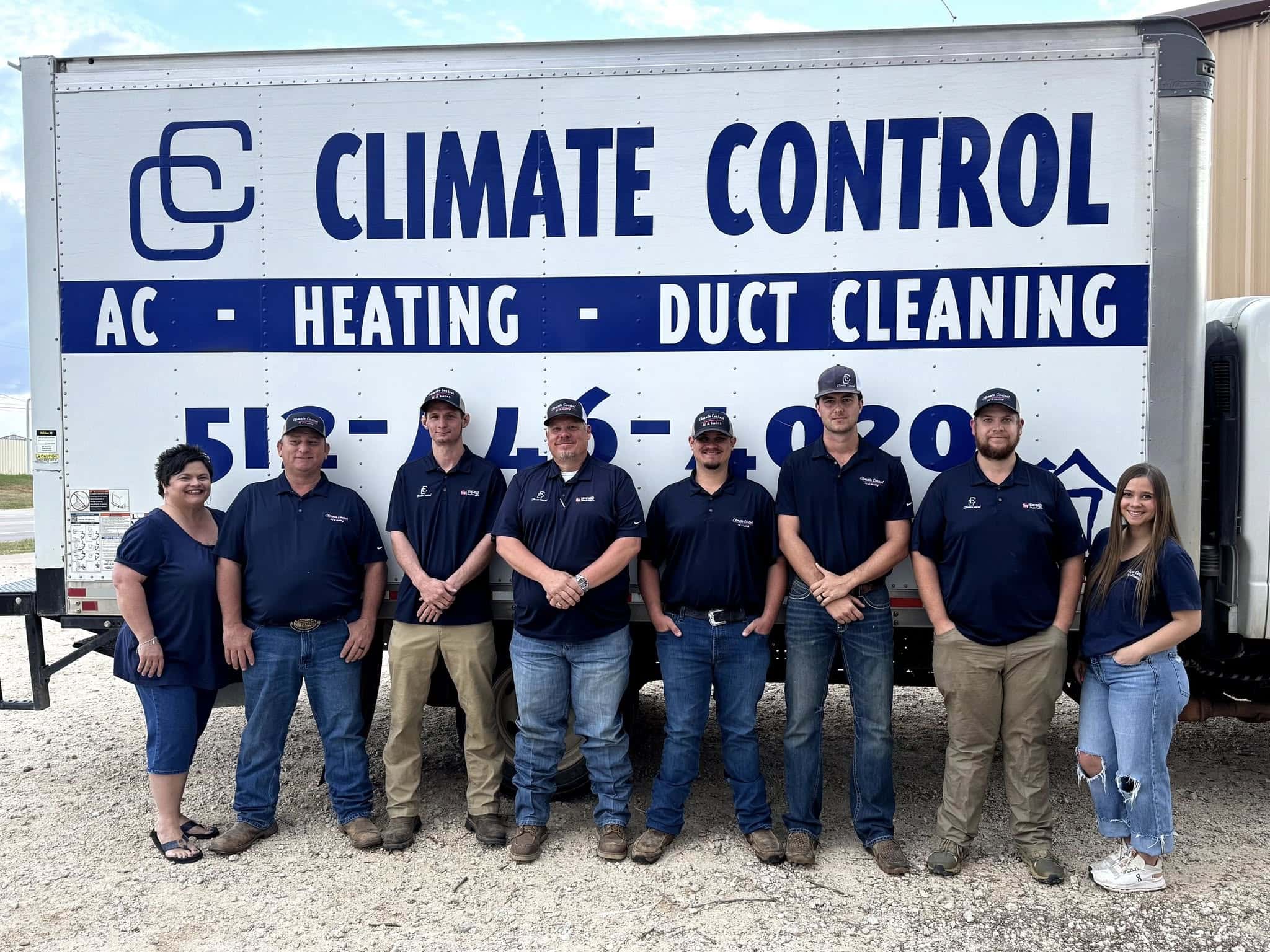
Trying to find Refrigeration Service throughout Davilla?
Climate Control A/C & Heating services the equipment that keeps buildings comfortable here at home.
Phone 512-446-4020 and ask a real question.
Summer Load – the Setting for Every Choice
Summers across Davilla run long, hot and humid, and a home air conditioner may run most of the day through the worst of it.
Damp air changes how a house feels at any given temperature, and removing it takes steady run time rather than quick bursts.
Right sizing, steady airflow and a clean coil therefore decide how a house feels, long before a breakdown ever happens.
Anatomy of a Cooling System: What Each Piece Does
Air conditioning is the business of relocating heat; a sealed loop of refrigerant absorbs heat at one point and releases it at another.
Inside the house, the evaporator coil does the absorbing, with the compressor outside squeezing the refrigerant so the heat can leave.
Fan motors and start components do a great deal of work for their size, and the larger parts usually go on to last much longer.
Diagnosing a Weak Cooling System: a Look at Common Failures
Good AC repair is detective work before it is wrench work; weak cooling is a symptom that many separate faults share.
If the outdoor unit is silent, power, a breaker and the low-voltage wiring are the first suspects; the diagnosis comes before any decision about a bigger job.
Ice on the lines almost always means too little air or too little refrigerant; shutting the cooling off is the safest response until someone inspects it.
Refrigerant is not a consumable that needs topping off every season, and the leak is the thing that has to be found and dealt with.
A blocked drain line can back water into the pan and trip a safety switch, and the fix is usually quick once the blockage is found.
Symptoms Worth Noticing: Small Changes, Big Hints
Air conditioners seldom quit without hints along the way; the list below covers what owners tend to notice:
- Some rooms that never cool down even with the thermostat set low.
- A hissing noise near the refrigerant lines, sometimes only on the hottest afternoons.
- A system that turns on and off in short cycles, leaving the indoor air damp.
- Damp spots on the ceiling below the indoor cabinet, particularly after long runs.
Preventive Service: What a Maintenance Visit Covers
Regular AC maintenance trims the chance of a breakdown during the hottest week, and the visit usually combines cleaning, measuring and tightening.
Filters catch the dust that would otherwise coat the indoor coil, and a quick check each month is a good habit through the summer.
The visit usually includes the condenser coil, the evaporator coil and a flush of the drain line; temperature drop and refrigerant pressures are measured to show how the loop is behaving.
Time for a Change – a Decision Worth Making Carefully
The conversation about replacement starts when age, condition and comfort all point the same way; the right answer differs from one house to the next.
The refrigerant a system uses is worth asking about when a repair involves the sealed loop, and that can tip a close decision toward replacement.
Today's units move the same heat with less power than equipment from a generation ago, and in a long cooling season those savings add up.
Sizing and Setup: the Groundwork Matters
Air conditioning install quality depends on matching capacity to what the building actually needs; orientation and shading matter as much as floor area.
Too much capacity leads to short cycling, uneven rooms and a clammy feel; one that is too small never reaches the setpoint on the hottest days.
Matched components perform to their design efficiency, while mismatched ones fall short; commissioning measurements confirm that the system performs as designed.
Duct System Basics: the Lungs of the House
A duct system is the network of channels that carry conditioned air to every room and returns it for re-cooling, which is why the airflow measurement is part of a proper diagnosis.
Leaks at joints pull attic air into the system and push cooled air out into the rafters, and sealing with mastic rather than cloth tape holds up better in the heat.
Clearing Out the Channels: Realistic Expectations
A duct cleaning visit reaches the trunk lines, the branches and the grilles; cleaning is not a substitute for fixing leaks or changing filters.
Cleaning pays off only when the source of the dirt is also addressed, and a plain look inside the duct tells the real story.
Reversible Systems: a Natural Fit for Mild Winters
Instead of burning fuel, heat pumps pull warmth from outdoor air and carry it inside, and one system handles both seasons with a single set of equipment.
When outdoor temperatures fall far enough, electric strips or a furnace add the missing warmth; watch for unusually high bills as a hint.
Gas Furnaces: How a Furnace Heats a House
Gas furnaces rely on an igniter, a flame sensor and a gas valve working in sequence; the flue and combustion air must be clear for safe operation.
The annual furnace check is also a safety check on combustion and exhaust, and stored items near the unit can block airflow and combustion air.
All-Electric Warmth – Features and Trade-Offs
Electric heat uses sequenced elements, relays and limit switches to warm the house, and the main wear items are the elements, the sequencers and the blower.
Resistance heat converts every unit of power to heat, while a heat pump moves several units for each one consumed, and a technician can explain how each option behaves in a mild climate.
Heating Systems of Every Type: Short Winters Still Bite
A norther can send temperatures tumbling, and heating systems that sat idle all summer must start right up; heating systems are better checked before they are needed.
A heating service call looks at the heat source, the blower, the filter, the thermostat and the airflow, which keeps the work simple to explain and easy to follow.
Hot-Water Heating: Found in Older and Larger Buildings
Boiler systems appear in older buildings, larger properties and some commercial spaces, and the parts, from circulators to expansion tanks, differ from forced-air equipment.
Air in the lines, a stuck valve or a weak pump are common reasons a boiler heats unevenly, and bleeding air from the loops is a routine task.
The Air Inside Your Walls: Starting With Facts
Residential air quality is shaped by dust, pet dander, cooking fumes, cleaning products and moisture; the equipment that moves air is also the equipment that carries the contaminants.
Filter grade matters, but a very dense filter in the wrong system can choke the airflow; the system and the filter are chosen together.
Larger buildings circulate air through central equipment, so one fault can reach every room, and employee and customer comfort both depend on it.
Cleaning the Air Itself – Whole-Home or Single Room
Purifiers remove particles or gases from the air, and they come as whole-home units or portable room models, and ozone-producing models are better avoided in occupied rooms.
Good results come from a purifier chosen to complement the rest of the system; the goal is a measurable improvement, not a gadget.
UV Lights and Antimicrobial Mist – Reasonable Expectations
Lamps inside the cabinet work on the coil and pan, and they need replacing on a schedule, and results depend on placement, dose and the lamp type.
Mist treatments use an approved solution applied by a technician in a controlled way; the label for the product spells out how it is to be used.
Bringing Outdoor Air In: Balance in a Humid Climate
Modern buildings are tight, so ventilating on purpose keeps carbon dioxide and odors from building up, and in a humid climate the incoming air needs dehumidifying.
A hot attic loads up the ceiling and the ducts, so attic ventilation and insulation help the system; improvements can start with simple, low-effort fixes.
Business Climate Control – Planning Around the Business
A commercial AC system is often a rooftop package unit that holds the compressor, the coils and the blower in one cabinet, and filters, belts, coils and drains are the usual checklist items.
Rooftop units sit in the sun and wind, so the cabinets, the coils and the curbs take a beating, and larger properties may phase work across several units.
Central Plant Equipment: Parts and Service Needs
Chiller systems are used in large offices, schools, hospitals and industrial plants, and water treatment, tube cleaning and refrigerant checks are routine tasks.
Cold Storage Equipment: Walk-Ins, Reach-Ins and More
Refrigeration service covers walk-in coolers, reach-in units, freezers, display cases and ice machines, and food safety rules set limits that equipment must keep.
How Climate Control A/C & Heating Goes About Refrigeration Service around Davilla
Before touching a tool, the technician hears the history of the problem from the person who lives with it; the owner understands the situation before any decision.
Options are laid out clearly, with the reasons behind each recommendation; good service depends on trust running both ways.
Questions About Your System Are Welcome
Phone 512-446-4020 to book a technician or get a straight answer.
Putting It Together – Keep Things Simple
From Refrigeration Service to routine upkeep, good outcomes come from understanding the equipment and caring for it, and Climate Control A/C & Heating is ready to help with it.