
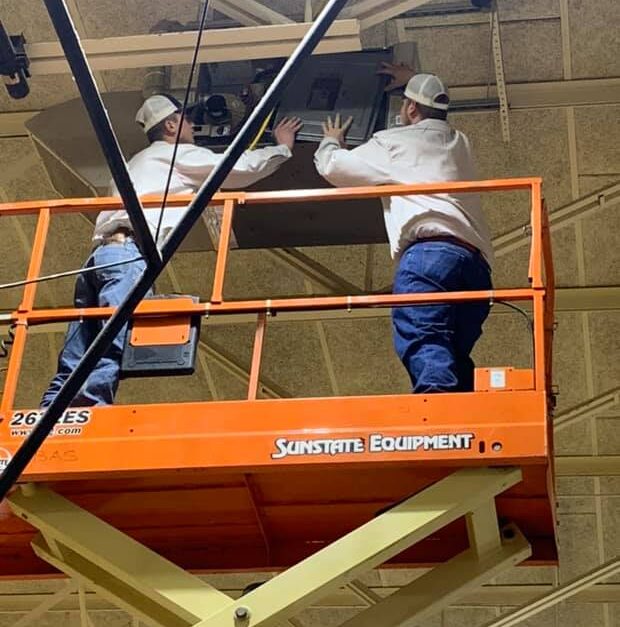
Trying to find Duct Work around Gause?
Climate Control A/C & Heating takes on cooling, heating and the air indoors close to home.
Contact us at 512-446-4020 to talk it through.
Summer Load: Local Conditions Come First
Summers across Gause run long, hot and humid; a cooling system here logs far more running hours than one in a mild climate.
Water vapor rides along with the heat on a muggy afternoon; an air conditioner pulls it out as a side effect of cooling, but only while it is actually running.
Matching capacity to the house, moving enough air and keeping the coil clean all shape the result, even before anything breaks.
How Air Conditioning Works: What Each Piece Does
Cooling equipment does not manufacture chill; refrigerant picks up warmth from indoor air and carries it outside.
Inside the house, the evaporator coil does the absorbing; outdoors, a fan pulls air across the condenser coil to shed the load.
Fan motors and start components do a great deal of work for their size, and that is good news, because they are far simpler to fix than a compressor.
Cooling Troubles – Sorting Symptoms From Causes
AC repair that works starts with measurements, because guessing wastes time and parts; weak cooling is a symptom that many separate faults share.
Electrical faults are common, with capacitors and contactors leading the list of small failures; the diagnosis comes before any decision about a bigger job.
Ice on the lines almost always means too little air or too little refrigerant; switching the system off and letting it thaw protects the equipment until it can be checked.
Low refrigerant means a leak, because the charge stays put when the loop is tight; a responsible repair locates the leak instead of simply adding more.
Condensate has to leave the house, so a blocked line sends it somewhere less welcome, though a stopped system after heavy use is a good moment to check it.
Warning Signs: Trust Your Senses
A struggling cooling system leaves clues around the house; the list below covers what owners tend to notice:
- One end of the house that feels warmer even with the thermostat set low.
- A buzzing or clicking sound at startup, whether or not the cooling seems to work.
- A system that turns on and off in short cycles, with indoor humidity climbing.
- Pooling water under the furnace or air handler, sometimes from a dirty coil.
Routine Care: Habits That Pay Off Later
Routine AC maintenance heads off the kind of failure that arrives on a hot afternoon, and the visit usually combines cleaning, measuring and tightening.
Dirty filters are the single easiest thing for an owner to handle; homes with pets, dust or a constant run schedule need fresh filters more often.
The visit usually includes the condenser coil, the evaporator coil and a flush of the drain line; tightening electrical connections is a standard part of the job.
When Replacement Makes Sense: Questions to Ask First
The conversation about replacement starts when age, condition and comfort all point the same way, with the condition of the compressor and coils weighing heavily.
Some older units run on refrigerant that is now scarce, which affects repair decisions, and newer equipment is built for current refrigerants.
Variable-speed designs hold temperature and humidity more precisely than single-stage units, which matters most where the system runs for months.
Planning a New Installation: Details That Shape Comfort
Proper AC install planning measures the house, the windows, the insulation and the sun exposure; windows, attic insulation and ductwork all change the answer.
Too much capacity leads to short cycling, uneven rooms and a clammy feel; one that is too small never reaches the setpoint on the hottest days.
Matched components perform to their design efficiency, while mismatched ones fall short, and the installer verifies airflow and charge before leaving the job.
Ductwork Matters – What Hides Above the Ceiling
Duct work moves the air that the equipment has cooled or heated, so its design shapes every room, which is why the airflow measurement is part of a proper diagnosis.
Runs through an unconditioned attic or crawl space gain heat or lose chill unless sealed and wrapped, and sealing with mastic rather than cloth tape holds up better in the heat.
Dust, Debris and Ductwork: Realistic Expectations
Air passages collect dust, and duct cleaning is the way to clear it from the inside; a house with no such history may not need it often.
A cleaning that ignores leaks and filtration is a short-term fix at best, and claims about health benefits should be treated skeptically.
Heat Pump Basics: a Natural Fit for Mild Winters
Heat pumps use the same refrigerant loop as an air conditioner, with a reversing valve added; in Texas, cold snaps are short, so a heat pump covers most of the heating season.
Auxiliary heat strips back up the heat pump on the coldest mornings; steam from the outdoor unit during defrost is normal.
Furnace Basics – the Machinery in the Closet
Gas furnaces burn natural gas or propane in a burner and pass the heat through a heat exchanger, and a dirty flame sensor is a frequent reason for a furnace that lights and then shuts off.
Carbon monoxide detectors belong in any home with fuel-burning equipment, and stored items near the unit can block airflow and combustion air.
Electric Furnaces and Air Handlers: What to Expect From It
Electric heating systems have no burner, no flue and no combustion byproducts, which keeps the mechanical side straightforward.
The trade-off with electric heat is simple equipment against higher running use, and a technician can explain how each option behaves in a mild climate.
Warmth When the Front Arrives – Reliable Heat on Demand
Winters in Texas are short, but cold fronts can drop temperatures sharply in a matter of hours; problems found early can be repaired before a cold front arrives.
Furnaces, heat pumps and electric air handlers all heat homes, and each has its own checkup list, and the safety controls get tested along with the comfort ones.
Boilers: Found in Older and Larger Buildings
Radiant floor and baseboard heating both rely on a boiler to heat the water; an owner with a boiler should look for experience with water-based heat.
Air in the lines, a stuck valve or a weak pump are common reasons a boiler heats unevenly, and bleeding air from the loops is a routine task.
Cleaner Air Indoors: Why It Deserves Attention
Residential air quality is shaped by dust, pet dander, cooking fumes, cleaning products and moisture, and cleaner air depends on filtration, ventilation and moisture control working together.
Filter grade matters, but a very dense filter in the wrong system can choke the airflow, and a technician can recommend what the equipment can handle.
Commercial air quality depends on ventilation rates, filtration and the upkeep of rooftop equipment, which is why commercial properties usually benefit from regular service visits.
Cleaning the Air Itself: Sorting Fact From Marketing
Purifiers vary widely, from simple filters to units combining filtration, carbon and other methods; a device that makes bold promises deserves a second look.
A purifier works alongside good ventilation and a clean system, not in place of them, and sizing matters here as much as anywhere.
Keeping Coils Clean Between Visits – Tools for a Damp Climate
Ultraviolet lamps near the coil are meant to keep it cleaner by discouraging growth on damp surfaces, and a technician can explain which kind fits a given air handler.
Mist treatments use an approved solution applied by a technician in a controlled way, and ventilation and occupant safety are part of the process.
Ventilating: Why Tight Buildings Need It
Bath fans, kitchen hoods and outdoor air intakes are all part of ventilating a modern building, which is where design and service make a real difference.
Good attic airflow lowers the heat that leaks down into the living space, and this is another reason the whole building matters.
Cooling for Shops, Offices and Buildings – Planning Around the Business
Commercial air conditioning system designs range from rooftop packages to split systems and multi-zone setups; planned maintenance keeps surprises to a minimum.
Condensate drains on rooftops clog with debris, and the water can stain ceilings below; a clear plan helps the business stay open.
Cooling at Scale – Water Carries the Cold
Chiller systems are used in large offices, schools, hospitals and industrial plants, and the plant includes a chiller, pumps, a cooling tower or air-cooled condenser, and controls.
Coolers, Freezers and Ice Machines – Equipment With Little Room for Error
Businesses that sell or store food depend on refrigeration service to hold safe temperatures; frost buildup, warm product and constant running all point to trouble.
How Climate Control A/C & Heating Thinks About Duct Work across Gause
Before touching a tool, the technician hears the history of the problem from the person who lives with it; the owner understands the situation before any decision.
Options are laid out clearly, with the reasons behind each recommendation, and questions are welcome at every stage.
Comfort Is a Phone Call Away
Reach out at 512-446-4020 to line up service or learn what to expect.
Bringing It Home: Comfort Is a System
From Duct Work to routine upkeep, good outcomes come from understanding the equipment and caring for it; Climate Control A/C & Heating can walk through the choices with you.