
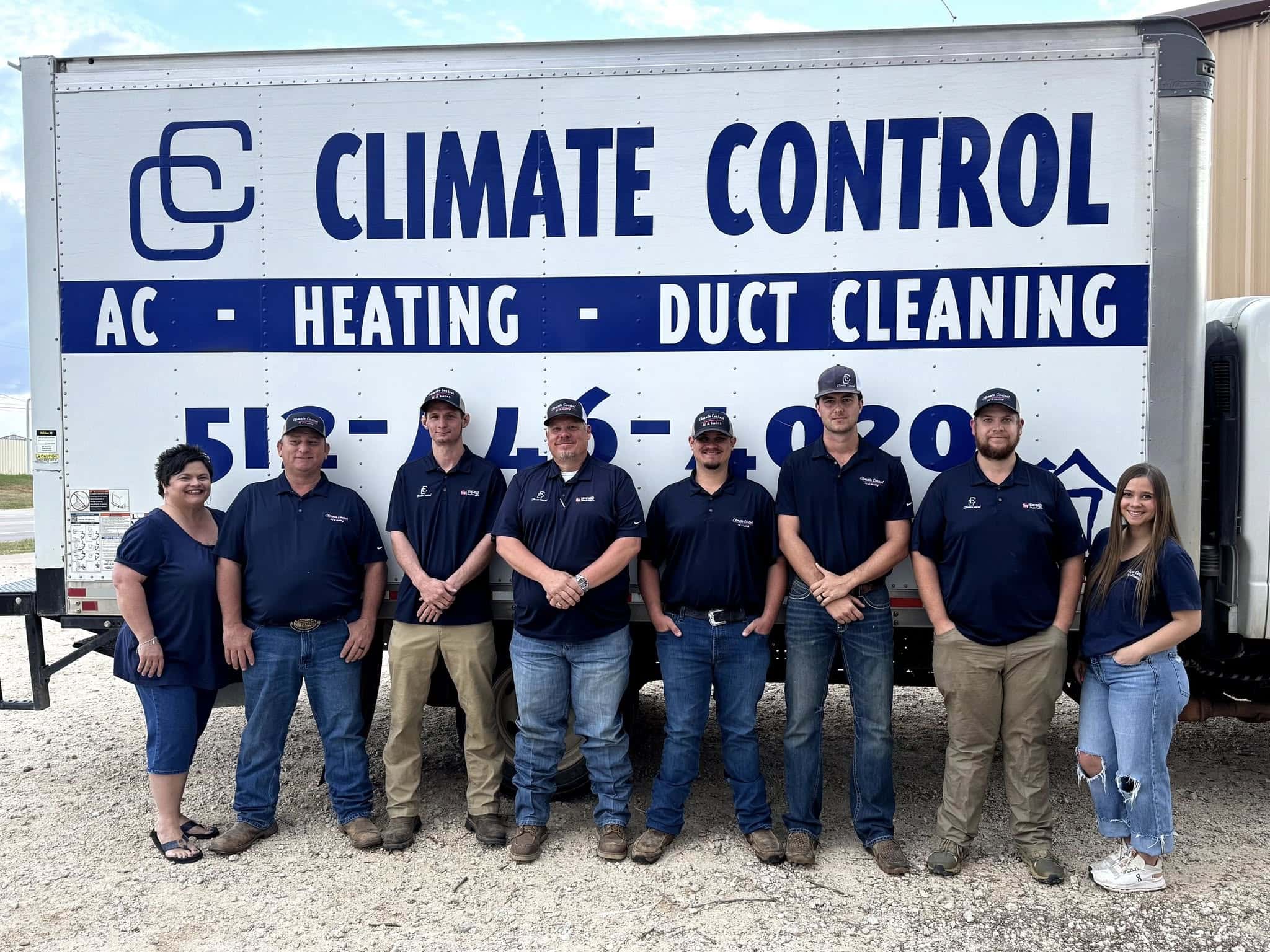
Looking for Gas Furnaces in Gause?
Climate Control A/C & Heating supports comfort equipment of every kind in the local area.
Call 512-446-4020 to start the conversation.
Summer Load – the Setting for Every Choice
Warm weather in Gause stretches across much of the calendar; the machine on the pad outside is among the busiest appliances a household owns.
Sticky air can make a cool room feel uncomfortable; the indoor coil acts as the dehumidifier, collecting water that leaves through a drain line.
Matching capacity to the house, moving enough air and keeping the coil clean all shape the result, even before anything breaks.
Inside an Air Conditioner: a Plain Explanation
A central air conditioner is a heat mover, not a cold maker; it collects heat inside the house and dumps it into the outdoor air.
Warm indoor air passes over a cold coil in the air handler or furnace cabinet, and the outdoor unit holds the compressor and condenser coil that push that heat away.
Fan motors and start components do a great deal of work for their size; the compressor itself can last a long time when it is kept clean and properly charged.
Diagnosing a Weak Cooling System – Finding the Real Cause
Good AC repair is detective work before it is wrench work, and a house that is warm may have an electrical fault, an airflow problem or a refrigerant problem.
If the outdoor unit is silent, power, a breaker and the low-voltage wiring are the first suspects, and each can be tested with a meter in a few minutes.
Frost on the indoor coil or the copper line is a warning sign, not a cooling success, and running the system while it is frozen can damage the compressor.
The charge in a cooling system is fixed, so a shortage points to escape, and the leak is the thing that has to be found and dealt with.
Condensate has to leave the house, so a blocked line sends it somewhere less welcome; moisture removed from muggy air adds up to gallons a day.
Clues Your System Is Struggling: Trust Your Senses
Most breakdowns announce themselves with small changes in behavior, and every item below is a reason to schedule a visit:
- Some rooms that never cool down while the system runs nonstop.
- A burning smell from the vents, whether or not the cooling seems to work.
- An outdoor unit that starts and stops every few minutes, along with a higher electric bill.
- Pooling water under the furnace or air handler, which deserves a look before damage spreads.
Regular Maintenance – the Work Behind Reliable Comfort
Routine AC maintenance heads off the kind of failure that arrives on a hot afternoon, and the visit usually combines cleaning, measuring and tightening.
Changing the filter on schedule protects the coil, the blower and the ductwork, which is a quick job that helps the entire system.
Heat flows through each of the coils, and each one loses capacity when it collects dirt; the report reflects measurements rather than guesses.
Repair or Replace – a Decision Worth Making Carefully
The conversation about replacement starts when age, condition and comfort all point the same way, and an honest technician explains both paths.
Refrigerant types have changed over time, so older systems may use one that is hard to find, and newer equipment is built for current refrigerants.
Efficiency numbers on new equipment, such as SEER2, give a way to compare models fairly; the benefit grows in houses that rely on cooling much of the year.
Sizing and Setup: Details That Shape Comfort
AC install work succeeds or fails on sizing and airflow before any equipment is delivered; orientation and shading matter as much as floor area.
Equipment that is too big runs in bursts, which hurts comfort and efficiency alike, and a unit that is too small runs constantly without catching up.
Every connection, from the refrigerant lines to the thermostat wire, gets sized and routed with care, and the installer verifies airflow and charge before leaving the job.
Duct System Basics: the Lungs of the House
In many houses, the ducts decide whether a new system performs as promised, and a unit can be fine while the ducts hold the whole system back.
Ducts that run through a hot attic lose a surprising amount of cooling on the way to the rooms, and sealing with mastic rather than cloth tape holds up better in the heat.
Clearing Out the Channels: What It Can and Cannot Do
Cleaning the ducts means pulling loose material out with agitation tools and a strong vacuum; a house with no such history may not need it often.
Filtering, sealing and cleaning form one plan, not three separate jobs; ask to see before-and-after photos of the work.
The Two-Way Heat Mover: Strengths and Limits
A heat pump is an air conditioner that can run backward to warm the house, and that makes them efficient in climates with mild winters.
Defrost cycles and backup heat are normal parts of winter operation; watch for unusually high bills as a hint.
Furnace Basics: What Owners Should Know
Gas furnaces burn natural gas or propane in a burner and pass the heat through a heat exchanger, and a fault in any one step can stop the whole cycle.
Safe furnace operation depends on clear venting and working carbon monoxide alarms; never ignore an alarm or a smell of gas.
Electric Heating Systems – Where It Fits Best
Electric heat uses sequenced elements, relays and limit switches to warm the house; the electrical safety devices do the most important work.
Compared with a heat pump, strips and electric furnaces draw heavily for the heat they make, and many homes pair a heat pump with strips as a backup.
Warmth When the Front Arrives: Short Winters Still Bite
A hard freeze can arrive with little warning, so heating equipment needs to be ready before it is called on, and a test on a mild day beats a surprise on a freezing one.
Heating systems come in several forms, and the same house may use gas furnaces, heat pumps or electric heating systems; one failed switch can shut down an otherwise healthy system.
Heating With Water – Radiators, Coils and Radiant Floors
Boiler systems appear in older buildings, larger properties and some commercial spaces; an owner with a boiler should look for experience with water-based heat.
The relief valve and low-water cutoff protect a boiler, so they get tested during service; neglected boilers corrode inside, so water quality and venting matter.
Cleaner Air Indoors – the Part You Cannot See
Residential air quality is shaped by dust, pet dander, cooking fumes, cleaning products and moisture, which makes the HVAC system the natural place to improve air quality.
MERV numbers describe how fine a filter catches, and the right one balances capture with airflow; a deeper media cabinet gives better filtering with less restriction.
Commercial air quality depends on ventilation rates, filtration and the upkeep of rooftop equipment, which is why commercial properties usually benefit from regular service visits.
Purifiers: Sorting Fact From Marketing
Purifiers vary widely, from simple filters to units combining filtration, carbon and other methods, and ozone-producing models are better avoided in occupied rooms.
Purifiers help most when the air handler is clean, the ducts are sealed and humidity is under control, and a conversation about the whole house usually comes first.
Managing Growth Inside the System – Tools for a Damp Climate
Ultraviolet lamps near the coil are meant to keep it cleaner by discouraging growth on damp surfaces; ask what the lamp targets and how often it needs service.
An antimicrobial mist is sprayed or fogged onto surfaces inside the system or the building; the label for the product spells out how it is to be used.
Ventilating – Not Too Much, Not Too Little
Modern buildings are tight, so ventilating on purpose keeps carbon dioxide and odors from building up, and dampers, filters and controls keep the supply of fresh air in balance.
Good attic airflow lowers the heat that leaks down into the living space; the equipment, the envelope and the airflow work as a team.
Keeping a Workplace Comfortable – Planning Around the Business
Commercial air conditioning system designs range from rooftop packages to split systems and multi-zone setups; planned maintenance keeps surprises to a minimum.
Rooftop units sit in the sun and wind, so the cabinets, the coils and the curbs take a beating; a clear plan helps the business stay open.
Chillers: Parts and Service Needs
A chiller is a large refrigeration machine that chills water for use in many spaces; the equipment is larger, more complex and more closely monitored.
Commercial Refrigeration: Walk-Ins, Reach-Ins and More
Walk-in coolers rely on evaporators, condensing units, defrost systems and door seals working together; regular cleaning of condenser coils matters even more than in comfort cooling.
How Climate Control A/C & Heating Goes About Gas Furnaces near Gause
Before touching a tool, the technician hears the history of the problem from the person who lives with it; the owner understands the situation before any decision.
Recommendations come with explanations, so choices rest on information rather than pressure; good service depends on trust running both ways.
Ready When You Are
Contact us at 512-446-4020 to line up service or learn what to expect.
Putting It Together: Comfort Is a System
Equipment, ducts and air quality are connected, so a question about Gas Furnaces is rarely a stand-alone one; reach Climate Control A/C & Heating at 512-446-4020 when you are ready.