
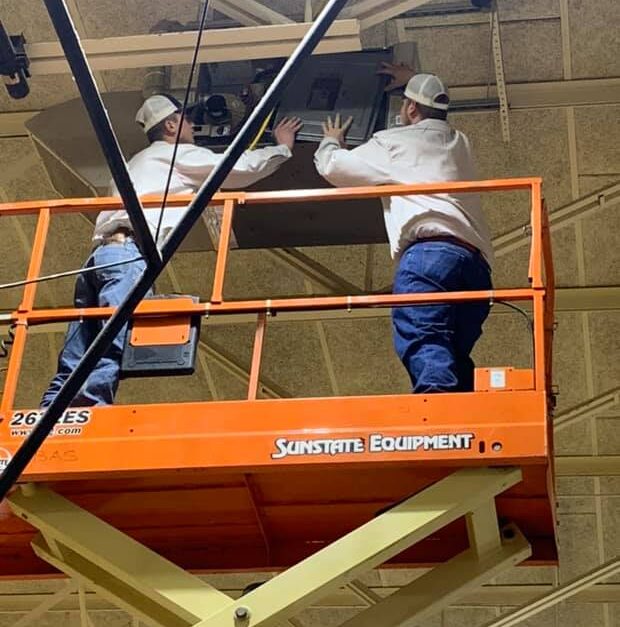
In need of Air Conditioning across Hoyte?
Climate Control A/C & Heating supports comfort equipment of every kind in the surrounding towns.
Phone 512-446-4020 to start the conversation.
A Hot, Wet Climate: Local Conditions Come First
Summers across Hoyte run long, hot and humid, and a home air conditioner may run most of the day through the worst of it.
Moisture in the air matters as much as the thermometer reading, and removing it takes steady run time rather than quick bursts.
Matching capacity to the house, moving enough air and keeping the coil clean all shape the result, whatever the label on the box promises.
Inside an Air Conditioner: the Basics Worth Knowing
An air conditioner does not create cold; a sealed loop of refrigerant absorbs heat at one point and releases it at another.
Warm indoor air passes over a cold coil in the air handler or furnace cabinet, and the outdoor unit holds the compressor and condenser coil that push that heat away.
Parts that wear out fastest are usually the small electrical ones; a failed capacitor is often a small repair rather than the end of the system.
Diagnosing a Weak Cooling System – Finding the Real Cause
Good AC repair is detective work before it is wrench work; the same warm room can come from a dead capacitor, a frozen coil or a leak.
A unit that clicks and does nothing may be waiting on a bad contactor or a dead control board, though a part that failed once can point to heat or a loose connection that needs attention.
A coil that ices over points toward airflow or refrigerant, and the cause may be as simple as a clogged filter or as involved as a leak.
The charge in a cooling system is fixed, so a shortage points to escape, and adding more without finding the leak only delays the same problem.
Clogged condensate drains are a quiet cause of water stains and shutdowns; moisture removed from muggy air adds up to gallons a day.
Clues Your System Is Struggling – Before a Breakdown
The system tends to behave differently well before the day it stops, and the following signs are worth acting on:
- Supply air that feels weak or lukewarm even with the thermostat set low.
- A burning smell from the vents, often getting louder from one week to the next.
- Short, frequent cycling of the outdoor unit, even though the thermostat is satisfied.
- Condensation where there should be none, particularly after long runs.
Tune-Ups for Cooling Gear: Catching Trouble Before It Grows
Scheduled air conditioning maintenance gives a technician a look at the system while it still works, with attention paid to coils, drains, belts and wiring.
The air filter is the part most under the homeowner's own control, and a quick check each month is a good habit through the summer.
The visit usually includes the condenser coil, the evaporator coil and a flush of the drain line, and reading the numbers shows whether anything is drifting out of range.
Time for a Change – Age, Condition and Efficiency
Air conditioning equipment reaches a point where a new system makes more sense than another fix, and a good evaluation lays out repair and replacement side by side.
A system built around a retired refrigerant can be a poor candidate for major repairs, which is another reason to get a clear diagnosis before deciding.
Newer cooling equipment is generally more efficient than older models, and in a long cooling season those savings add up.
Getting an Install Right: Where Good Results Begin
AC install work succeeds or fails on sizing and airflow before any equipment is delivered; orientation and shading matter as much as floor area.
Too much capacity leads to short cycling, uneven rooms and a clammy feel; careful sizing protects comfort and the equipment.
Matched components perform to their design efficiency, while mismatched ones fall short; commissioning measurements confirm that the system performs as designed.
Air Distribution: the Lungs of the House
The duct system is as much a part of comfort as the unit that feeds it, and leaks, bad bends and poor insulation waste a large share of the effort.
Attic duct work in Texas sees extreme heat, so insulation and tight seams earn their keep, and a technician can often find the leaks with a pressure test.
Duct Cleaning: Worth Doing at the Right Time
A duct cleaning visit reaches the trunk lines, the branches and the grilles, and the decision should rest on what is actually in the ducts.
Cleaning pays off only when the source of the dirt is also addressed, and a plain look inside the duct tells the real story.
Heat Pump Basics – Efficient Most of the Year
Heat pumps move heat in both directions, cooling in summer and heating in winter, which suits places where freezing weather is brief.
On extremely cold days the heat pump leans on supplemental heat to keep up; steam from the outdoor unit during defrost is normal.
Fuel-Fired Warmth – Parts, Safety and Service
The sequence in a gas furnace runs from thermostat call to draft fan, igniter, gas valve and flame proof, and a dirty flame sensor is a frequent reason for a furnace that lights and then shuts off.
Combustion appliances produce carbon monoxide, which is why detectors and clear vents matter, and a detector near the sleeping areas gives early warning.
Electric Heating Systems – Features and Trade-Offs
Elements in an electric air handler turn current directly into heat, which keeps the mechanical side straightforward.
Homes with strip heat often see bigger winter bills than homes with efficient heat pumps, particularly where cold stretches are brief.
Heating Services: Planning for Sudden Cold
Heating season in this part of Texas is brief, with sudden swings between warm days and freezing nights, which is why heating services are well scheduled in fall.
Furnaces, heat pumps and electric air handlers all heat homes, and each has its own checkup list; the common thread is clean air passages and a blower that moves enough air.
Boilers: Less Common, Still Important
Hydronic heating moves heat with water instead of air, which makes for quiet, even warmth, and they are less common in Texas than furnaces and heat pumps.
Service on boiler systems covers the burner, the water pressure, the circulator pump, the expansion tank and the safety relief valve; water damage can grow quickly.
Air Quality Basics: Starting With Facts
The air in a house mixes outdoor pollen, indoor dust and chemicals from everyday products; allergy seasons put extra load on filters and ducts.
Residential air quality improves when the filter fits the system and gets changed on schedule; a deeper media cabinet gives better filtering with less restriction.
Offices, shops and restaurants need steady fresh air so that crowds do not make the space stuffy, which is why commercial properties usually benefit from regular service visits.
Purifiers: Sorting Fact From Marketing
Purifiers remove particles or gases from the air, and they come as whole-home units or portable room models; pollen and dust call for filtration, while odors call for carbon.
Buying a purifier without fixing a moisture problem treats a symptom and misses the cause, and a conversation about the whole house usually comes first.
Managing Growth Inside the System: Understanding the Options
UV lights install in the air handler and shine on the indoor coil and drain pan to limit microbial growth, and a technician can explain which kind fits a given air handler.
Treatments with antimicrobial mist are used after cleaning, when surfaces are dry and accessible; the underlying cause still has to be fixed.
Bringing Outdoor Air In: the Case for Planned Airflow
Modern buildings are tight, so ventilating on purpose keeps carbon dioxide and odors from building up; an energy recovery ventilator can trade heat and moisture between the two airstreams.
Good attic airflow lowers the heat that leaks down into the living space, and the same attention applies to the whole building.
Cooling for Shops, Offices and Buildings – Equipment Built for Heavier Duty
A commercial AC system is often a rooftop package unit that holds the compressor, the coils and the blower in one cabinet, and filters, belts, coils and drains are the usual checklist items.
Control settings, schedules and thermostats on commercial systems deserve a look when comfort complaints begin; a clear plan helps the business stay open.
Chillers: How They Differ From Packaged Units
Instead of cooling air directly, chiller systems cool a water loop that serves coils across the property, and they need specialized service knowledge.
Cold Storage Equipment: What Service Involves
Walk-in coolers rely on evaporators, condensing units, defrost systems and door seals working together; regular cleaning of condenser coils matters even more than in comfort cooling.
How Climate Control A/C & Heating Works Through Air Conditioning throughout Hoyte
The technician asks what changed, what is happening and how long it has been going on, and then the system gets inspected with gauges, meters and a careful eye.
Honest advice separates the necessary from the optional, and the work proceeds only when the owner agrees.
Let's Talk About Your Equipment
Phone 512-446-4020 to book a technician or get a straight answer.
What to Remember: Comfort Is a System
Whether the need falls under Air Conditioning or elsewhere in the heating, cooling and air quality family, the same principles apply; reach Climate Control A/C & Heating at 512-446-4020 when you are ready.