
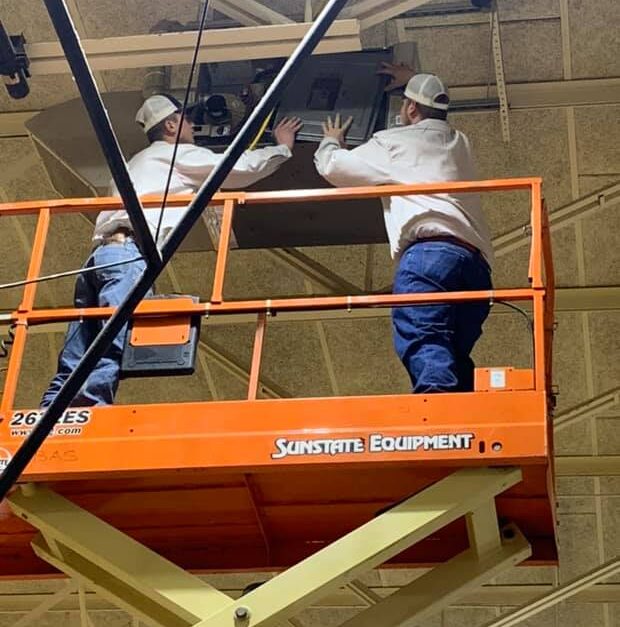
In need of Commercial Air Quality around Hoyte?
Climate Control A/C & Heating supports heating, cooling and indoor comfort around the community.
Dial 512-446-4020 to talk it through.
The Cooling Season: Local Conditions Come First
Warm weather in Hoyte stretches across much of the calendar, and a home air conditioner may run most of the day through the worst of it.
Sticky air can make a cool room feel uncomfortable; the indoor coil acts as the dehumidifier, collecting water that leaves through a drain line.
Right sizing, steady airflow and a clean coil therefore decide how a house feels, whatever the label on the box promises.
Anatomy of a Cooling System – Parts and Their Jobs
Nothing in a cooling system generates cold air from scratch; it collects heat inside the house and dumps it into the outdoor air.
Inside the house, the evaporator coil does the absorbing; the outdoor cabinet houses the compressor, the condenser coil and a fan.
The contactor, the capacitor and the motors take a beating in hot weather, and the larger parts usually go on to last much longer.
When the House Stops Cooling – Finding the Real Cause
AC repair that works starts with measurements, because guessing wastes time and parts, and each of those causes needs a different fix.
Electrical faults are common, with capacitors and contactors leading the list of small failures, and they usually repair cleanly because the parts are small.
Ice building up near the air handler tells a technician where to look; shutting the cooling off is the safest response until someone inspects it.
Low refrigerant means a leak, because the charge stays put when the loop is tight, and adding more without finding the leak only delays the same problem.
Algae and debris plug the drain, and many systems have a float switch that stops the cooling; moisture removed from muggy air adds up to gallons a day.
Symptoms Worth Noticing: Trust Your Senses
Cooling equipment usually gives notice before it fails outright; the list below covers what owners tend to notice:
- Uneven temperatures from room to room even with the thermostat set low.
- A burning smell from the vents, often getting louder from one week to the next.
- An outdoor unit that starts and stops every few minutes, leaving the indoor air damp.
- Water around the air handler, sometimes from a dirty coil.
Routine Care: What a Maintenance Visit Covers
Regular AC maintenance trims the chance of a breakdown during the hottest week, and the work centers on airflow, cleanliness and electrical health.
Changing the filter on schedule protects the coil, the blower and the ductwork, which is a quick job that helps the entire system.
The visit usually includes the condenser coil, the evaporator coil and a flush of the drain line, and reading the numbers shows whether anything is drifting out of range.
Deciding on a New System – Age, Condition and Efficiency
Replacement is worth considering once repairs pile up on equipment that was already aging, with the condition of the compressor and coils weighing heavily.
The refrigerant a system uses is worth asking about when a repair involves the sealed loop, and that can tip a close decision toward replacement.
Efficiency numbers on new equipment, such as SEER2, give a way to compare models fairly, and in a long cooling season those savings add up.
Choosing Capacity – Bigger Is Not Better
An air conditioning install starts with a load calculation, not a rule of thumb; windows, attic insulation and ductwork all change the answer.
An oversized system cools the air quickly and then shuts off before it removes moisture; the right size runs long, steady cycles that dry the air.
The outdoor pad, the line set, the electrical disconnect and the drain all need planning, and local permit and inspection rules apply in most towns.
The Hidden Network in the Walls and Attic: the Lungs of the House
In many houses, the ducts decide whether a new system performs as promised, which is why the airflow measurement is part of a proper diagnosis.
Attic duct work in Texas sees extreme heat, so insulation and tight seams earn their keep; return air paths deserve the same attention as the supply side.
When Ducts Need Attention – Reasons and Limits
Cleaning the ducts means pulling loose material out with agitation tools and a strong vacuum; a house with no such history may not need it often.
Filtering, sealing and cleaning form one plan, not three separate jobs, and a careful provider will show the owner what was found inside.
The Two-Way Heat Mover: Strengths and Limits
The reversing valve is what lets heat pumps switch between cooling and heating; one outdoor unit does the work of two.
On extremely cold days the heat pump leans on supplemental heat to keep up, and a system that runs strips constantly deserves a diagnostic visit.
Heating With Gas: What Owners Should Know
Gas furnaces rely on an igniter, a flame sensor and a gas valve working in sequence, and a dirty flame sensor is a frequent reason for a furnace that lights and then shuts off.
A technician checks venting, gas pressure and the heat exchanger during a furnace tune-up, and the furnace check is well timed before the first cold front arrives.
Resistance and Strip Heat: What to Expect From It
Electric heat uses sequenced elements, relays and limit switches to warm the house, which keeps the mechanical side straightforward.
Homes with strip heat often see bigger winter bills than homes with efficient heat pumps, and a technician can explain how each option behaves in a mild climate.
Heating Systems of Every Type: What to Do Before the First Freeze
Heating season in this part of Texas is brief, with sudden swings between warm days and freezing nights; problems found early can be repaired before a cold front arrives.
From gas furnaces to heat pumps, each heating system needs different attention before winter, and the safety controls get tested along with the comfort ones.
Heating With Water – Radiators, Coils and Radiant Floors
A boiler warms water in a closed loop, and pumps circulate it to the rooms, but a building with a boiler needs service from someone who knows hydronics.
The relief valve and low-water cutoff protect a boiler, so they get tested during service, and annual attention keeps these systems running quietly.
The Air Inside Your Walls: Beyond Temperature and Humidity
Air inside a home can carry particles, gases and moisture that the thermostat never shows, which makes the HVAC system the natural place to improve air quality.
Filter grade matters, but a very dense filter in the wrong system can choke the airflow; the system and the filter are chosen together.
Offices, shops and restaurants need steady fresh air so that crowds do not make the space stuffy, and a maintenance plan fits the building's size and hours.
Filters, Purifiers and Their Limits: Sorting Fact From Marketing
Purifiers remove particles or gases from the air, and they come as whole-home units or portable room models, and ozone-producing models are better avoided in occupied rooms.
Purifiers help most when the air handler is clean, the ducts are sealed and humidity is under control; a technician looks at the system before recommending a device.
Keeping Coils Clean Between Visits: Where They Fit
UV lights are a common add-on in humid climates, where the evaporator coil stays wet for months, and a technician can explain which kind fits a given air handler.
An antimicrobial mist is sprayed or fogged onto surfaces inside the system or the building; the label for the product spells out how it is to be used.
Bringing Outdoor Air In: the Case for Planned Airflow
Ventilating a building means replacing stale indoor air with fresh outdoor air in a controlled way; the cooling equipment has to be sized to handle the fresh air coming in.
Ductwork that dumps moisture into an attic can create damage far from the source, and this is another reason the whole building matters.
Commercial AC Systems – Equipment Built for Heavier Duty
A commercial AC system is sized for heat from people, lighting and machines as well as sunshine; a break in cooling can mean lost customers or a workday cut short.
Coil cleaning, belt checks and economizer inspections are part of keeping commercial equipment dependable, and a technician can map out options on site.
Chillers: Where They Make Sense
Chiller systems cool water, and pumps carry the chilled water through pipes to air handlers throughout a building, and the plant includes a chiller, pumps, a cooling tower or air-cooled condenser, and controls.
Cold Storage Equipment – Equipment With Little Room for Error
Refrigeration equipment uses the same basic cycle as air conditioning but at much lower temperatures, which is why restaurants and stores plan service ahead of busy seasons.
How Climate Control A/C & Heating Works Through Commercial Air Quality around Hoyte
Conversation comes first, because the owner knows the symptoms better than anyone, and then the system gets inspected with gauges, meters and a careful eye.
The owner hears what needs to happen now, what can wait and what is optional, and questions are welcome at every stage.
Ready When You Are
Call 512-446-4020 to line up service or learn what to expect.
A Last Word: Attention Now Saves Trouble Later
Interest in Commercial Air Quality often starts with a problem, and the solution starts with a clear diagnosis; Climate Control A/C & Heating can walk through the choices with you.