
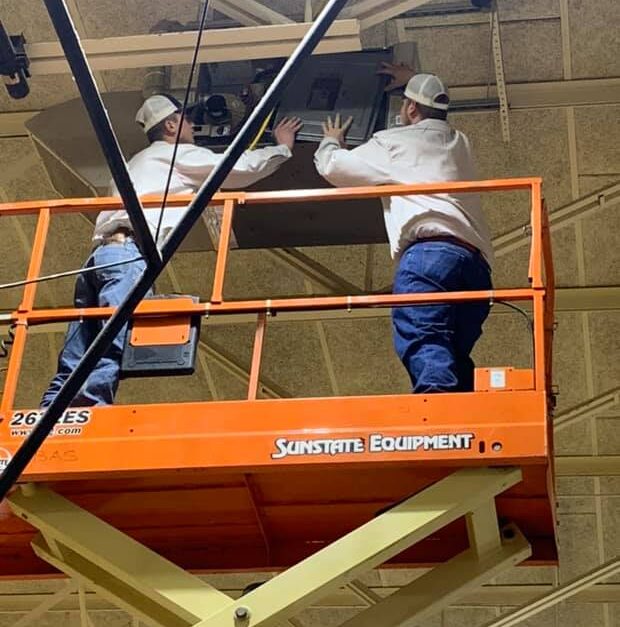
Shopping around for Indoor Air Quality throughout Hoyte?
Climate Control A/C & Heating works on heating, cooling and indoor comfort here at home.
Call 512-446-4020 to start the conversation.
Summer Load – Built for a Long Haul
Summers across Hoyte run long, hot and humid, and the equipment that carries the load is working harder than its owner tends to notice.
Water vapor rides along with the heat on a muggy afternoon; a cooling system dehumidifies only when the compressor is on and air is moving across the coil.
Proper equipment size, good airflow and clean surfaces separate a comfortable house from a clammy one, whatever the label on the box promises.
Anatomy of a Cooling System – Parts and Their Jobs
An air conditioner does not create cold; the refrigerant carries heat out of the house and leaves the cool behind.
Inside the house, the evaporator coil does the absorbing; the outdoor cabinet houses the compressor, the condenser coil and a fan.
Fan motors and start components do a great deal of work for their size, and that is good news, because they are far simpler to fix than a compressor.
Cooling Troubles – Finding the Real Cause
A proper air conditioning repair sorts the symptom from the cause before anything is replaced, and a house that is warm may have an electrical fault, an airflow problem or a refrigerant problem.
A unit that clicks and does nothing may be waiting on a bad contactor or a dead control board, and they usually repair cleanly because the parts are small.
Ice on the lines almost always means too little air or too little refrigerant; the coil needs to thaw completely before anyone can measure what is going on.
Low refrigerant means a leak, because the charge stays put when the loop is tight, and the leak is the thing that has to be found and dealt with.
Condensate has to leave the house, so a blocked line sends it somewhere less welcome, and a flush of the line during regular service often prevents the problem.
Symptoms Worth Noticing: Spotting Problems Early
A struggling cooling system leaves clues around the house; the list below covers what owners tend to notice:
- Some rooms that never cool down though the unit sounds normal.
- A hissing noise near the refrigerant lines, especially when the weather is hot.
- Repeated short runs that never finish a cooling cycle, even though the thermostat is satisfied.
- Pooling water under the furnace or air handler, particularly after long runs.
Routine Care: Catching Trouble Before It Grows
AC maintenance is a set of simple, repeatable tasks that keep a cooling system efficient, and the visit usually combines cleaning, measuring and tightening.
Dirty filters are the single easiest thing for an owner to handle; homes with pets, dust or a constant run schedule need fresh filters more often.
Dirt on the condenser makes the compressor run hotter, so that coil gets cleaned too, and reading the numbers shows whether anything is drifting out of range.
Time for a Change – a Decision Worth Making Carefully
AC replacement becomes a real question when a system is old, repeatedly broken or hard to keep comfortable, with the condition of the compressor and coils weighing heavily.
Some older units run on refrigerant that is now scarce, which affects repair decisions, and newer equipment is built for current refrigerants.
Newer cooling equipment is generally more efficient than older models, and comfort improves along with the numbers.
Matching a System to a House: the Groundwork Matters
AC install work succeeds or fails on sizing and airflow before any equipment is delivered, which is why square footage alone is a poor guide.
A unit that is too large satisfies the thermostat fast and leaves the humidity behind, and a unit that is too small runs constantly without catching up.
Every connection, from the refrigerant lines to the thermostat wire, gets sized and routed with care, and local permit and inspection rules apply in most towns.
The Hidden Network in the Walls and Attic – Where Comfort Is Won or Lost
The duct system is as much a part of comfort as the unit that feeds it; undersized trunks, kinked runs and open seams all choke the flow.
Runs through an unconditioned attic or crawl space gain heat or lose chill unless sealed and wrapped, and a technician can often find the leaks with a pressure test.
Duct Cleaning: Worth Doing at the Right Time
A duct cleaning visit reaches the trunk lines, the branches and the grilles, and it makes the most sense after a renovation, a pest problem or visible contamination.
Clean ducts work best alongside a good filter and sealed connections, and a plain look inside the duct tells the real story.
Cooling and Heating in One: a Natural Fit for Mild Winters
Heat pumps move heat in both directions, cooling in summer and heating in winter, which suits places where freezing weather is brief.
Defrost cycles and backup heat are normal parts of winter operation; steam from the outdoor unit during defrost is normal.
Burners, Igniters and Flues: How a Furnace Heats a House
The sequence in a gas furnace runs from thermostat call to draft fan, igniter, gas valve and flame proof, and a dirty flame sensor is a frequent reason for a furnace that lights and then shuts off.
Carbon monoxide detectors belong in any home with fuel-burning equipment; never ignore an alarm or a smell of gas.
Electric Furnaces and Air Handlers: Simple Equipment, Steady Output
An electric furnace passes air over banks of resistance elements that glow when energized, which keeps the mechanical side straightforward.
The trade-off with electric heat is simple equipment against higher running use, particularly where cold stretches are brief.
Warmth When the Front Arrives: Planning for Sudden Cold
The heating season is short enough that equipment sits unused for months, then must work on the first cold night; running the heater briefly in fall shows whether it lights, blows warm air and shuts off properly.
Heating services cover igniters and burners on gas units, reversing valves on heat pumps and elements on electric ones; one failed switch can shut down an otherwise healthy system.
Heating With Water: Found in Older and Larger Buildings
Boiler systems heat water or make steam and send it through pipes to radiators, baseboards or in-floor loops; an owner with a boiler should look for experience with water-based heat.
Air in the lines, a stuck valve or a weak pump are common reasons a boiler heats unevenly, and bleeding air from the loops is a routine task.
Indoor Air Quality: Beyond Temperature and Humidity
Good indoor air quality means controlling particles, humidity, fresh air and sources of contamination; allergy seasons put extra load on filters and ducts.
A better filter helps only if the blower can pull air through it without strain; humidity control prevents the conditions mold needs.
Larger buildings circulate air through central equipment, so one fault can reach every room; ventilation rules for occupied spaces set a baseline.
Air Purification Options – Whole-Home or Single Room
Whole-home purifiers treat air as it passes through the system, while portable ones clean a single space; pollen and dust call for filtration, while odors call for carbon.
Good results come from a purifier chosen to complement the rest of the system; a technician looks at the system before recommending a device.
Light and Mist Treatments: What They Do and What They Do Not
A UV lamp does not clean the air passing by, but it treats the surfaces it can see, and a technician can explain which kind fits a given air handler.
An antimicrobial mist is sprayed or fogged onto surfaces inside the system or the building; the underlying cause still has to be fixed.
Fresh Air and Exhaust: the Case for Planned Airflow
Ventilating a building means replacing stale indoor air with fresh outdoor air in a controlled way; an energy recovery ventilator can trade heat and moisture between the two airstreams.
Ductwork that dumps moisture into an attic can create damage far from the source, and this is another reason the whole building matters.
Commercial AC Systems: Comfort That Supports the Work
Shops, restaurants, offices and churches often rely on rooftop equipment that serves a zone of the building; planned maintenance keeps surprises to a minimum.
Commercial equipment is built to run long hours, and it still depends on clean coils and clear drains; a clear plan helps the business stay open.
Cooling at Scale: How They Differ From Packaged Units
Chiller systems cool water, and pumps carry the chilled water through pipes to air handlers throughout a building, and they need specialized service knowledge.
Cold Storage Equipment – Why Failures Matter Fast
Walk-in coolers rely on evaporators, condensing units, defrost systems and door seals working together, and food safety rules set limits that equipment must keep.
How Climate Control A/C & Heating Looks at Indoor Air Quality in Hoyte
Every visit starts with questions about what the equipment has been doing and when, followed by an explanation of what was found and what the choices are.
The owner hears what needs to happen now, what can wait and what is optional, and questions are welcome at every stage.
Ready When You Are
Phone 512-446-4020 to set up a visit or talk through your options.
What to Remember – Keep Things Simple
Interest in Indoor Air Quality often starts with a problem, and the solution starts with a clear diagnosis, and Climate Control A/C & Heating answers questions at 512-446-4020.