
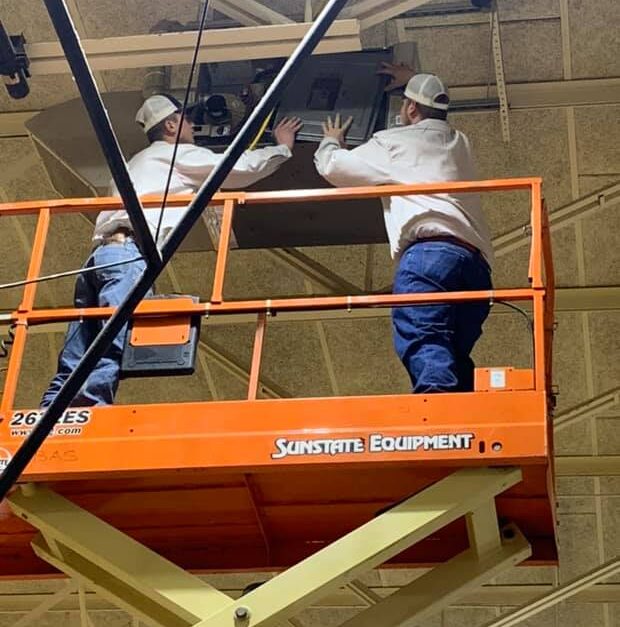
Trying to find UV lights in Hoyte?
Climate Control A/C & Heating takes on climate equipment for homes and businesses around the community.
Call 512-446-4020 and tell us what you are noticing.
The Cooling Season: Why Equipment Works Hard Here
The cooling season in Hoyte starts early and finishes late; a cooling system here logs far more running hours than one in a mild climate.
Humidity is half of the comfort problem, not an afterthought; an air conditioner pulls it out as a side effect of cooling, but only while it is actually running.
Capacity, airflow and cleanliness work together, and a weakness in one shows up as a house that never feels quite right, long before a breakdown ever happens.
How Air Conditioning Works: the Basics Worth Knowing
Cooling equipment does not manufacture chill; refrigerant picks up warmth from indoor air and carries it outside.
The indoor coil is where the cooling happens; outdoors, a fan pulls air across the condenser coil to shed the load.
Starting and stopping thousands of times a season is hard on switches and capacitors, which is why a quick diagnosis matters before anyone talks about replacement.
Diagnosing a Weak Cooling System: Repair Starts With Diagnosis
A thorough air conditioning repair starts with a diagnosis rather than a hunch, and a house that is warm may have an electrical fault, an airflow problem or a refrigerant problem.
A tripped breaker, a failed capacitor or a worn contactor keeps the outdoor unit from starting, and each can be tested with a meter in a few minutes.
A frozen evaporator coil blocks the very air it is supposed to cool; switching the system off and letting it thaw protects the equipment until it can be checked.
Low refrigerant means a leak, because the charge stays put when the loop is tight; a responsible repair locates the leak instead of simply adding more.
A blocked drain line can back water into the pan and trip a safety switch; moisture removed from muggy air adds up to gallons a day.
Warning Signs – What Owners Notice First
A struggling cooling system leaves clues around the house; the list below covers what owners tend to notice:
- One end of the house that feels warmer even with the thermostat set low.
- A hissing noise near the refrigerant lines, often getting louder from one week to the next.
- Repeated short runs that never finish a cooling cycle; parts wear faster.
- Damp spots on the ceiling below the indoor cabinet, which deserves a look before damage spreads.
Routine Care – the Work Behind Reliable Comfort
Air conditioning maintenance keeps dust, grime and wear from piling up unseen; the checklist stays short enough to repeat every season.
Changing the filter on schedule protects the coil, the blower and the ductwork, which is a quick job that helps the entire system.
Coils, drain pans and drain lines all get attention during a complete tune-up; the report reflects measurements rather than guesses.
When Replacement Makes Sense – Age, Condition and Efficiency
Air conditioning equipment reaches a point where a new system makes more sense than another fix, and a good evaluation lays out repair and replacement side by side.
The refrigerant a system uses is worth asking about when a repair involves the sealed loop, which is another reason to get a clear diagnosis before deciding.
Variable-speed designs hold temperature and humidity more precisely than single-stage units; the benefit grows in houses that rely on cooling much of the year.
Getting an Install Right: Details That Shape Comfort
Proper AC install planning measures the house, the windows, the insulation and the sun exposure; orientation and shading matter as much as floor area.
Equipment that is too big runs in bursts, which hurts comfort and efficiency alike; one that is too small never reaches the setpoint on the hottest days.
Matched components perform to their design efficiency, while mismatched ones fall short, and local permit and inspection rules apply in most towns.
Duct System Basics – What Hides Above the Ceiling
Duct work moves the air that the equipment has cooled or heated, so its design shapes every room; a house with comfort problems deserves a look at its air paths.
A long flexible run through a hot attic needs support, sealing and good insulation, and sealing with mastic rather than cloth tape holds up better in the heat.
Clearing Out the Channels – Reasons and Limits
Duct cleaning removes dust and debris from the supply and return runs, the registers and the blower compartment, and it makes the most sense after a renovation, a pest problem or visible contamination.
Clean ducts work best alongside a good filter and sealed connections; ask to see before-and-after photos of the work.
Reversible Systems – Why They Suit the Region
Heat pumps move heat in both directions, cooling in summer and heating in winter; one outdoor unit does the work of two.
Defrost cycles and backup heat are normal parts of winter operation, but a heat pump that always needs the backup may have a fault.
Burners, Igniters and Flues: What Owners Should Know
A furnace heats air by passing it over a hot metal exchanger while exhaust gases leave through a flue; a cracked heat exchanger is a safety issue that calls for a prompt professional look.
A technician checks venting, gas pressure and the heat exchanger during a furnace tune-up, and stored items near the unit can block airflow and combustion air.
Resistance and Strip Heat – Where It Fits Best
Electric heating systems warm the air with heating elements instead of a flame; troubleshooting centers on power, controls and the blower motor.
Electricity makes heat at a steady rate, but resistance heat uses more power than a heat pump does for the same warmth; the choice depends on what fuel is available at the property.
Warmth When the Front Arrives – Reliable Heat on Demand
Heating season in this part of Texas is brief, with sudden swings between warm days and freezing nights, and a test on a mild day beats a surprise on a freezing one.
Heating services cover igniters and burners on gas units, reversing valves on heat pumps and elements on electric ones, and a technician adjusts the visit to the equipment on site.
Hydronic Warmth – Quiet, Even Heat
Radiant floor and baseboard heating both rely on a boiler to heat the water; an owner with a boiler should look for experience with water-based heat.
Pressure, temperature and flame quality are the numbers that matter in a boiler check; leaks near joints deserve prompt attention.
Indoor Air Quality – the Part You Cannot See
Good indoor air quality means controlling particles, humidity, fresh air and sources of contamination; allergy seasons put extra load on filters and ducts.
Residential air quality improves when the filter fits the system and gets changed on schedule; humidity control prevents the conditions mold needs.
Businesses face their own air issues, from shared air handlers to customers coming and going all day; ventilation rules for occupied spaces set a baseline.
Purifiers: What the Labels Mean
Whole-home purifiers treat air as it passes through the system, while portable ones clean a single space; a device that makes bold promises deserves a second look.
Buying a purifier without fixing a moisture problem treats a symptom and misses the cause, and sizing matters here as much as anywhere.
Add-On Air Treatments: Understanding the Options
UV lights install in the air handler and shine on the indoor coil and drain pan to limit microbial growth; bulbs lose strength over time and need changing.
Antimicrobial mist is a liquid treatment applied to coils, ducts or surfaces to discourage growth; the underlying cause still has to be fixed.
Ventilating: the Case for Planned Airflow
Ventilating a building means replacing stale indoor air with fresh outdoor air in a controlled way; an energy recovery ventilator can trade heat and moisture between the two airstreams.
Attic ventilation is a separate matter, but it affects how hard the cooling system works, and the same attention applies to the whole building.
Cooling for Shops, Offices and Buildings: From Rooftop Units to Split Systems
A commercial AC system is often a rooftop package unit that holds the compressor, the coils and the blower in one cabinet, and when it fails the business feels it quickly.
Condensate drains on rooftops clog with debris, and the water can stain ceilings below, and a technician can map out options on site.
Chiller Systems for Larger Buildings: Parts and Service Needs
A chiller is a large refrigeration machine that chills water for use in many spaces, and water treatment, tube cleaning and refrigerant checks are routine tasks.
Commercial Refrigeration – Why Failures Matter Fast
Refrigeration service covers walk-in coolers, reach-in units, freezers, display cases and ice machines; frost buildup, warm product and constant running all point to trouble.
How Climate Control A/C & Heating Works Through UV lights near Hoyte
Every visit starts with questions about what the equipment has been doing and when; readings replace guesses, and the findings are explained in plain language.
The owner hears what needs to happen now, what can wait and what is optional, and questions are welcome at every stage.
Questions About Your System Are Welcome
Call 512-446-4020 to schedule service or ask what makes sense for your building.
Closing Thoughts: Small Habits, Big Difference
Searching for UV lights in Hoyte usually leads to the same few questions about size, age, airflow and care, with Climate Control A/C & Heating at 512-446-4020 to start the conversation.