
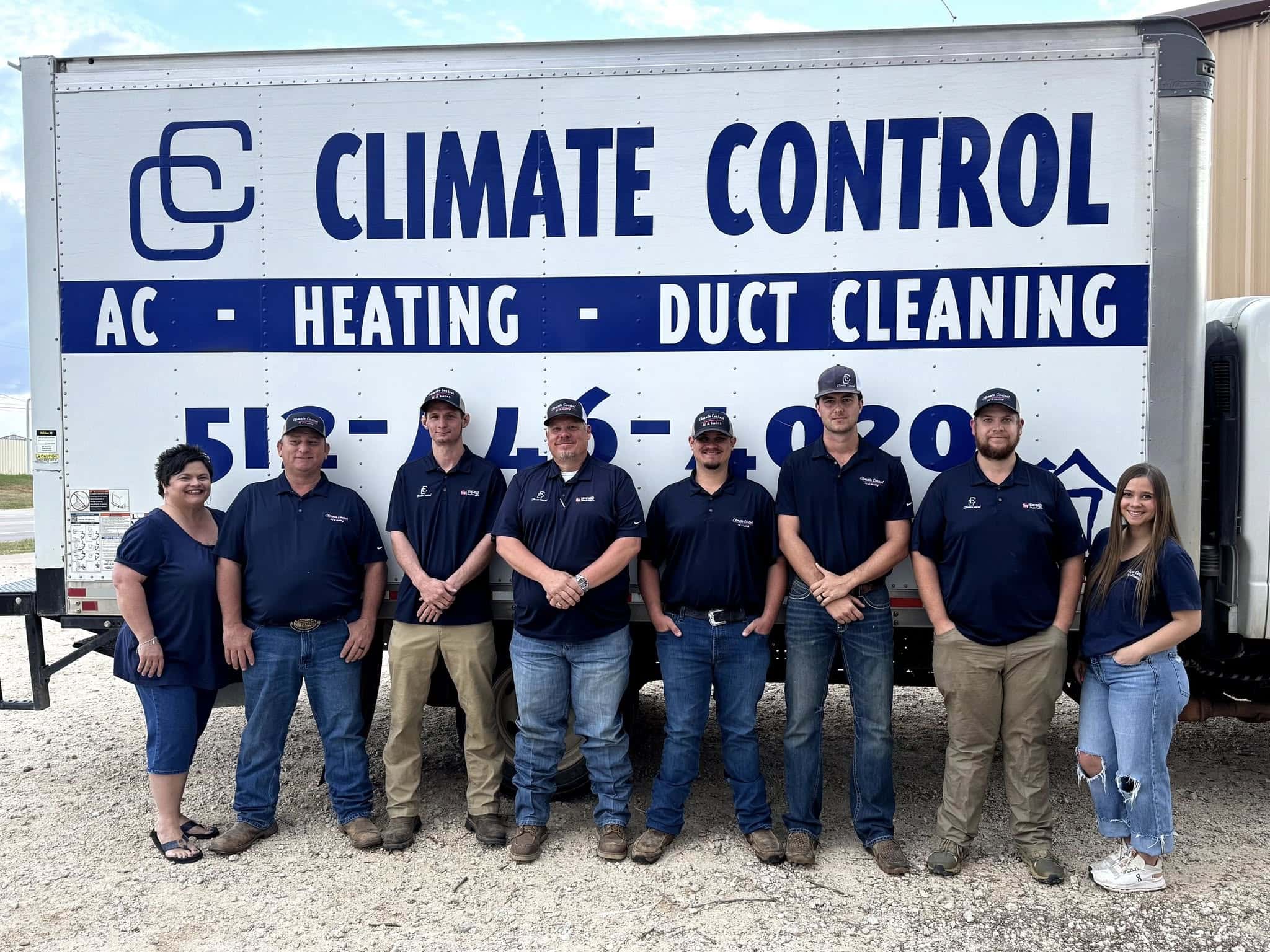
Trying to find Commercial AC System throughout Marak?
Climate Control A/C & Heating takes on the equipment that keeps buildings comfortable around the community.
Call 512-446-4020 to describe what your equipment is doing.
What Summer Asks of a System – Built for a Long Haul
A Marak summer stacks hot afternoon after hot afternoon; the machine on the pad outside is among the busiest appliances a household owns.
Damp air changes how a house feels at any given temperature; the indoor coil acts as the dehumidifier, collecting water that leaves through a drain line.
Matching capacity to the house, moving enough air and keeping the coil clean all shape the result, regardless of which brand is on the cabinet.
Anatomy of a Cooling System – Heat Moves, Cold Is Not Made
A central air conditioner is a heat mover, not a cold maker; a sealed loop of refrigerant absorbs heat at one point and releases it at another.
A cold coil indoors takes in heat while the blower keeps air moving, and the outdoor unit holds the compressor and condenser coil that push that heat away.
Parts that wear out fastest are usually the small electrical ones, and the larger parts usually go on to last much longer.
Diagnosing a Weak Cooling System: Where the Fault Usually Hides
AC repair that works starts with measurements, because guessing wastes time and parts; the same warm room can come from a dead capacitor, a frozen coil or a leak.
Electrical faults are common, with capacitors and contactors leading the list of small failures; the diagnosis comes before any decision about a bigger job.
Ice on the lines almost always means too little air or too little refrigerant, and running the system while it is frozen can damage the compressor.
Low refrigerant means a leak, because the charge stays put when the loop is tight, and the leak is the thing that has to be found and dealt with.
Algae and debris plug the drain, and many systems have a float switch that stops the cooling, and the fix is usually quick once the blockage is found.
Clues Your System Is Struggling: Small Changes, Big Hints
Cooling equipment usually gives notice before it fails outright, and every item below is a reason to schedule a visit:
- Some rooms that never cool down while the system runs nonstop.
- Loud banging when the compressor starts, particularly at the start of a cycle.
- Repeated short runs that never finish a cooling cycle, even though the thermostat is satisfied.
- Condensation where there should be none, which deserves a look before damage spreads.
Preventive Service: Habits That Pay Off Later
Routine AC maintenance heads off the kind of failure that arrives on a hot afternoon, with attention paid to coils, drains, belts and wiring.
Filters catch the dust that would otherwise coat the indoor coil; the label on the filter and the look of its surface are a reliable guide.
Dirt on the condenser makes the compressor run hotter, so that coil gets cleaned too; capacitors, contactors, wiring and motor amperage get checked as well.
Deciding on a New System: Questions to Ask First
Air conditioning equipment reaches a point where a new system makes more sense than another fix, with the condition of the compressor and coils weighing heavily.
Refrigerant types have changed over time, so older systems may use one that is hard to find; matching parts and refrigerant correctly keeps the whole loop reliable.
Efficiency has improved steadily, and a modern system can use noticeably less electricity; replacement can pay back in comfort as well as in energy use.
Choosing Capacity: the Groundwork Matters
AC install work succeeds or fails on sizing and airflow before any equipment is delivered; orientation and shading matter as much as floor area.
Too much capacity leads to short cycling, uneven rooms and a clammy feel; careful sizing protects comfort and the equipment.
Matched components perform to their design efficiency, while mismatched ones fall short, and the installer verifies airflow and charge before leaving the job.
Duct System Basics: Moving Air Efficiently
A duct system is the network of channels that carry conditioned air to every room and returns it for re-cooling, which is why the airflow measurement is part of a proper diagnosis.
Runs through an unconditioned attic or crawl space gain heat or lose chill unless sealed and wrapped, and a technician can often find the leaks with a pressure test.
Cleaning the Air Paths: Realistic Expectations
Cleaning the ducts means pulling loose material out with agitation tools and a strong vacuum, and the decision should rest on what is actually in the ducts.
Filtering, sealing and cleaning form one plan, not three separate jobs, and claims about health benefits should be treated skeptically.
Heat Pumps: Strengths and Limits
A heat pump is an air conditioner that can run backward to warm the house, which suits places where freezing weather is brief.
Auxiliary heat strips back up the heat pump on the coldest mornings, but a heat pump that always needs the backup may have a fault.
Heating With Gas – Parts, Safety and Service
A furnace heats air by passing it over a hot metal exchanger while exhaust gases leave through a flue, and a dirty flame sensor is a frequent reason for a furnace that lights and then shuts off.
Combustion appliances produce carbon monoxide, which is why detectors and clear vents matter, and stored items near the unit can block airflow and combustion air.
All-Electric Warmth – Features and Trade-Offs
Electric heat uses sequenced elements, relays and limit switches to warm the house, which keeps the mechanical side straightforward.
The trade-off with electric heat is simple equipment against higher running use; the decision rests on the building, not just the equipment.
Winter Preparation – Reliable Heat on Demand
The heating season is short enough that equipment sits unused for months, then must work on the first cold night, and a test on a mild day beats a surprise on a freezing one.
From gas furnaces to heat pumps, each heating system needs different attention before winter, which keeps the work simple to explain and easy to follow.
Boiler Systems: How Hydronic Systems Differ
Boiler systems appear in older buildings, larger properties and some commercial spaces; an owner with a boiler should look for experience with water-based heat.
Service on boiler systems covers the burner, the water pressure, the circulator pump, the expansion tank and the safety relief valve, and annual attention keeps these systems running quietly.
The Air Inside Your Walls: Beyond Temperature and Humidity
Good indoor air quality means controlling particles, humidity, fresh air and sources of contamination; the equipment that moves air is also the equipment that carries the contaminants.
Choosing a filter means balancing how much it removes against how much resistance it adds; humidity control prevents the conditions mold needs.
Commercial air quality involves larger volumes, more occupants and strict airflow requirements; ventilation rules for occupied spaces set a baseline.
Choosing an Air Cleaner: Sorting Fact From Marketing
Whole-home purifiers treat air as it passes through the system, while portable ones clean a single space; pollen and dust call for filtration, while odors call for carbon.
Good results come from a purifier chosen to complement the rest of the system, which is why one device rarely fits every home.
Keeping Coils Clean Between Visits: Understanding the Options
UV lights install in the air handler and shine on the indoor coil and drain pan to limit microbial growth; ask what the lamp targets and how often it needs service.
Antimicrobial mist is a liquid treatment applied to coils, ducts or surfaces to discourage growth; the underlying cause still has to be fixed.
Ventilating: Why Tight Buildings Need It
Ventilating a building means replacing stale indoor air with fresh outdoor air in a controlled way, and in a humid climate the incoming air needs dehumidifying.
Ductwork that dumps moisture into an attic can create damage far from the source; improvements can start with simple, low-effort fixes.
Commercial AC Systems: From Rooftop Units to Split Systems
A commercial AC system is sized for heat from people, lighting and machines as well as sunshine, and when it fails the business feels it quickly.
Coil cleaning, belt checks and economizer inspections are part of keeping commercial equipment dependable, and larger properties may phase work across several units.
Chillers: Where They Make Sense
Chiller systems cool water, and pumps carry the chilled water through pipes to air handlers throughout a building, and water treatment, tube cleaning and refrigerant checks are routine tasks.
Keeping Food and Product Cold – Why Failures Matter Fast
Walk-in coolers rely on evaporators, condensing units, defrost systems and door seals working together, which is why restaurants and stores plan service ahead of busy seasons.
How Climate Control A/C & Heating Looks at Commercial AC System in Marak
A good service call begins with listening to what the owner has noticed, followed by an explanation of what was found and what the choices are.
Options are laid out clearly, with the reasons behind each recommendation, and questions are welcome at every stage.
Let's Talk About Your Equipment
Dial 512-446-4020 to set up a visit or talk through your options.
What to Remember – Keep Things Simple
Equipment, ducts and air quality are connected, so a question about Commercial AC System is rarely a stand-alone one, and Climate Control A/C & Heating answers questions at 512-446-4020.