
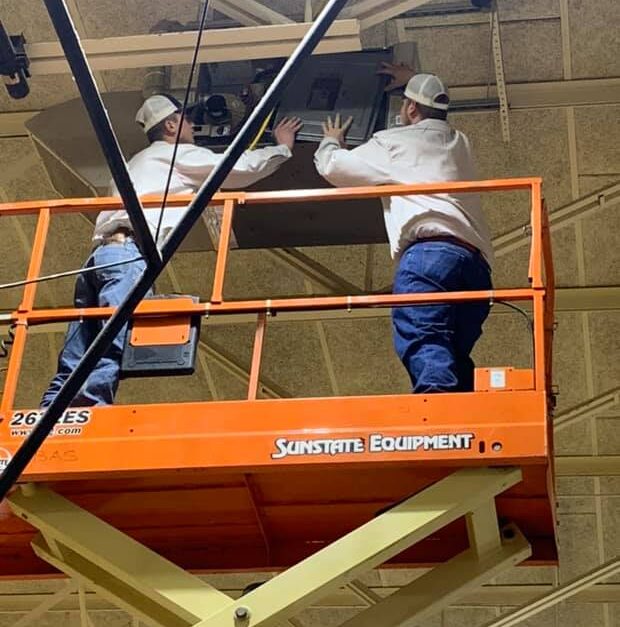
In need of AC Replacement across Milam County?
Climate Control A/C & Heating works on climate equipment for homes and businesses here at home.
Contact us at 512-446-4020 and tell us what you are noticing.
A Hot, Wet Climate: Local Conditions Come First
Hot weather in Milam County settles in for months at a time, and the equipment that carries the load is working harder than its owner tends to notice.
Damp air changes how a house feels at any given temperature, and removing it takes steady run time rather than quick bursts.
Right sizing, steady airflow and a clean coil therefore decide how a house feels, regardless of which brand is on the cabinet.
The Refrigerant Cycle – Heat Moves, Cold Is Not Made
Cooling equipment does not manufacture chill; the refrigerant carries heat out of the house and leaves the cool behind.
A cold coil indoors takes in heat while the blower keeps air moving, and the outdoor unit holds the compressor and condenser coil that push that heat away.
Parts that wear out fastest are usually the small electrical ones; a failed capacitor is often a small repair rather than the end of the system.
Problems Behind a Warm House: a Look at Common Failures
A thorough air conditioning repair starts with a diagnosis rather than a hunch, and a house that is warm may have an electrical fault, an airflow problem or a refrigerant problem.
A tripped breaker, a failed capacitor or a worn contactor keeps the outdoor unit from starting, and each can be tested with a meter in a few minutes.
A coil that ices over points toward airflow or refrigerant; shutting the cooling off is the safest response until someone inspects it.
Refrigerant is sealed in a loop and does not get used up, and adding more without finding the leak only delays the same problem.
Algae and debris plug the drain, and many systems have a float switch that stops the cooling, and the fix is usually quick once the blockage is found.
Trouble You Can See and Hear – Before a Breakdown
Air conditioners seldom quit without hints along the way; the list below covers what owners tend to notice:
- Rooms that stay warm while the system runs nonstop.
- Loud banging when the compressor starts, often getting louder from one week to the next.
- Repeated short runs that never finish a cooling cycle, with indoor humidity climbing.
- Condensation where there should be none, particularly after long runs.
Preventive Service – Small Tasks, Long Equipment Life
Routine AC maintenance heads off the kind of failure that arrives on a hot afternoon, and the visit usually combines cleaning, measuring and tightening.
Filters catch the dust that would otherwise coat the indoor coil, and a quick check each month is a good habit through the summer.
Coils, drain pans and drain lines all get attention during a complete tune-up; temperature drop and refrigerant pressures are measured to show how the loop is behaving.
When Replacement Makes Sense – Age, Condition and Efficiency
An old unit that needs repair after repair may be a candidate for AC replacement, and an honest technician explains both paths.
Refrigerant types have changed over time, so older systems may use one that is hard to find; matching parts and refrigerant correctly keeps the whole loop reliable.
Today's units move the same heat with less power than equipment from a generation ago; replacement can pay back in comfort as well as in energy use.
Choosing Capacity: Where Good Results Begin
Air conditioning install quality depends on matching capacity to what the building actually needs, which is why square footage alone is a poor guide.
Oversizing is a common mistake, and it wears out parts through constant starting; one that is too small never reaches the setpoint on the hottest days.
Matched components perform to their design efficiency, while mismatched ones fall short; the owner then gets a walk-through of the thermostat and the filter.
Ductwork Matters: Sizing, Sealing and Insulation
Good duct work delivers the right amount of air to each room and brings it back again; a house with comfort problems deserves a look at its air paths.
Runs through an unconditioned attic or crawl space gain heat or lose chill unless sealed and wrapped, which can improve comfort without touching the equipment.
Dust, Debris and Ductwork: What It Can and Cannot Do
Duct cleaning removes dust and debris from the supply and return runs, the registers and the blower compartment; construction dust, rodents or visible mold growth are the usual reasons to schedule it.
A cleaning that ignores leaks and filtration is a short-term fix at best, and claims about health benefits should be treated skeptically.
The Two-Way Heat Mover – Why They Suit the Region
Heat pumps move heat in both directions, cooling in summer and heating in winter, which suits places where freezing weather is brief.
A heat pump may call on backup heat during a hard freeze or while defrosting its coil, but a heat pump that always needs the backup may have a fault.
Gas Furnaces: How a Furnace Heats a House
Inside a gas furnace, a burner lights, a heat exchanger warms up and the blower pushes air across it, and a dirty flame sensor is a frequent reason for a furnace that lights and then shuts off.
A technician checks venting, gas pressure and the heat exchanger during a furnace tune-up; never ignore an alarm or a smell of gas.
Resistance and Strip Heat: How the Elements Work
Electric heat uses sequenced elements, relays and limit switches to warm the house, and the main wear items are the elements, the sequencers and the blower.
Compared with a heat pump, strips and electric furnaces draw heavily for the heat they make, and a technician can explain how each option behaves in a mild climate.
Warmth When the Front Arrives – Test Before You Need It
The heating season is short enough that equipment sits unused for months, then must work on the first cold night, which is why heating services are well scheduled in fall.
From gas furnaces to heat pumps, each heating system needs different attention before winter, and the safety controls get tested along with the comfort ones.
Boilers – Quiet, Even Heat
Boiler systems appear in older buildings, larger properties and some commercial spaces; the region mostly uses forced air, so boilers are the exception.
Air in the lines, a stuck valve or a weak pump are common reasons a boiler heats unevenly, and annual attention keeps these systems running quietly.
Cleaner Air Indoors – the Part You Cannot See
Indoor air quality describes what is floating in the air inside a building, from dust and pollen to odors and humidity, and cleaner air depends on filtration, ventilation and moisture control working together.
A better filter helps only if the blower can pull air through it without strain; the system and the filter are chosen together.
Commercial air quality depends on ventilation rates, filtration and the upkeep of rooftop equipment, and a maintenance plan fits the building's size and hours.
Filters, Purifiers and Their Limits: Matching the Tool to the Problem
Air purifiers range from a stand-alone machine in one room to a unit tied into the ductwork, and ozone-producing models are better avoided in occupied rooms.
Buying a purifier without fixing a moisture problem treats a symptom and misses the cause; the goal is a measurable improvement, not a gadget.
Add-On Air Treatments – Reasonable Expectations
Ultraviolet lamps near the coil are meant to keep it cleaner by discouraging growth on damp surfaces; ask what the lamp targets and how often it needs service.
Treatments with antimicrobial mist are used after cleaning, when surfaces are dry and accessible; the underlying cause still has to be fixed.
Letting a Building Breathe – Controlled and Filtered
Bath fans, kitchen hoods and outdoor air intakes are all part of ventilating a modern building; the cooling equipment has to be sized to handle the fresh air coming in.
Exhaust fans that move air out of kitchens and baths should vent outdoors, not into the attic, and a technician who looks at the surroundings sees more than the unit alone.
Business Climate Control: Comfort That Supports the Work
A commercial AC system is often a rooftop package unit that holds the compressor, the coils and the blower in one cabinet, which is why many businesses plan service around their schedule.
Control settings, schedules and thermostats on commercial systems deserve a look when comfort complaints begin; a clear plan helps the business stay open.
Cooling at Scale: How They Differ From Packaged Units
A chiller is a large refrigeration machine that chills water for use in many spaces, and the plant includes a chiller, pumps, a cooling tower or air-cooled condenser, and controls.
Coolers, Freezers and Ice Machines: Walk-Ins, Reach-Ins and More
Refrigeration equipment uses the same basic cycle as air conditioning but at much lower temperatures, which is why restaurants and stores plan service ahead of busy seasons.
How Climate Control A/C & Heating Goes About AC Replacement across Milam County
Conversation comes first, because the owner knows the symptoms better than anyone, followed by an explanation of what was found and what the choices are.
Options are laid out clearly, with the reasons behind each recommendation, and the work proceeds only when the owner agrees.
Comfort Is a Phone Call Away
Call 512-446-4020 to book a technician or get a straight answer.
A Last Word: Small Habits, Big Difference
Equipment, ducts and air quality are connected, so a question about AC Replacement is rarely a stand-alone one, and Climate Control A/C & Heating answers questions at 512-446-4020.