
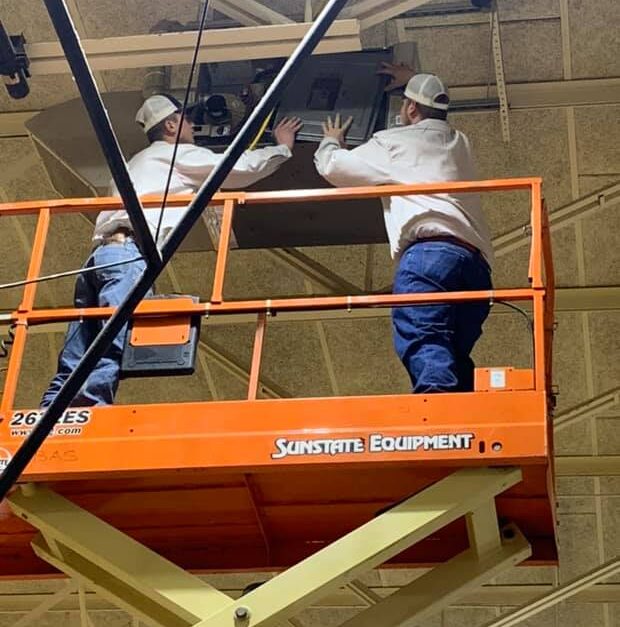
In need of Air Conditioning Install around Milam County?
Climate Control A/C & Heating takes on climate equipment for homes and businesses in the surrounding towns.
Contact us at 512-446-4020 to start the conversation.
The Cooling Season – the Setting for Every Choice
The cooling season in Milam County starts early and finishes late, and the equipment that carries the load is working harder than its owner tends to notice.
Sticky air can make a cool room feel uncomfortable; the indoor coil acts as the dehumidifier, collecting water that leaves through a drain line.
Right size, steady airflow and a clean coil explain much of how a house feels, long before a breakdown ever happens.
Moving Heat Outdoors: the Basics Worth Knowing
An air conditioner does not create cold; a sealed loop of refrigerant absorbs heat at one point and releases it at another.
A cold coil indoors takes in heat while the blower keeps air moving; outdoors, a fan pulls air across the condenser coil to shed the load.
Wear tends to show up in the electrical components before the big mechanical ones, and that is good news, because they are far simpler to fix than a compressor.
Service Calls in Hot Weather: Where the Fault Usually Hides
AC repair that works starts with measurements, because guessing wastes time and parts, and a house that is warm may have an electrical fault, an airflow problem or a refrigerant problem.
When the outdoor fan hums but will not spin, a capacitor is often the reason; the diagnosis comes before any decision about a bigger job.
A coil that ices over points toward airflow or refrigerant, and the cause may be as simple as a clogged filter or as involved as a leak.
Refrigerant is not a consumable that needs topping off every season; a responsible repair locates the leak instead of simply adding more.
Algae and debris plug the drain, and many systems have a float switch that stops the cooling, and clearing the line is routine maintenance work.
When to Call for Service: Small Changes, Big Hints
A struggling cooling system leaves clues around the house, and the items below are easy to check from inside the house:
- Supply air that feels weak or lukewarm even with the thermostat set low.
- A buzzing or clicking sound at startup, sometimes only on the hottest afternoons.
- Short, frequent cycling of the outdoor unit; parts wear faster.
- Water around the air handler, sometimes from a dirty coil.
Tune-Ups for Cooling Gear: What a Maintenance Visit Covers
Routine AC maintenance heads off the kind of failure that arrives on a hot afternoon, with attention paid to coils, drains, belts and wiring.
Filters catch the dust that would otherwise coat the indoor coil; the label on the filter and the look of its surface are a reliable guide.
Dirt on the condenser makes the compressor run hotter, so that coil gets cleaned too; temperature drop and refrigerant pressures are measured to show how the loop is behaving.
Deciding on a New System – Age, Condition and Efficiency
An old unit that needs repair after repair may be a candidate for AC replacement; the right answer differs from one house to the next.
Older equipment may use a refrigerant that has been phased out of new production, which is another reason to get a clear diagnosis before deciding.
Today's units move the same heat with less power than equipment from a generation ago, which matters most where the system runs for months.
Getting an Install Right: the Groundwork Matters
Proper AC install planning measures the house, the windows, the insulation and the sun exposure; windows, attic insulation and ductwork all change the answer.
Too much capacity leads to short cycling, uneven rooms and a clammy feel; careful sizing protects comfort and the equipment.
A complete installation pairs the condenser, the coil and the air handler as one system, and a startup check confirms the charge, the airflow and the temperature drop.
Ducts: the Lungs of the House
Good duct work delivers the right amount of air to each room and brings it back again, and a unit can be fine while the ducts hold the whole system back.
Attic duct work in Texas sees extreme heat, so insulation and tight seams earn their keep, which can improve comfort without touching the equipment.
Dust, Debris and Ductwork: Realistic Expectations
Duct cleaning removes dust and debris from the supply and return runs, the registers and the blower compartment; construction dust, rodents or visible mold growth are the usual reasons to schedule it.
Clean ducts work best alongside a good filter and sealed connections; ask to see before-and-after photos of the work.
Heat Pumps – Efficient Most of the Year
The reversing valve is what lets heat pumps switch between cooling and heating; one outdoor unit does the work of two.
A heat pump may call on backup heat during a hard freeze or while defrosting its coil, but a heat pump that always needs the backup may have a fault.
Furnace Basics: Reliable Heat for Cold Fronts
Gas furnaces burn natural gas or propane in a burner and pass the heat through a heat exchanger, and a fault in any one step can stop the whole cycle.
A technician checks venting, gas pressure and the heat exchanger during a furnace tune-up, and a detector near the sleeping areas gives early warning.
All-Electric Warmth: What to Expect From It
An electric furnace passes air over banks of resistance elements that glow when energized, and the main wear items are the elements, the sequencers and the blower.
Electricity makes heat at a steady rate, but resistance heat uses more power than a heat pump does for the same warmth, particularly where cold stretches are brief.
Warmth When the Front Arrives: Short Winters Still Bite
A hard freeze can arrive with little warning, so heating equipment needs to be ready before it is called on; heating systems are better checked before they are needed.
Heating services cover igniters and burners on gas units, reversing valves on heat pumps and elements on electric ones; one failed switch can shut down an otherwise healthy system.
Hydronic Warmth: Less Common, Still Important
Radiant floor and baseboard heating both rely on a boiler to heat the water; an owner with a boiler should look for experience with water-based heat.
Air in the lines, a stuck valve or a weak pump are common reasons a boiler heats unevenly; leaks near joints deserve prompt attention.
Cleaner Air Indoors: Starting With Facts
The air in a house mixes outdoor pollen, indoor dust and chemicals from everyday products, and in Texas, cedar pollen and spring dust can find their way inside.
A better filter helps only if the blower can pull air through it without strain; a deeper media cabinet gives better filtering with less restriction.
Offices, shops and restaurants need steady fresh air so that crowds do not make the space stuffy; ventilation rules for occupied spaces set a baseline.
Choosing an Air Cleaner: Sorting Fact From Marketing
Air purifiers range from a stand-alone machine in one room to a unit tied into the ductwork; pollen and dust call for filtration, while odors call for carbon.
Good results come from a purifier chosen to complement the rest of the system, and a conversation about the whole house usually comes first.
Light and Mist Treatments – Tools for a Damp Climate
A UV lamp does not clean the air passing by, but it treats the surfaces it can see; the lamp supplements regular cleaning rather than replacing it.
An antimicrobial mist is sprayed or fogged onto surfaces inside the system or the building; the underlying cause still has to be fixed.
Ventilation Done Right: Why Tight Buildings Need It
Bath fans, kitchen hoods and outdoor air intakes are all part of ventilating a modern building, and in a humid climate the incoming air needs dehumidifying.
Good attic airflow lowers the heat that leaks down into the living space; the equipment, the envelope and the airflow work as a team.
Keeping a Workplace Comfortable: Uptime Matters
A commercial AC system is often a rooftop package unit that holds the compressor, the coils and the blower in one cabinet; planned maintenance keeps surprises to a minimum.
Condensate drains on rooftops clog with debris, and the water can stain ceilings below; a clear plan helps the business stay open.
Chilled Water Cooling: Where They Make Sense
A chiller is a large refrigeration machine that chills water for use in many spaces, and water treatment, tube cleaning and refrigerant checks are routine tasks.
Coolers, Freezers and Ice Machines – Equipment With Little Room for Error
Walk-in coolers rely on evaporators, condensing units, defrost systems and door seals working together, and temperature drift is the warning sign to act on.
How Climate Control A/C & Heating Approaches Air Conditioning Install around Milam County
Conversation comes first, because the owner knows the symptoms better than anyone, then examines the equipment and measures what can be measured.
A repair, a tune-up and a replacement are each described for what they are and what they involve, and questions are welcome at every stage.
Start With a Conversation
Dial 512-446-4020 to describe what is going on and find the next step.
Closing Thoughts – Equipment, Airflow and Air Quality
Interest in Air Conditioning Install often starts with a problem, and the solution starts with a clear diagnosis, and Climate Control A/C & Heating answers questions at 512-446-4020.