
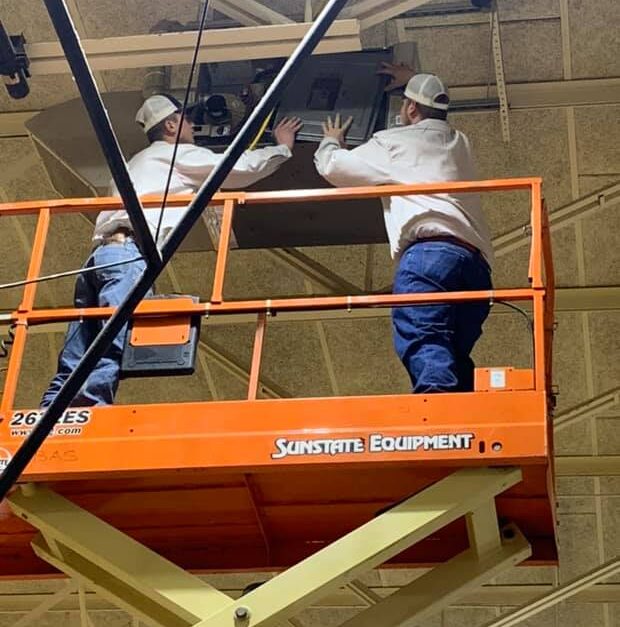
Shopping around for Air Conditioning Maintenance near Milano?
Climate Control A/C & Heating works on climate equipment for homes and businesses around the community.
Call 512-446-4020 to talk it through.
The Cooling Season – the Setting for Every Choice
Summers across Milano run long, hot and humid; a cooling system here logs far more running hours than one in a mild climate.
Water vapor rides along with the heat on a muggy afternoon, and removing it takes steady run time rather than quick bursts.
Right size, steady airflow and a clean coil explain much of how a house feels, regardless of which brand is on the cabinet.
Inside an Air Conditioner – Parts and Their Jobs
Nothing in a cooling system generates cold air from scratch; a sealed loop of refrigerant absorbs heat at one point and releases it at another.
Warm indoor air passes over a cold coil in the air handler or furnace cabinet, with the compressor outside squeezing the refrigerant so the heat can leave.
Starting and stopping thousands of times a season is hard on switches and capacitors, which is why a quick diagnosis matters before anyone talks about replacement.
Diagnosing a Weak Cooling System: a Look at Common Failures
Good AC repair is detective work before it is wrench work; the same warm room can come from a dead capacitor, a frozen coil or a leak.
A unit that clicks and does nothing may be waiting on a bad contactor or a dead control board, and they usually repair cleanly because the parts are small.
Ice on the lines almost always means too little air or too little refrigerant; switching the system off and letting it thaw protects the equipment until it can be checked.
Low refrigerant means a leak, because the charge stays put when the loop is tight; a responsible repair locates the leak instead of simply adding more.
A blocked drain line can back water into the pan and trip a safety switch, and the fix is usually quick once the blockage is found.
Clues Your System Is Struggling: Spotting Problems Early
Most breakdowns announce themselves with small changes in behavior; these are the signs a homeowner can see, hear or feel without any tools:
- Uneven temperatures from room to room despite thin airflow at the vents.
- Loud banging when the compressor starts, whether or not the cooling seems to work.
- Repeated short runs that never finish a cooling cycle, along with a higher electric bill.
- Musty smells when the blower starts, which deserves a look before damage spreads.
Routine Care – the Work Behind Reliable Comfort
Air conditioning maintenance keeps dust, grime and wear from piling up unseen; the technician cleans what gets dirty and measures what can drift.
Dirty filters are the single easiest thing for an owner to handle, and a quick check each month is a good habit through the summer.
Dirt on the condenser makes the compressor run hotter, so that coil gets cleaned too, and reading the numbers shows whether anything is drifting out of range.
Time for a Change: How Owners Decide
AC replacement becomes a real question when a system is old, repeatedly broken or hard to keep comfortable, and an honest technician explains both paths.
Older equipment may use a refrigerant that has been phased out of new production, which is another reason to get a clear diagnosis before deciding.
Newer cooling equipment is generally more efficient than older models, and in a long cooling season those savings add up.
Matching a System to a House – a Calculation, Not a Guess
Air conditioning install quality depends on matching capacity to what the building actually needs; windows, attic insulation and ductwork all change the answer.
An oversized system cools the air quickly and then shuts off before it removes moisture, and a unit that is too small runs constantly without catching up.
Matched components perform to their design efficiency, while mismatched ones fall short, and a startup check confirms the charge, the airflow and the temperature drop.
Air Distribution – What Hides Above the Ceiling
In many houses, the ducts decide whether a new system performs as promised, and leaks, bad bends and poor insulation waste a large share of the effort.
Ducts that run through a hot attic lose a surprising amount of cooling on the way to the rooms; return air paths deserve the same attention as the supply side.
Clearing Out the Channels: What It Can and Cannot Do
Cleaning the ducts means pulling loose material out with agitation tools and a strong vacuum; a house with no such history may not need it often.
Clean ducts work best alongside a good filter and sealed connections, and a plain look inside the duct tells the real story.
Heat Pump Basics: a Natural Fit for Mild Winters
A heat pump is an air conditioner that can run backward to warm the house, and that makes them efficient in climates with mild winters.
A heat pump may call on backup heat during a hard freeze or while defrosting its coil, and a technician can check whether the strips are running more than they should.
Heating With Gas: What Owners Should Know
Gas furnaces burn natural gas or propane in a burner and pass the heat through a heat exchanger, and a dirty flame sensor is a frequent reason for a furnace that lights and then shuts off.
Carbon monoxide detectors belong in any home with fuel-burning equipment, and homeowners should keep the area around the furnace clear of clutter.
Electric Heating Systems – Where It Fits Best
Elements in an electric air handler turn current directly into heat, which keeps the mechanical side straightforward.
The trade-off with electric heat is simple equipment against higher running use, and many homes pair a heat pump with strips as a backup.
Warmth When the Front Arrives: Short Winters Still Bite
Winters in Texas are short, but cold fronts can drop temperatures sharply in a matter of hours; running the heater briefly in fall shows whether it lights, blows warm air and shuts off properly.
Heating systems come in several forms, and the same house may use gas furnaces, heat pumps or electric heating systems, and the safety controls get tested along with the comfort ones.
Hydronic Warmth – Quiet, Even Heat
Hydronic heating moves heat with water instead of air, which makes for quiet, even warmth; an owner with a boiler should look for experience with water-based heat.
Service on boiler systems covers the burner, the water pressure, the circulator pump, the expansion tank and the safety relief valve; leaks near joints deserve prompt attention.
Air Quality Basics: Starting With Facts
The air in a house mixes outdoor pollen, indoor dust and chemicals from everyday products; the equipment that moves air is also the equipment that carries the contaminants.
A better filter helps only if the blower can pull air through it without strain; the system and the filter are chosen together.
Businesses face their own air issues, from shared air handlers to customers coming and going all day, and a maintenance plan fits the building's size and hours.
Choosing an Air Cleaner – Whole-Home or Single Room
Purifiers vary widely, from simple filters to units combining filtration, carbon and other methods; a device that makes bold promises deserves a second look.
Good results come from a purifier chosen to complement the rest of the system, and a conversation about the whole house usually comes first.
Managing Growth Inside the System: Understanding the Options
Lamps inside the cabinet work on the coil and pan, and they need replacing on a schedule; bulbs lose strength over time and need changing.
Fogging a space with antimicrobial mist is a surface treatment, not a cure for a moisture problem, and ventilation and occupant safety are part of the process.
Bringing Outdoor Air In: Balance in a Humid Climate
Bath fans, kitchen hoods and outdoor air intakes are all part of ventilating a modern building, and in a humid climate the incoming air needs dehumidifying.
Ductwork that dumps moisture into an attic can create damage far from the source; improvements can start with simple, low-effort fixes.
Commercial Cooling: Comfort That Supports the Work
Shops, restaurants, offices and churches often rely on rooftop equipment that serves a zone of the building, and filters, belts, coils and drains are the usual checklist items.
Commercial equipment is built to run long hours, and it still depends on clean coils and clear drains, and larger properties may phase work across several units.
Central Plant Equipment: Where They Make Sense
Chiller systems are used in large offices, schools, hospitals and industrial plants, and the plant includes a chiller, pumps, a cooling tower or air-cooled condenser, and controls.
Commercial Refrigeration – Equipment With Little Room for Error
Refrigeration service covers walk-in coolers, reach-in units, freezers, display cases and ice machines, and temperature drift is the warning sign to act on.
How Climate Control A/C & Heating Goes About Air Conditioning Maintenance near Milano
A good service call begins with listening to what the owner has noticed; readings replace guesses, and the findings are explained in plain language.
The owner hears what needs to happen now, what can wait and what is optional, and questions are welcome at every stage.
Ready When You Are
Contact us at 512-446-4020 to line up service or learn what to expect.
Putting It Together: Attention Now Saves Trouble Later
Equipment, ducts and air quality are connected, so a question about Air Conditioning Maintenance is rarely a stand-alone one, with Climate Control A/C & Heating at 512-446-4020 to start the conversation.