
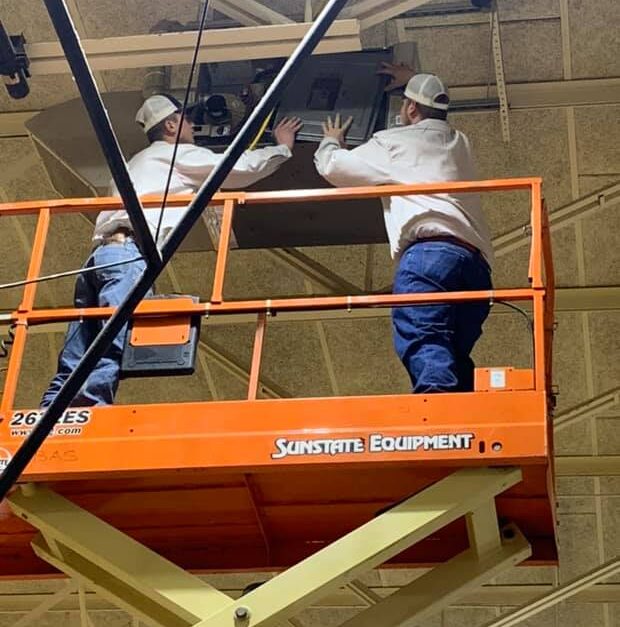
Shopping around for Commercial AC System across Milano?
Climate Control A/C & Heating takes on cooling, heating and the air indoors in the surrounding towns.
Dial 512-446-4020 and tell us what you are noticing.
A Hot, Wet Climate – Built for a Long Haul
A Milano summer stacks hot afternoon after hot afternoon; the machine on the pad outside is among the busiest appliances a household owns.
Water vapor rides along with the heat on a muggy afternoon, and the coil is where the moisture condenses and drains away.
Right sizing, steady airflow and a clean coil therefore decide how a house feels, long before a breakdown ever happens.
Anatomy of a Cooling System: the Basics Worth Knowing
Cooling equipment does not manufacture chill; a sealed loop of refrigerant absorbs heat at one point and releases it at another.
The air handler holds the indoor coil and the blower that pushes air across it, and the outdoor unit holds the compressor and condenser coil that push that heat away.
The contactor, the capacitor and the motors take a beating in hot weather; a failed capacitor is often a small repair rather than the end of the system.
Cooling Troubles: Where the Fault Usually Hides
Good AC repair is detective work before it is wrench work; weak cooling is a symptom that many separate faults share.
If the outdoor unit is silent, power, a breaker and the low-voltage wiring are the first suspects, and these are among the quicker repairs when the technician has the part.
A frozen evaporator coil blocks the very air it is supposed to cool, and the cause may be as simple as a clogged filter or as involved as a leak.
Refrigerant is sealed in a loop and does not get used up, and adding more without finding the leak only delays the same problem.
Algae and debris plug the drain, and many systems have a float switch that stops the cooling, though a stopped system after heavy use is a good moment to check it.
When to Call for Service: Spotting Problems Early
A struggling cooling system leaves clues around the house, and the items below are easy to check from inside the house:
- Uneven temperatures from room to room though the unit sounds normal.
- A buzzing or clicking sound at startup, often getting louder from one week to the next.
- A system that turns on and off in short cycles; parts wear faster.
- Musty smells when the blower starts, which deserves a look before damage spreads.
Regular Maintenance – the Work Behind Reliable Comfort
Routine AC maintenance heads off the kind of failure that arrives on a hot afternoon, with attention paid to coils, drains, belts and wiring.
Filters catch the dust that would otherwise coat the indoor coil, and a quick check each month is a good habit through the summer.
The visit usually includes the condenser coil, the evaporator coil and a flush of the drain line; tightening electrical connections is a standard part of the job.
When Replacement Makes Sense: Questions to Ask First
Air conditioning equipment reaches a point where a new system makes more sense than another fix, and a good evaluation lays out repair and replacement side by side.
A system built around a retired refrigerant can be a poor candidate for major repairs, which is another reason to get a clear diagnosis before deciding.
Efficiency numbers on new equipment, such as SEER2, give a way to compare models fairly; the benefit grows in houses that rely on cooling much of the year.
Getting an Install Right: Details That Shape Comfort
Air conditioning install quality depends on matching capacity to what the building actually needs; orientation and shading matter as much as floor area.
An oversized system cools the air quickly and then shuts off before it removes moisture; careful sizing protects comfort and the equipment.
The indoor and outdoor parts have to match each other and the ductwork, and local permit and inspection rules apply in most towns.
Ducts: Sizing, Sealing and Insulation
A duct system is the network of channels that carry conditioned air to every room and returns it for re-cooling; a house with comfort problems deserves a look at its air paths.
Leaks at joints pull attic air into the system and push cooled air out into the rafters, and sealing with mastic rather than cloth tape holds up better in the heat.
When Ducts Need Attention – Reasons and Limits
Duct cleaning is a mechanical job that brushes loose and vacuums out what has collected; construction dust, rodents or visible mold growth are the usual reasons to schedule it.
Dirt returns quickly if the filter is poor or the returns leak unfiltered air; ask to see before-and-after photos of the work.
Cooling and Heating in One: a Natural Fit for Mild Winters
Heat pumps use the same refrigerant loop as an air conditioner, with a reversing valve added; in Texas, cold snaps are short, so a heat pump covers most of the heating season.
Defrost cycles and backup heat are normal parts of winter operation, and a system that runs strips constantly deserves a diagnostic visit.
Furnace Basics: Reliable Heat for Cold Fronts
Inside a gas furnace, a burner lights, a heat exchanger warms up and the blower pushes air across it; the flue and combustion air must be clear for safe operation.
Carbon monoxide detectors belong in any home with fuel-burning equipment, and stored items near the unit can block airflow and combustion air.
All-Electric Warmth: What to Expect From It
Elements in an electric air handler turn current directly into heat, which keeps the mechanical side straightforward.
The trade-off with electric heat is simple equipment against higher running use, and a technician can explain how each option behaves in a mild climate.
Winter Preparation – Test Before You Need It
A norther can send temperatures tumbling, and heating systems that sat idle all summer must start right up; heating systems are better checked before they are needed.
From gas furnaces to heat pumps, each heating system needs different attention before winter, and the safety controls get tested along with the comfort ones.
Hot-Water Heating: Found in Older and Larger Buildings
Radiant floor and baseboard heating both rely on a boiler to heat the water, and the parts, from circulators to expansion tanks, differ from forced-air equipment.
Service on boiler systems covers the burner, the water pressure, the circulator pump, the expansion tank and the safety relief valve; leaks near joints deserve prompt attention.
Air Quality Basics – Sources, Symptoms and Solutions
Air inside a home can carry particles, gases and moisture that the thermostat never shows, which makes the HVAC system the natural place to improve air quality.
A better filter helps only if the blower can pull air through it without strain, and sealing return leaks keeps unfiltered air from sneaking around the filter.
Commercial air quality depends on ventilation rates, filtration and the upkeep of rooftop equipment, and employee and customer comfort both depend on it.
Choosing an Air Cleaner: Matching the Tool to the Problem
Whole-home purifiers treat air as it passes through the system, while portable ones clean a single space, and the right choice depends on what needs removing.
Equipment that cleans the air cannot make up for a dirty coil or a leaky return; the goal is a measurable improvement, not a gadget.
Light and Mist Treatments: Understanding the Options
A UV lamp does not clean the air passing by, but it treats the surfaces it can see; ask what the lamp targets and how often it needs service.
Antimicrobial mist is a liquid treatment applied to coils, ducts or surfaces to discourage growth; the label for the product spells out how it is to be used.
Bringing Outdoor Air In: Balance in a Humid Climate
Modern buildings are tight, so ventilating on purpose keeps carbon dioxide and odors from building up, and in a humid climate the incoming air needs dehumidifying.
Exhaust fans that move air out of kitchens and baths should vent outdoors, not into the attic; the equipment, the envelope and the airflow work as a team.
Commercial AC Systems: From Rooftop Units to Split Systems
A commercial AC system is sized for heat from people, lighting and machines as well as sunshine; a break in cooling can mean lost customers or a workday cut short.
Rooftop units sit in the sun and wind, so the cabinets, the coils and the curbs take a beating; a clear plan helps the business stay open.
Chillers – Big Buildings, Big Loads
Chiller systems cool water, and pumps carry the chilled water through pipes to air handlers throughout a building; the equipment is larger, more complex and more closely monitored.
Coolers, Freezers and Ice Machines – Why Failures Matter Fast
Businesses that sell or store food depend on refrigeration service to hold safe temperatures; regular cleaning of condenser coils matters even more than in comfort cooling.
How Climate Control A/C & Heating Thinks About Commercial AC System throughout Milano
Conversation comes first, because the owner knows the symptoms better than anyone, followed by an explanation of what was found and what the choices are.
Honest advice separates the necessary from the optional; nothing starts without a clear understanding.
Ready When You Are
Call 512-446-4020 to schedule service or ask what makes sense for your building.
Closing Thoughts: Attention Now Saves Trouble Later
Whether the need falls under Commercial AC System or elsewhere in the heating, cooling and air quality family, the same principles apply, and Climate Control A/C & Heating answers questions at 512-446-4020.