
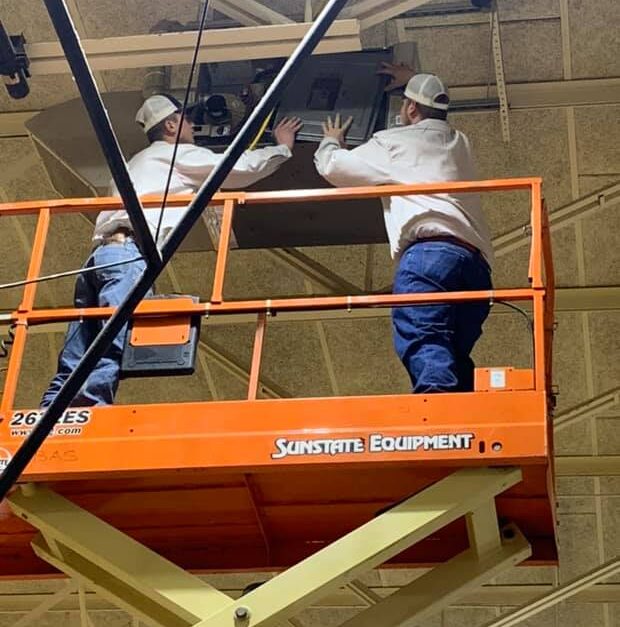
In need of AC Maintenance across Pettibone?
Climate Control A/C & Heating takes on heating, cooling and indoor comfort around the community.
Contact us at 512-446-4020 to start the conversation.
The Cooling Season: Why Equipment Works Hard Here
Warm weather in Pettibone stretches across much of the calendar, which means a cooling unit seldom rests between spring and fall.
Humidity is half of the comfort problem, not an afterthought; a cooling system dehumidifies only when the compressor is on and air is moving across the coil.
Capacity, airflow and cleanliness work together, and a weakness in one shows up as a house that never feels quite right, regardless of which brand is on the cabinet.
Inside an Air Conditioner: the Basics Worth Knowing
Air conditioning is the business of relocating heat; warmth is absorbed in one coil and released in another.
The indoor coil is where the cooling happens, and the outdoor unit holds the compressor and condenser coil that push that heat away.
Fan motors and start components do a great deal of work for their size; the compressor itself can last a long time when it is kept clean and properly charged.
When the House Stops Cooling: Where the Fault Usually Hides
Air conditioning repair begins with finding out why the system quit, not with swapping parts; the same warm room can come from a dead capacitor, a frozen coil or a leak.
A unit that clicks and does nothing may be waiting on a bad contactor or a dead control board, and each can be tested with a meter in a few minutes.
Ice building up near the air handler tells a technician where to look; the coil needs to thaw completely before anyone can measure what is going on.
A properly working system keeps its charge for good, since nothing burns it off; topping off a leaking system is a temporary patch that lets the problem return.
Condensate has to leave the house, so a blocked line sends it somewhere less welcome; moisture removed from muggy air adds up to gallons a day.
Symptoms Worth Noticing – What Owners Notice First
A struggling cooling system leaves clues around the house, and every item below is a reason to schedule a visit:
- Rooms that stay warm even with the thermostat set low.
- A burning smell from the vents, whether or not the cooling seems to work.
- Short, frequent cycling of the outdoor unit, even though the thermostat is satisfied.
- Pooling water under the furnace or air handler, which deserves a look before damage spreads.
Tune-Ups for Cooling Gear: What a Maintenance Visit Covers
AC maintenance is a set of simple, repeatable tasks that keep a cooling system efficient; the checklist stays short enough to repeat every season.
Changing the filter on schedule protects the coil, the blower and the ductwork, and a quick check each month is a good habit through the summer.
Dirt on the condenser makes the compressor run hotter, so that coil gets cleaned too; the report reflects measurements rather than guesses.
Repair or Replace: Questions to Ask First
An old unit that needs repair after repair may be a candidate for AC replacement; the right answer differs from one house to the next.
Some older units run on refrigerant that is now scarce, which affects repair decisions; matching parts and refrigerant correctly keeps the whole loop reliable.
Efficiency has improved steadily, and a modern system can use noticeably less electricity, and comfort improves along with the numbers.
Sizing and Setup – Bigger Is Not Better
AC install work succeeds or fails on sizing and airflow before any equipment is delivered; orientation and shading matter as much as floor area.
A unit that is too large satisfies the thermostat fast and leaves the humidity behind, and a unit that is too small runs constantly without catching up.
The indoor and outdoor parts have to match each other and the ductwork, and a startup check confirms the charge, the airflow and the temperature drop.
Duct System Basics: the Lungs of the House
The duct system is as much a part of comfort as the unit that feeds it; a house with comfort problems deserves a look at its air paths.
Ducts that run through a hot attic lose a surprising amount of cooling on the way to the rooms, and sealing with mastic rather than cloth tape holds up better in the heat.
Duct Cleaning: What It Can and Cannot Do
Cleaning the ducts means pulling loose material out with agitation tools and a strong vacuum; construction dust, rodents or visible mold growth are the usual reasons to schedule it.
Cleaning pays off only when the source of the dirt is also addressed, and claims about health benefits should be treated skeptically.
Reversible Systems: a Natural Fit for Mild Winters
The reversing valve is what lets heat pumps switch between cooling and heating, and one system handles both seasons with a single set of equipment.
On extremely cold days the heat pump leans on supplemental heat to keep up; watch for unusually high bills as a hint.
Burners, Igniters and Flues – the Machinery in the Closet
The sequence in a gas furnace runs from thermostat call to draft fan, igniter, gas valve and flame proof, and a fault in any one step can stop the whole cycle.
Carbon monoxide detectors belong in any home with fuel-burning equipment, and homeowners should keep the area around the furnace clear of clutter.
Heating With Electricity: Simple Equipment, Steady Output
Electric heat uses sequenced elements, relays and limit switches to warm the house, and the equipment is simple, with few moving parts.
Homes with strip heat often see bigger winter bills than homes with efficient heat pumps, and many homes pair a heat pump with strips as a backup.
Getting Ready for Cold Weather: Planning for Sudden Cold
Winters in Texas are short, but cold fronts can drop temperatures sharply in a matter of hours; heating systems are better checked before they are needed.
From gas furnaces to heat pumps, each heating system needs different attention before winter, and the safety controls get tested along with the comfort ones.
Boilers: Less Common, Still Important
Radiant floor and baseboard heating both rely on a boiler to heat the water; an owner with a boiler should look for experience with water-based heat.
Pressure, temperature and flame quality are the numbers that matter in a boiler check, and bleeding air from the loops is a routine task.
Air Quality Basics: Why It Deserves Attention
Air inside a home can carry particles, gases and moisture that the thermostat never shows; the equipment that moves air is also the equipment that carries the contaminants.
Residential air quality improves when the filter fits the system and gets changed on schedule, and a technician can recommend what the equipment can handle.
Businesses face their own air issues, from shared air handlers to customers coming and going all day; scheduled filter changes and coil cleaning keep these systems honest.
Purifiers – Useful, With Realistic Goals
Air purifiers range from a stand-alone machine in one room to a unit tied into the ductwork; pollen and dust call for filtration, while odors call for carbon.
A purifier works alongside good ventilation and a clean system, not in place of them; a technician looks at the system before recommending a device.
UV Lights and Antimicrobial Mist: What They Do and What They Do Not
UV lights are a common add-on in humid climates, where the evaporator coil stays wet for months, and results depend on placement, dose and the lamp type.
An antimicrobial mist is sprayed or fogged onto surfaces inside the system or the building, and it works best where the source of moisture has been dealt with.
Ventilation Done Right: Balance in a Humid Climate
Ventilating also removes moisture from kitchens and baths before it settles into the structure; an energy recovery ventilator can trade heat and moisture between the two airstreams.
Good attic airflow lowers the heat that leaks down into the living space; improvements can start with simple, low-effort fixes.
Commercial AC Systems – Equipment Built for Heavier Duty
Every commercial air conditioning system serves a space with different loads from a house, such as crowds, lighting and equipment, and filters, belts, coils and drains are the usual checklist items.
Control settings, schedules and thermostats on commercial systems deserve a look when comfort complaints begin; a clear plan helps the business stay open.
Chiller Systems for Larger Buildings: Parts and Service Needs
A chiller is a large refrigeration machine that chills water for use in many spaces, and water treatment, tube cleaning and refrigerant checks are routine tasks.
Refrigeration Service – Equipment With Little Room for Error
A refrigeration problem is often found in the condenser, the defrost control or a worn door gasket, and food safety rules set limits that equipment must keep.
How Climate Control A/C & Heating Works Through AC Maintenance around Pettibone
Before touching a tool, the technician hears the history of the problem from the person who lives with it; the owner understands the situation before any decision.
Recommendations come with explanations, so choices rest on information rather than pressure; good service depends on trust running both ways.
Start With a Conversation
Phone 512-446-4020 to describe what is going on and find the next step.
Closing Thoughts: Small Habits, Big Difference
Equipment, ducts and air quality are connected, so a question about AC Maintenance is rarely a stand-alone one, and Climate Control A/C & Heating answers questions at 512-446-4020.