
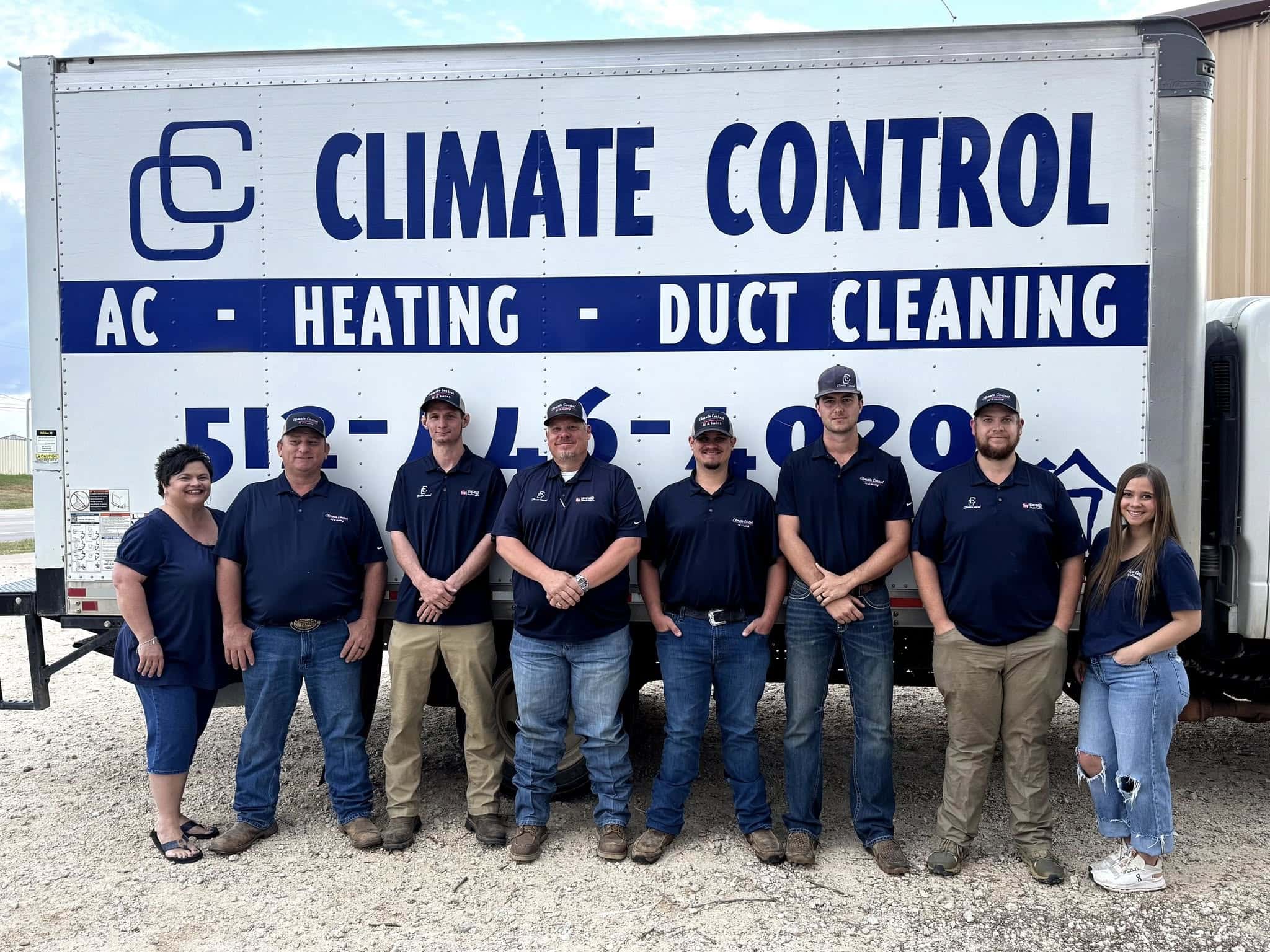
Shopping around for Gas Furnaces in Rockdale?
Climate Control A/C & Heating works on comfort equipment of every kind close to home.
Dial 512-446-4020 and ask a real question.
Heat and Humidity: Why Equipment Works Hard Here
Warm weather in Rockdale stretches across much of the calendar; the machine on the pad outside is among the busiest appliances a household owns.
Water vapor rides along with the heat on a muggy afternoon, and the coil is where the moisture condenses and drains away.
Matching capacity to the house, moving enough air and keeping the coil clean all shape the result, whatever the label on the box promises.
Inside an Air Conditioner – Heat Moves, Cold Is Not Made
An air conditioner does not create cold; it collects heat inside the house and dumps it into the outdoor air.
Inside the house, the evaporator coil does the absorbing, and the outdoor unit holds the compressor and condenser coil that push that heat away.
Starting and stopping thousands of times a season is hard on switches and capacitors; a failed capacitor is often a small repair rather than the end of the system.
Cooling Troubles: Repair Starts With Diagnosis
A proper air conditioning repair sorts the symptom from the cause before anything is replaced; weak cooling is a symptom that many separate faults share.
When the outdoor fan hums but will not spin, a capacitor is often the reason, and these are among the quicker repairs when the technician has the part.
Ice building up near the air handler tells a technician where to look; the coil needs to thaw completely before anyone can measure what is going on.
Refrigerant is sealed in a loop and does not get used up, which is why measuring pressures and temperatures matters more than adding gas.
Water around the air handler often means the condensate line has clogged with slime, and the fix is usually quick once the blockage is found.
When to Call for Service – What Owners Notice First
Cooling equipment usually gives notice before it fails outright; the list below covers what owners tend to notice:
- Some rooms that never cool down despite thin airflow at the vents.
- A buzzing or clicking sound at startup, especially when the weather is hot.
- Repeated short runs that never finish a cooling cycle; parts wear faster.
- Condensation where there should be none, which deserves a look before damage spreads.
Preventive Service – the Work Behind Reliable Comfort
AC maintenance is a set of simple, repeatable tasks that keep a cooling system efficient, and the visit usually combines cleaning, measuring and tightening.
Changing the filter on schedule protects the coil, the blower and the ductwork; the label on the filter and the look of its surface are a reliable guide.
Dirt on the condenser makes the compressor run hotter, so that coil gets cleaned too; capacitors, contactors, wiring and motor amperage get checked as well.
When Replacement Makes Sense: Questions to Ask First
AC replacement becomes a real question when a system is old, repeatedly broken or hard to keep comfortable, and an honest technician explains both paths.
The refrigerant a system uses is worth asking about when a repair involves the sealed loop, which is another reason to get a clear diagnosis before deciding.
Efficiency numbers on new equipment, such as SEER2, give a way to compare models fairly; the benefit grows in houses that rely on cooling much of the year.
Planning a New Installation: Where Good Results Begin
Choosing equipment for an AC install means working out how much heat the structure gains; orientation and shading matter as much as floor area.
Too much capacity leads to short cycling, uneven rooms and a clammy feel, and a proper calculation avoids both extremes.
The outdoor pad, the line set, the electrical disconnect and the drain all need planning, and local permit and inspection rules apply in most towns.
Ducts – Where Comfort Is Won or Lost
In many houses, the ducts decide whether a new system performs as promised; a house with comfort problems deserves a look at its air paths.
Leaks at joints pull attic air into the system and push cooled air out into the rafters, which can improve comfort without touching the equipment.
Dust, Debris and Ductwork: What It Can and Cannot Do
Air passages collect dust, and duct cleaning is the way to clear it from the inside; a house with no such history may not need it often.
Cleaning pays off only when the source of the dirt is also addressed, and a plain look inside the duct tells the real story.
Heat Pumps: How the Technology Works
The reversing valve is what lets heat pumps switch between cooling and heating; in Texas, cold snaps are short, so a heat pump covers most of the heating season.
When outdoor temperatures fall far enough, electric strips or a furnace add the missing warmth; steam from the outdoor unit during defrost is normal.
Fuel-Fired Warmth: What Owners Should Know
Inside a gas furnace, a burner lights, a heat exchanger warms up and the blower pushes air across it, and a fault in any one step can stop the whole cycle.
The annual furnace check is also a safety check on combustion and exhaust, and homeowners should keep the area around the furnace clear of clutter.
Electric Furnaces and Air Handlers: What to Expect From It
Elements in an electric air handler turn current directly into heat, and the main wear items are the elements, the sequencers and the blower.
Homes with strip heat often see bigger winter bills than homes with efficient heat pumps, particularly where cold stretches are brief.
Winter Preparation – Reliable Heat on Demand
The heating season is short enough that equipment sits unused for months, then must work on the first cold night, which is why heating services are well scheduled in fall.
Heating systems come in several forms, and the same house may use gas furnaces, heat pumps or electric heating systems, and the safety controls get tested along with the comfort ones.
Hydronic Warmth: How Hydronic Systems Differ
A boiler warms water in a closed loop, and pumps circulate it to the rooms; the region mostly uses forced air, so boilers are the exception.
Air in the lines, a stuck valve or a weak pump are common reasons a boiler heats unevenly; water damage can grow quickly.
Indoor Air Quality – Sources, Symptoms and Solutions
The air in a house mixes outdoor pollen, indoor dust and chemicals from everyday products, and in Texas, cedar pollen and spring dust can find their way inside.
Filter grade matters, but a very dense filter in the wrong system can choke the airflow; humidity control prevents the conditions mold needs.
Commercial air quality involves larger volumes, more occupants and strict airflow requirements, and a maintenance plan fits the building's size and hours.
Filters, Purifiers and Their Limits: Sorting Fact From Marketing
Some purifiers capture particles with high-efficiency filters, and others target odors with carbon; a device that makes bold promises deserves a second look.
Equipment that cleans the air cannot make up for a dirty coil or a leaky return, and a conversation about the whole house usually comes first.
Light and Mist Treatments: Understanding the Options
UV lights install in the air handler and shine on the indoor coil and drain pan to limit microbial growth; ask what the lamp targets and how often it needs service.
Treatments with antimicrobial mist are used after cleaning, when surfaces are dry and accessible, and it works best where the source of moisture has been dealt with.
Ventilation Done Right: Balance in a Humid Climate
Modern buildings are tight, so ventilating on purpose keeps carbon dioxide and odors from building up; the cooling equipment has to be sized to handle the fresh air coming in.
Ductwork that dumps moisture into an attic can create damage far from the source, and the same attention applies to the whole building.
Commercial AC Systems: From Rooftop Units to Split Systems
Every commercial air conditioning system serves a space with different loads from a house, such as crowds, lighting and equipment; planned maintenance keeps surprises to a minimum.
Commercial equipment is built to run long hours, and it still depends on clean coils and clear drains; a clear plan helps the business stay open.
Chiller Systems for Larger Buildings: Where They Make Sense
A building with chilled water pulls its cooling from a central plant rather than separate rooftop units, and they need specialized service knowledge.
Commercial Refrigeration: Walk-Ins, Reach-Ins and More
Businesses that sell or store food depend on refrigeration service to hold safe temperatures; frost buildup, warm product and constant running all point to trouble.
How Climate Control A/C & Heating Thinks About Gas Furnaces around Rockdale
A good service call begins with listening to what the owner has noticed, followed by an explanation of what was found and what the choices are.
Honest advice separates the necessary from the optional, and the work proceeds only when the owner agrees.
Ready When You Are
Call 512-446-4020 to schedule service or ask what makes sense for your building.
Closing Thoughts – Keep Things Simple
From Gas Furnaces to routine upkeep, good outcomes come from understanding the equipment and caring for it, and Climate Control A/C & Heating answers questions at 512-446-4020.