
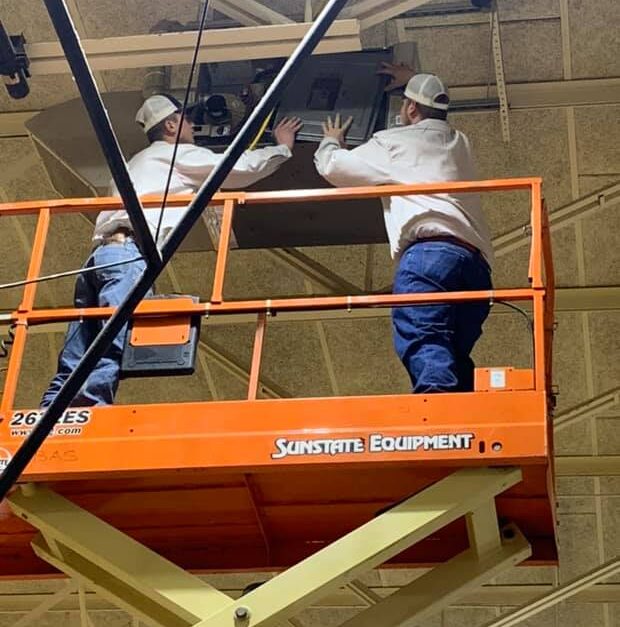
Searching for Air Conditioning Install throughout San Gabriel?
Climate Control A/C & Heating takes on cooling, heating and the air indoors in the local area.
Call 512-446-4020 and tell us what you are noticing.
A Hot, Wet Climate: Why Equipment Works Hard Here
Hot weather in San Gabriel settles in for months at a time, which means a cooling unit seldom rests between spring and fall.
Moisture in the air matters as much as the thermometer reading; an air conditioner pulls it out as a side effect of cooling, but only while it is actually running.
Proper equipment size, good airflow and clean surfaces separate a comfortable house from a clammy one, regardless of which brand is on the cabinet.
Inside an Air Conditioner: a Plain Explanation
Cooling equipment does not manufacture chill; refrigerant picks up warmth from indoor air and carries it outside.
Inside the house, the evaporator coil does the absorbing; the outdoor cabinet houses the compressor, the condenser coil and a fan.
Fan motors and start components do a great deal of work for their size, and the larger parts usually go on to last much longer.
Service Calls in Hot Weather: Repair Starts With Diagnosis
AC repair that works starts with measurements, because guessing wastes time and parts; weak cooling is a symptom that many separate faults share.
A unit that clicks and does nothing may be waiting on a bad contactor or a dead control board, though a part that failed once can point to heat or a loose connection that needs attention.
A frozen evaporator coil blocks the very air it is supposed to cool; shutting the cooling off is the safest response until someone inspects it.
The charge in a cooling system is fixed, so a shortage points to escape, and adding more without finding the leak only delays the same problem.
Algae and debris plug the drain, and many systems have a float switch that stops the cooling, and a flush of the line during regular service often prevents the problem.
Symptoms Worth Noticing – Before a Breakdown
Cooling equipment usually gives notice before it fails outright, and every item below is a reason to schedule a visit:
- Some rooms that never cool down while the system runs nonstop.
- Grinding, squealing or rattling from the outdoor cabinet, especially when the weather is hot.
- A system that turns on and off in short cycles, along with a higher electric bill.
- Condensation where there should be none, particularly after long runs.
Keeping Equipment Healthy – Small Tasks, Long Equipment Life
Routine AC maintenance heads off the kind of failure that arrives on a hot afternoon, and the work centers on airflow, cleanliness and electrical health.
The air filter is the part most under the homeowner's own control; homes with pets, dust or a constant run schedule need fresh filters more often.
The visit usually includes the condenser coil, the evaporator coil and a flush of the drain line; temperature drop and refrigerant pressures are measured to show how the loop is behaving.
Aging Equipment – a Decision Worth Making Carefully
Replacement is worth considering once repairs pile up on equipment that was already aging, with the condition of the compressor and coils weighing heavily.
A system built around a retired refrigerant can be a poor candidate for major repairs, and that can tip a close decision toward replacement.
Efficiency numbers on new equipment, such as SEER2, give a way to compare models fairly, which matters most where the system runs for months.
Planning a New Installation: Where Good Results Begin
Air conditioning install quality depends on matching capacity to what the building actually needs, and the standard method for homes is a room-by-room heat gain calculation.
Too much capacity leads to short cycling, uneven rooms and a clammy feel, and a unit that is too small runs constantly without catching up.
Every connection, from the refrigerant lines to the thermostat wire, gets sized and routed with care; commissioning measurements confirm that the system performs as designed.
Duct System Basics – What Hides Above the Ceiling
Good duct work delivers the right amount of air to each room and brings it back again; undersized trunks, kinked runs and open seams all choke the flow.
Attic duct work in Texas sees extreme heat, so insulation and tight seams earn their keep, and a technician can often find the leaks with a pressure test.
Clearing Out the Channels: Realistic Expectations
Duct cleaning is a mechanical job that brushes loose and vacuums out what has collected; construction dust, rodents or visible mold growth are the usual reasons to schedule it.
Filtering, sealing and cleaning form one plan, not three separate jobs, and be cautious of anyone who promises that cleaning will cure every problem.
The Two-Way Heat Mover – Why They Suit the Region
A heat pump is an air conditioner that can run backward to warm the house; in Texas, cold snaps are short, so a heat pump covers most of the heating season.
On extremely cold days the heat pump leans on supplemental heat to keep up; steam from the outdoor unit during defrost is normal.
Fuel-Fired Warmth – the Machinery in the Closet
Inside a gas furnace, a burner lights, a heat exchanger warms up and the blower pushes air across it; a cracked heat exchanger is a safety issue that calls for a prompt professional look.
A technician checks venting, gas pressure and the heat exchanger during a furnace tune-up, and the furnace check is well timed before the first cold front arrives.
Electric Heating Systems – Features and Trade-Offs
Elements in an electric air handler turn current directly into heat, and the equipment is simple, with few moving parts.
The trade-off with electric heat is simple equipment against higher running use, and a technician can explain how each option behaves in a mild climate.
Heating Services – Reliable Heat on Demand
Heating season in this part of Texas is brief, with sudden swings between warm days and freezing nights; running the heater briefly in fall shows whether it lights, blows warm air and shuts off properly.
Heating services cover igniters and burners on gas units, reversing valves on heat pumps and elements on electric ones, and the safety controls get tested along with the comfort ones.
Hot-Water Heating: How Hydronic Systems Differ
Boiler systems heat water or make steam and send it through pipes to radiators, baseboards or in-floor loops, but a building with a boiler needs service from someone who knows hydronics.
Air in the lines, a stuck valve or a weak pump are common reasons a boiler heats unevenly; leaks near joints deserve prompt attention.
Cleaner Air Indoors: Beyond Temperature and Humidity
Air inside a home can carry particles, gases and moisture that the thermostat never shows; allergy seasons put extra load on filters and ducts.
Filter grade matters, but a very dense filter in the wrong system can choke the airflow; humidity control prevents the conditions mold needs.
Larger buildings circulate air through central equipment, so one fault can reach every room, and employee and customer comfort both depend on it.
Cleaning the Air Itself: Sorting Fact From Marketing
Purifiers remove particles or gases from the air, and they come as whole-home units or portable room models; pollen and dust call for filtration, while odors call for carbon.
A purifier works alongside good ventilation and a clean system, not in place of them, which is why one device rarely fits every home.
UV Lights and Antimicrobial Mist: Where They Fit
UV lights install in the air handler and shine on the indoor coil and drain pan to limit microbial growth, and a technician can explain which kind fits a given air handler.
Fogging a space with antimicrobial mist is a surface treatment, not a cure for a moisture problem; the underlying cause still has to be fixed.
Letting a Building Breathe – Not Too Much, Not Too Little
Ventilating a building means replacing stale indoor air with fresh outdoor air in a controlled way; an energy recovery ventilator can trade heat and moisture between the two airstreams.
A hot attic loads up the ceiling and the ducts, so attic ventilation and insulation help the system; the equipment, the envelope and the airflow work as a team.
Cooling for Shops, Offices and Buildings – Planning Around the Business
A commercial AC system is sized for heat from people, lighting and machines as well as sunshine, and filters, belts, coils and drains are the usual checklist items.
Rooftop units sit in the sun and wind, so the cabinets, the coils and the curbs take a beating; planning a changeout around business hours limits disruption.
Cooling at Scale: Parts and Service Needs
Chiller systems are used in large offices, schools, hospitals and industrial plants; air-cooled and water-cooled designs differ in how they reject heat.
Coolers, Freezers and Ice Machines: What Service Involves
Refrigeration service covers walk-in coolers, reach-in units, freezers, display cases and ice machines; frost buildup, warm product and constant running all point to trouble.
How Climate Control A/C & Heating Looks at Air Conditioning Install throughout San Gabriel
A good service call begins with listening to what the owner has noticed, and then the system gets inspected with gauges, meters and a careful eye.
Recommendations come with explanations, so choices rest on information rather than pressure, and the work proceeds only when the owner agrees.
Ready When You Are
Reach out at 512-446-4020 to describe what is going on and find the next step.
What to Remember – Keep Things Simple
Interest in Air Conditioning Install often starts with a problem, and the solution starts with a clear diagnosis, and Climate Control A/C & Heating answers questions at 512-446-4020.