
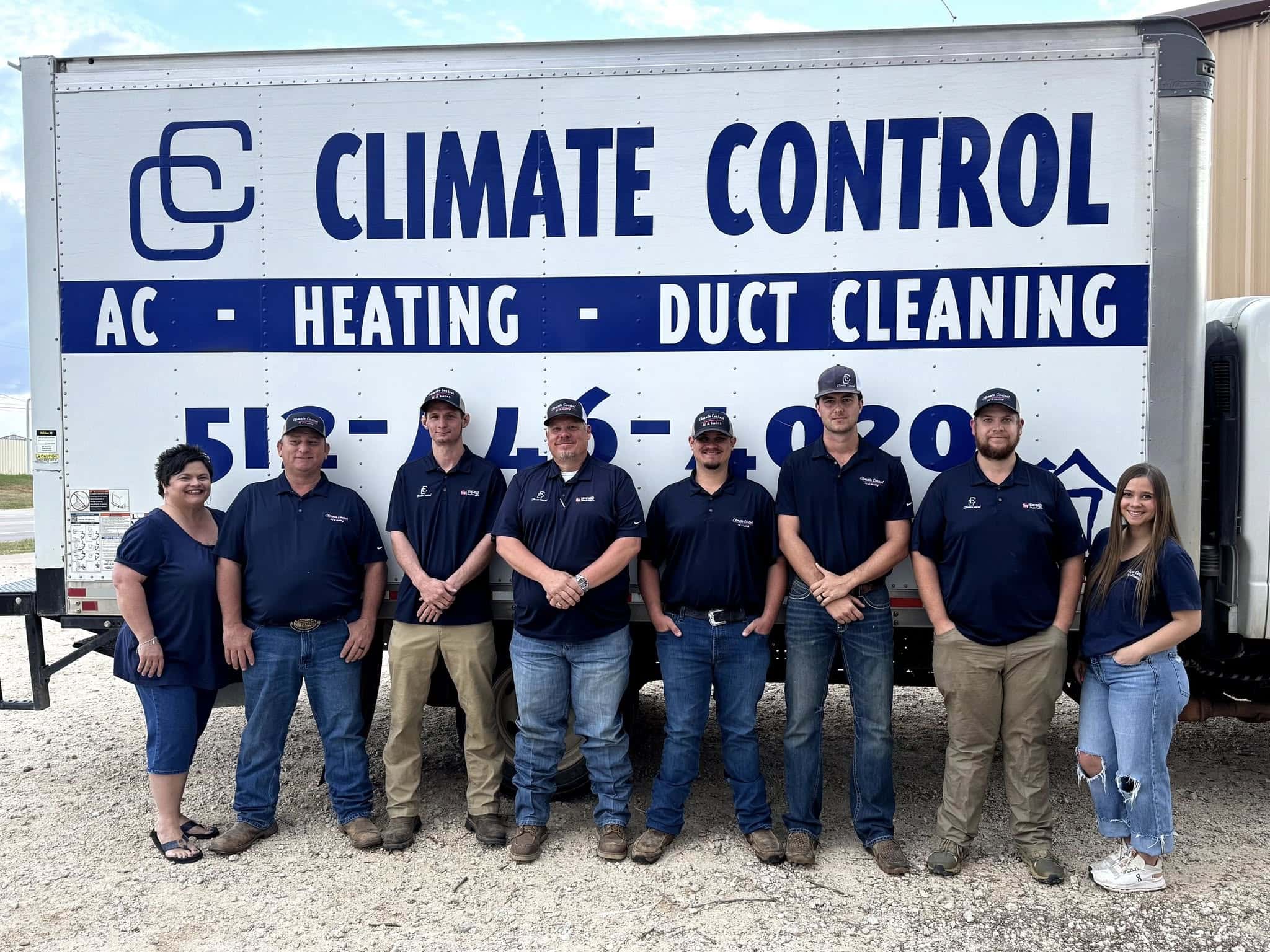
Searching for Chiller Systems throughout San Gabriel?
Climate Control A/C & Heating works on heating, cooling and indoor comfort close to home.
Call 512-446-4020 and ask a real question.
Summer Load – the Setting for Every Choice
Summers across San Gabriel run long, hot and humid; the machine on the pad outside is among the busiest appliances a household owns.
Moisture in the air matters as much as the thermometer reading; the indoor coil acts as the dehumidifier, collecting water that leaves through a drain line.
Proper equipment size, good airflow and clean surfaces separate a comfortable house from a clammy one, and each one is something a technician can check on site.
Moving Heat Outdoors: the Basics Worth Knowing
A central air conditioner is a heat mover, not a cold maker; the refrigerant carries heat out of the house and leaves the cool behind.
The indoor coil is where the cooling happens, and the outdoor unit holds the compressor and condenser coil that push that heat away.
Starting and stopping thousands of times a season is hard on switches and capacitors; a failed capacitor is often a small repair rather than the end of the system.
Problems Behind a Warm House: Repair Starts With Diagnosis
Good AC repair is detective work before it is wrench work, and a house that is warm may have an electrical fault, an airflow problem or a refrigerant problem.
Electrical faults are common, with capacitors and contactors leading the list of small failures, and each can be tested with a meter in a few minutes.
Ice building up near the air handler tells a technician where to look; shutting the cooling off is the safest response until someone inspects it.
Refrigerant is not a consumable that needs topping off every season; topping off a leaking system is a temporary patch that lets the problem return.
Water around the air handler often means the condensate line has clogged with slime, and clearing the line is routine maintenance work.
Clues Your System Is Struggling: Spotting Problems Early
Most breakdowns announce themselves with small changes in behavior, and every item below is a reason to schedule a visit:
- Supply air that feels weak or lukewarm even with the thermostat set low.
- Loud banging when the compressor starts, often getting louder from one week to the next.
- Repeated short runs that never finish a cooling cycle, along with a higher electric bill.
- Water around the air handler, which deserves a look before damage spreads.
Keeping Equipment Healthy – Small Tasks, Long Equipment Life
Air conditioning maintenance keeps dust, grime and wear from piling up unseen, and the visit usually combines cleaning, measuring and tightening.
A clogged filter chokes the blower and starves the coil of air; the label on the filter and the look of its surface are a reliable guide.
The visit usually includes the condenser coil, the evaporator coil and a flush of the drain line, and reading the numbers shows whether anything is drifting out of range.
Time for a Change: Weighing the Options Honestly
An old unit that needs repair after repair may be a candidate for AC replacement, with the condition of the compressor and coils weighing heavily.
Refrigerant types have changed over time, so older systems may use one that is hard to find, and newer equipment is built for current refrigerants.
Efficiency numbers on new equipment, such as SEER2, give a way to compare models fairly, which matters most where the system runs for months.
Choosing Capacity – a Calculation, Not a Guess
Air conditioning install quality depends on matching capacity to what the building actually needs; windows, attic insulation and ductwork all change the answer.
A unit that is too large satisfies the thermostat fast and leaves the humidity behind; one that is too small never reaches the setpoint on the hottest days.
The indoor and outdoor parts have to match each other and the ductwork; commissioning measurements confirm that the system performs as designed.
Ductwork Matters: the Lungs of the House
In many houses, the ducts decide whether a new system performs as promised; a house with comfort problems deserves a look at its air paths.
Runs through an unconditioned attic or crawl space gain heat or lose chill unless sealed and wrapped; the usual fix is sealing the seams, supporting the runs and adding insulation.
Dust, Debris and Ductwork – Reasons and Limits
Cleaning the ducts means pulling loose material out with agitation tools and a strong vacuum; construction dust, rodents or visible mold growth are the usual reasons to schedule it.
Cleaning pays off only when the source of the dirt is also addressed, and a plain look inside the duct tells the real story.
Reversible Systems – Why They Suit the Region
The reversing valve is what lets heat pumps switch between cooling and heating; one outdoor unit does the work of two.
Auxiliary heat strips back up the heat pump on the coldest mornings, and a technician can check whether the strips are running more than they should.
Furnace Basics – the Machinery in the Closet
Gas furnaces rely on an igniter, a flame sensor and a gas valve working in sequence; a cracked heat exchanger is a safety issue that calls for a prompt professional look.
Combustion appliances produce carbon monoxide, which is why detectors and clear vents matter, and stored items near the unit can block airflow and combustion air.
Heating With Electricity – Where It Fits Best
Elements in an electric air handler turn current directly into heat, which keeps the mechanical side straightforward.
The trade-off with electric heat is simple equipment against higher running use, and a technician can explain how each option behaves in a mild climate.
Getting Ready for Cold Weather: What to Do Before the First Freeze
Heating season in this part of Texas is brief, with sudden swings between warm days and freezing nights; problems found early can be repaired before a cold front arrives.
From gas furnaces to heat pumps, each heating system needs different attention before winter, and the safety controls get tested along with the comfort ones.
Hot-Water Heating – Quiet, Even Heat
Boiler systems heat water or make steam and send it through pipes to radiators, baseboards or in-floor loops; the region mostly uses forced air, so boilers are the exception.
Pressure, temperature and flame quality are the numbers that matter in a boiler check, and annual attention keeps these systems running quietly.
The Air Inside Your Walls – the Part You Cannot See
Good indoor air quality means controlling particles, humidity, fresh air and sources of contamination, and in Texas, cedar pollen and spring dust can find their way inside.
Choosing a filter means balancing how much it removes against how much resistance it adds; the system and the filter are chosen together.
Commercial air quality depends on ventilation rates, filtration and the upkeep of rooftop equipment; ventilation rules for occupied spaces set a baseline.
Cleaning the Air Itself – Useful, With Realistic Goals
Some purifiers capture particles with high-efficiency filters, and others target odors with carbon; pollen and dust call for filtration, while odors call for carbon.
Good results come from a purifier chosen to complement the rest of the system; a technician looks at the system before recommending a device.
Keeping Coils Clean Between Visits: What They Do and What They Do Not
Ultraviolet lamps near the coil are meant to keep it cleaner by discouraging growth on damp surfaces; the lamp supplements regular cleaning rather than replacing it.
Mist treatments use an approved solution applied by a technician in a controlled way, and ventilation and occupant safety are part of the process.
Fresh Air and Exhaust: the Case for Planned Airflow
Ventilating also removes moisture from kitchens and baths before it settles into the structure, which is where design and service make a real difference.
Good attic airflow lowers the heat that leaks down into the living space; improvements can start with simple, low-effort fixes.
Commercial Cooling – Equipment Built for Heavier Duty
Shops, restaurants, offices and churches often rely on rooftop equipment that serves a zone of the building; planned maintenance keeps surprises to a minimum.
Coil cleaning, belt checks and economizer inspections are part of keeping commercial equipment dependable, and replacement decisions weigh downtime as well as equipment.
Chiller Systems for Larger Buildings: Where They Make Sense
A chiller is a large refrigeration machine that chills water for use in many spaces; the equipment is larger, more complex and more closely monitored.
Commercial Refrigeration: Temperature Is the Whole Job
Refrigeration equipment uses the same basic cycle as air conditioning but at much lower temperatures, which is why restaurants and stores plan service ahead of busy seasons.
How Climate Control A/C & Heating Thinks About Chiller Systems around San Gabriel
A good service call begins with listening to what the owner has noticed, followed by an explanation of what was found and what the choices are.
Recommendations come with explanations, so choices rest on information rather than pressure, and the owner stays in control of the decision.
Start With a Conversation
Phone 512-446-4020 to line up service or learn what to expect.
Putting It Together – Equipment, Airflow and Air Quality
Interest in Chiller Systems often starts with a problem, and the solution starts with a clear diagnosis, with Climate Control A/C & Heating at 512-446-4020 to start the conversation.